The Senegalese government has launched an initiative to boost the country's sheep farming industry through public-private financing. The goal is to make the industry a driver of employment and food sovereignty. According to the Ministry of Agriculture and Animal Husbandry, the country's sheep farming industry requires 860,000 sheep for the upcoming Tabaski celebration, with expected imports of 250,000 to 300,000 heads. In 2024, imports reached 297,488 heads, highlighting the need for a more structured and financed industry.
The Vision Sénégal 2050 and the Stratégie de souveraineté alimentaire 2025-2034 aim to achieve 90% food security and create 800,000 formal jobs by 2029. To achieve this, the Ministry of Agriculture and Animal Husbandry has engaged 29 banks and four financial institutions in a five-year investment program worth 1,470 billion FCFA. The program aims to create 90,000 jobs for young people and women. However, the industry's potential is hindered by a lack of structured and documented activities, making it difficult for banks to provide financing.
The Fonds d'Appui à la Stabulation (FONSTAB) has been established to address these challenges. The fund provides guarantees, interest rate subsidies, and credit facilities to reduce investment barriers and improve loan conditions. FONSTAB's approach involves a collective action, with the state setting the direction, financial institutions providing capital, and local communities ensuring territorial anchorage. Cooperatives play a crucial role in grouping demand and organizing access to markets.
The Initiative des Maires pour l'Autosuffisance en Moutons (IMAM2) project is a concrete example of this approach. Heifer International Sénégal is working with communities to structure producers into cooperatives, strengthen their governance, and transform their ideas into viable economic models. The project has engaged 189 municipalities, supported 959 self-help groups, and contributed to the creation of 30 cooperatives in 10 regions.
Under the IMAM2 project, nearly 700 beneficiaries from six cooperatives will receive 575,031,732 FCFA, of which 421,748,232 FCFA will be facilitated by Heifer International Sénégal for four cooperatives. The business plans cover 559 farms and an equal number of permanent jobs, combining sheep reproduction and fattening to generate rapid income. The project's success will depend on the ability of cooperatives to execute business plans, manage resources, and respect repayment commitments.
The project's implementers emphasize that the financing model is not just about providing credit but also about accompanying producers with training and support. This includes health, nutrition, and biosecurity training, as well as agricultural insurance and loan repayment monitoring. The goal is to create sustainable businesses that can produce, sell, repay, reinvest, and grow.
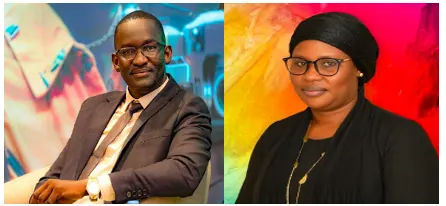
The success of Senegal's sheep farming industry will depend on its ability to retain more value and jobs in local communities and build trust among stakeholders. The public-private financing model has the potential to make the industry a driver of employment and food sovereignty. Key stakeholders, including Mme Fatoumata Diop Bakhoum Diouf, Administrator of FONSTAB, and Dr. Daouda Ndao, National Director of Heifer International Sénégal, are optimistic about the project's prospects.
Key points
- The Senegalese government has launched a public-private financing initiative to boost the country's sheep farming industry.
- The initiative aims to achieve 90% food security and create 800,000 formal jobs by 2029.
- The project's success will depend on the ability of cooperatives to execute business plans, manage resources, and respect repayment commitments.