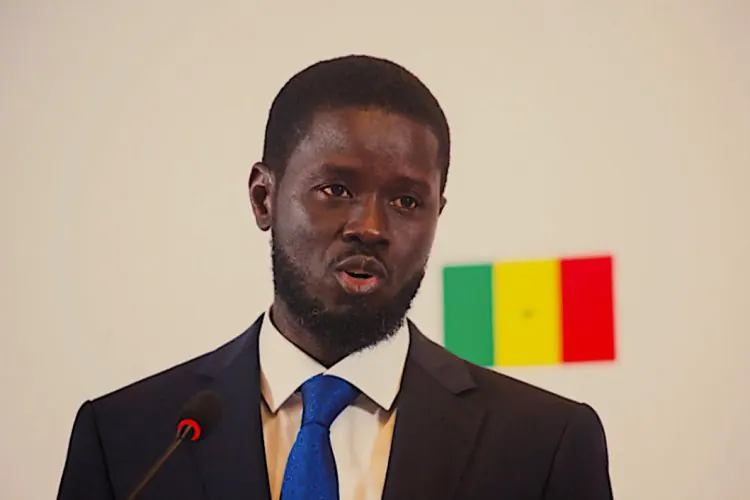
Senegalese President Bassirou Diomaye Faye has emphasized the importance of his country's cooperation with the International Monetary Fund (IMF), stating that it is crucial for Senegal's economic recovery. In an interview with RFI and France 24 on September 24, 2026, in New York, Faye highlighted that the IMF deal, worth $2.2 billion, aims to help Senegal restore financial balance and boost investor confidence. He urged lawmakers to prioritize the country's interests and support the government's economic initiatives.
Faye's comments come amid criticism from some lawmakers, including members of his own party, Pastef, which holds a majority in parliament. They have accused him of deviating from the party's stance on the IMF deal. Faye, however, maintained that his decision to engage with the IMF is in the best interest of Senegal, which is currently facing significant economic challenges. He also emphasized that each branch of government must fulfill its responsibilities, calling on lawmakers to demonstrate a "patriotic spirit" when making decisions on the government's economic proposals.
The president also addressed concerns about the potential dissolution of parliament, which he is authorized to do under the constitution starting from December 2, 2026. Faye stated that he has not yet made a decision on the matter, but emphasized that the constitution grants him the power to consider this option. He stressed that any decision would be based on the prevailing circumstances and would prioritize the interests of the Senegalese people and the effective functioning of state institutions.
Faye's relationship with his former Prime Minister, Ousmane Sonko, was also raised during the interview. The two have had differences, but Faye attributed their rift to disagreements on specific issues and a breakdown of trust, rather than the IMF deal. He expressed his commitment to finding solutions that benefit Senegal, stating that he is focused on addressing the country's economic challenges.
The IMF deal has been a subject of contention in Senegal, with some critics arguing that it may impose austerity measures that could harm the country's most vulnerable populations. Faye, however, insisted that the agreement is essential for Senegal's economic recovery and that his government is working to mitigate any potential negative impacts on citizens.
In addition to economic issues, Faye touched on regional security concerns, citing the ongoing threats in Mali and other parts of the Sahel region. He emphasized Senegal's commitment to regional cooperation and collaboration with international partners to address these challenges. Faye also highlighted the importance of maintaining dialogue with neighboring countries, including those that have recently left the Economic Community of West African States (ECOWAS).
Faye announced that Senegal, under ECOWAS, will continue to engage with countries such as Mali, Burkina Faso, and Niger, which have formed a new alliance, the Confederation of Sahel States. He emphasized Senegal's respect for the sovereignty and decision-making capacity of these countries, while also stressing the need for dialogue to facilitate the free movement of people, goods, and services in the region.
Key points
- President Faye emphasizes IMF deal crucial for Senegal's economic recovery
- Faye addresses concerns over potential dissolution of parliament
- President stresses regional cooperation and dialogue to address security challenges