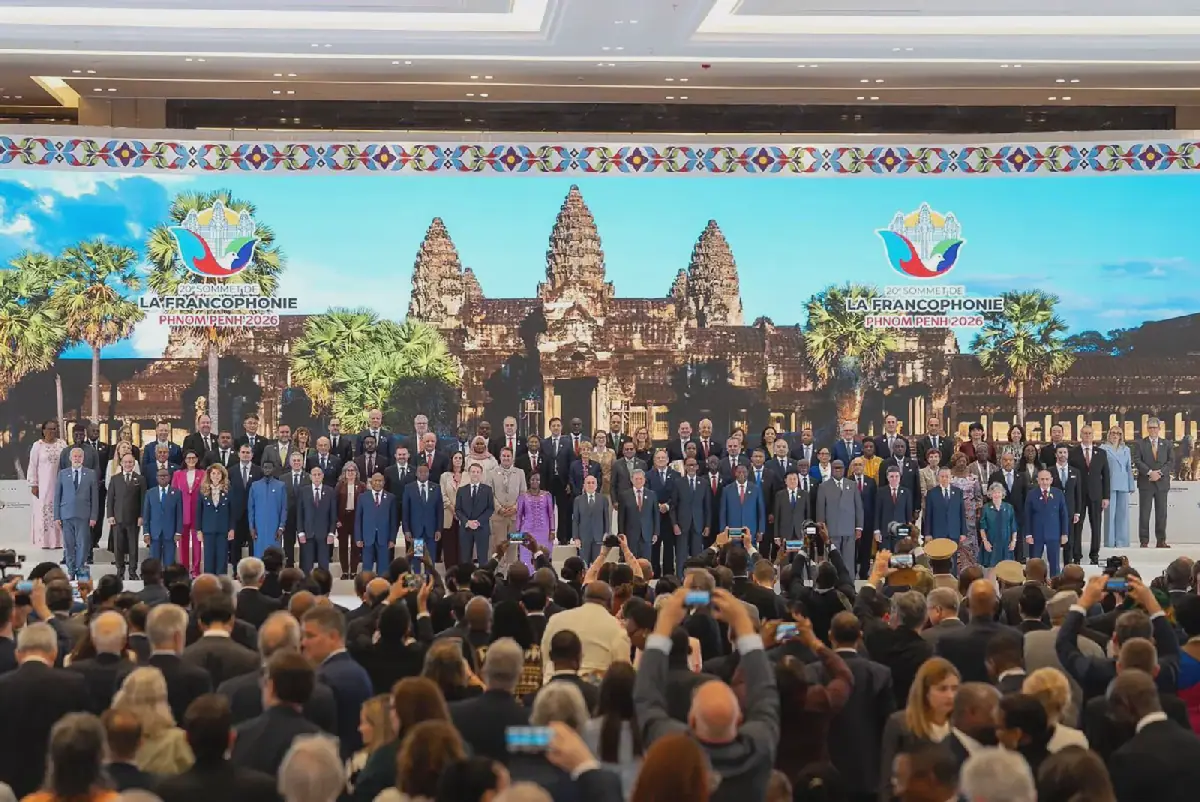
The 20th Summit of Heads of State and Government of the International Organization of La Francophonie (OIF) was held in Phnom Penh, Cambodia, on November 15-16, 2026. Senegalese President Bassirou Diomaye Faye played a crucial role in the summit, particularly in the election of the OIF Secretary-General. The summit took place amid global conflicts, shifting geopolitics, and growing concerns about multilateralism's future. President Faye's participation was marked by a commitment to dialogue and collective responsibility.
The election of the OIF Secretary-General exposed deep divisions among member states, exacerbated by tensions between Rwanda and the Democratic Republic of Congo. Several candidacies and geographical balances within the organization led to contrasting positions, risking polarization that could harm the Francophone community's cohesion. In response, President Faye initiated a meeting with African counterparts to foster collective consultation and explore possibilities for rapprochement. His efforts aimed to preserve the organization's unity and prevent competition for its leadership from becoming a lasting factor of division.
President Faye's approach was guided by a desire to prioritize the organization's unity over specific preferences for any candidacy. This stance aligns with Senegal's diplomatic tradition, which emphasizes preserving the founding values of the Francophonie. El Hadji Malick Ndiaye, vice-president of the National Assembly, praised President Faye's efforts, noting that he respected the tradition of good offices of Senegal by facilitating understanding among African and Western presidents gathered in Cambodia.
The Senegalese President actively participated in last-minute consultations, promoting rapprochement and encouraging an acceptable outcome for all parties. His efforts facilitated the work of the Cambodian presidency of the Francophonie. By exploiting Article 3 of the Charter, heads of state avoided an election, and negotiations led to a compromise: postponing the election of the OIF Secretary-General. This decision allowed for a peaceful dialogue and provided time for further consultations among member states.
As a result of the negotiations, the current Secretary-General, Louise Mushikiwabo's, mandate was extended by one year. During this period, her country, Rwanda, will not present a candidate. Other candidates can remain in the running, and candidatures will also be open to other interested personalities. The search for consensus reflects the collective desire not to let current differences compromise the unity and functioning of the Francophonie.
President Faye was also designated to coordinate a high-level roundtable discussion on the summit's central theme. The roundtable, which included representatives from Canada, France, Morocco, Mauritania, and the Wallonia-Brussels Federation, focused on building lasting peace and shared prosperity. This assignment underscores Senegal's importance in collective reflections on the Francophonie's major orientations.
The participation of President Faye in the Francophonie summit demonstrates Senegal's commitment to its diplomatic traditions and its role in promoting peace and stability. The next summit will be held in Ottawa, Canada, in 2028, preceded by a pre-summit of the Francophone youth in New Brunswick. Key points:
Key points
- President Bassirou Diomaye Faye helped broker a compromise on the election of the Francophonie Secretary-General.
- The Senegalese President facilitated consultations among African and Western leaders to preserve the unity of the Francophonie.
- The summit's outcome reflects a collective desire to prioritize the Francophonie's unity and functioning over current differences.