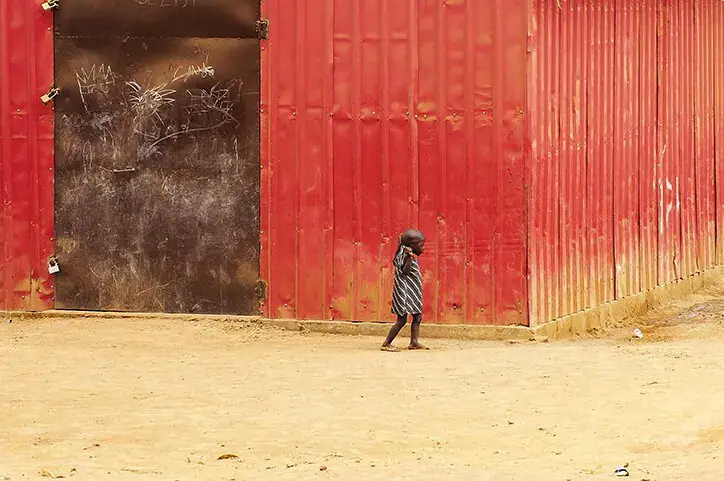
A recent report by the Instituto Nacional de Estatística (INE) of Angola has revealed that approximately 44.8% of the country's population, which translates to 15.6 million people, live in multidimensional poverty. This data was presented in the Relatório da Pobreza Multidimensional de Angola 2023/2024, which was released on November 17, 2026. The report was compiled in partnership with the Oxford Poverty and Human Development Initiative (OPHI), the United Nations Children's Fund (UNICEF), and the United Nations Development Programme (PNUD).
The study, based on data from the Inquérito de Indicadores Múltiplos e de Saúde (IIMS 2023-2024), introduces two new measurement tools: the Índice de Pobreza Multidimensional Criança (IPM-C) and the IPM Mulher. These instruments help identify individual deprivations throughout a person's life cycle that were not previously apparent through the national Índice de Pobreza Multidimensional (IPM-A). The IPM is an international indicator that measures acute poverty through multiple simultaneous deprivations, beyond just income.
According to the IPM-C, 12.8 million children and adolescents (69%) aged 0-17 live in poverty, with early childhood being the most vulnerable group. The main deprivations in this age group are related to vaccination, disease prevention, cognitive development, and housing conditions. For women aged 15-49, the IPM Mulher indicates that 4.4 million live in multidimensional poverty, primarily due to lack of financial autonomy, poor housing, and inadequate sanitation.
Nationally, the IPM-A stands at 0.214, reflecting an average deprivation intensity of 47.8%. The main deprivations among the poor population are concentrated in access to housing, electricity, sanitation, and cooking fuel. The study highlights a significant geographical asymmetry, with poverty incidence being four times higher in rural areas compared to urban areas.
Provinces such as Bié, Lunda Norte, Cunene, and Moxico have the highest poverty indices, while Luanda and Cabinda have the lowest rates. However, due to its high population density, Luanda has the largest absolute number of poor children, totaling 2 million. Compared to the 2015/2016 period, Angola has seen a 15.9% reduction in its national index, from 52.0% to 44.8%.
Despite this progress, the country's demographic growth has increased the absolute number of poor people by 1.5 million, primarily children and adolescents. The report emphasizes that the new indicators reveal a particularly difficult reality for the youngest and most vulnerable populations.
The multidimensional poverty index assesses deprivations in three dimensions: health, education, and living conditions, including access to clean water, sanitation, electricity, clean cooking fuel, adequate housing, and possession of basic goods. The report was developed by the INE, in partnership with OPHI, UNICEF, and PNUD.
Key points
- 69% of children and adolescents in Angola live in multidimensional poverty.
- The poverty incidence is four times higher in rural areas compared to urban areas.
- Despite a reduction in the national poverty index, the absolute number of poor people has increased by 1.5 million due to demographic growth.
Reporting sources
- INE/relatório: 69% das crianças e jovens em Angola... · novojornal.co.ao