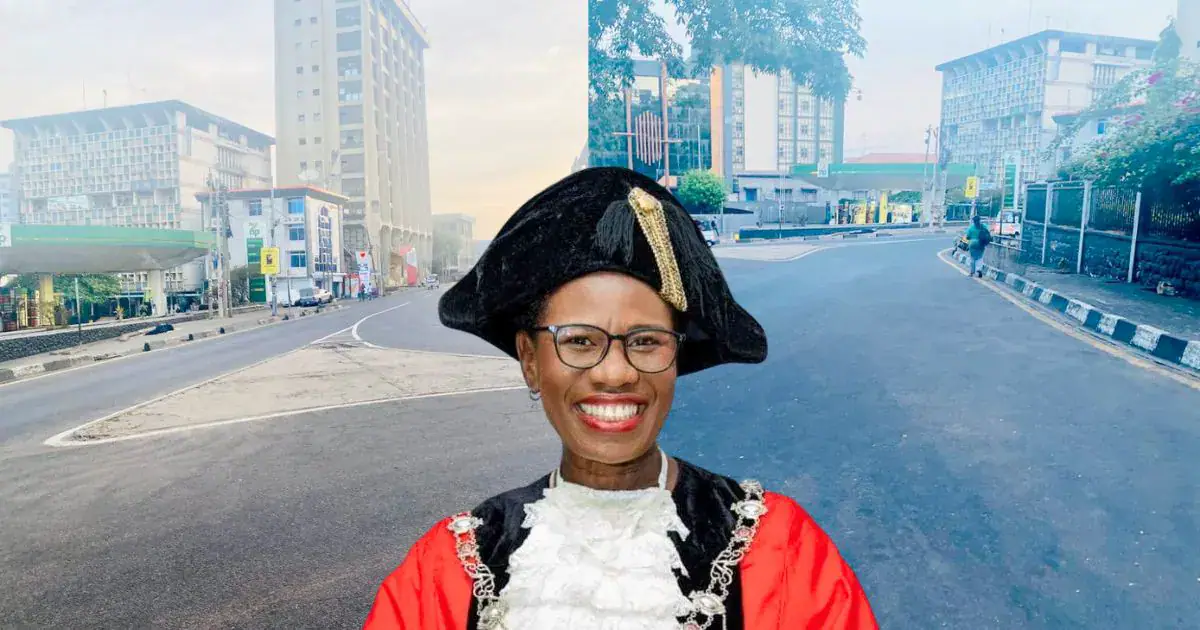
The Freetown City Council (FCC) has taken a proactive approach to address the growing health risks associated with rising temperatures in the city. As part of its five-day "Fritong Don Wam Oh!" outreach campaign, launched in partnership with the Ministry of Health from 16 to 20 November 2026, the FCC has trained 500 healthcare workers to identify and respond to heat-related illnesses. This initiative aims to protect residents from the increasing health threats posed by extreme heat.
Mayor Yvonne Aki-Sawyerr emphasized that extreme heat poses serious health risks, particularly to vulnerable groups such as pregnant women, market women, street vendors, and residents of overcrowded and poorly ventilated communities. She warned that prolonged exposure to extreme heat could lead to dehydration, heatstroke, heat rash, and other health complications, especially among people who work outdoors for extended periods. The Mayor also cautioned against the assumption that Africans are naturally accustomed to hot weather.
The FCC's initiative highlights the challenges faced by residents in informal settlements such as Kroo Bay, where many live in zinc-roofed structures that absorb and retain heat, often without adequate ventilation, fans, or surrounding vegetation. To mitigate the effects of rising temperatures, the Mayor announced that approximately 25,000 tree seedlings had been made available to encourage residents to participate in tree planting. This effort aims to reduce urban temperatures by protecting green spaces and increasing vegetation.
Chief Heat Officer at the Freetown City Council, Eugenia Kargbo, attributed rising urban temperatures partly to the removal of trees and the replacement of natural surfaces with concrete buildings, metal structures, and asphalt. These materials absorb heat during the day and gradually release it at night, creating the Urban Heat Island Effect, which causes built-up areas to remain warmer than their surroundings. Kargbo warned that prolonged exposure to extreme heat could cause sleep disruption, exhaustion, headaches, and dizziness.
The Sierra Leone Meteorological Agency is committed to providing meteorological data and technical expertise to support the campaign. Head of Climatology, Joseph Polynus Thomos, described extreme heat as a public health emergency and reaffirmed the agency's commitment to ensuring that meteorological data are properly interpreted and communicated to help the public make informed decisions.
The campaign will combine social media engagement, community outreach, and radio and television discussions to expand public awareness. Communication and Outreach Consultant, Dr Francis Sowa, announced that the first community outreach would take place at Lumley Roundabout, targeting residents, commercial drivers, and kekeh operators. Further activities are planned for Eastern Police and Ayandeh.
The initiative has received support from various stakeholders, including Senior Public Health Superintendent at the Ministry of Health, Bockarie P. Sesay, who encouraged participants to become ambassadors for the campaign by sharing heat-health messages in their respective communities. The campaign builds on the Freetown Climate Action Plan launched in 2023 and the city's Heat Action Plan introduced in 2025 during the inaugural Africa Heat Summit hosted in Freetown.
Key points
- The FCC has trained 500 healthcare workers to identify and respond to heat-related illnesses as part of its "Fritong Don Wam Oh!" outreach campaign.
- The campaign aims to protect residents from the growing health risks associated with rising temperatures in Freetown.
- The initiative includes community outreach, social media engagement, and tree planting efforts to mitigate the effects of extreme heat.
Reporting sources
- FCC Trains 500 Health Workers as Freetown Battles Rising Heat · sierraloaded.sl