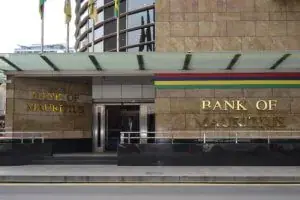
The Monetary Policy Committee of the Bank of Mauritius has raised the key interest rate to 5%. This decision comes as inflation in the country stands at 6.4% year-on-year. The rate hike was expected to spark debate, with some arguing it is a necessary measure to combat inflation, while others see it as a blunt instrument. Former Governor Rama Sithanen has expressed concerns that raising interest rates may not be effective in addressing external supply shocks.
The Bank of Mauritius has been criticized for its optimistic forecasts, which have consistently underestimated inflation. In February, the bank predicted that inflation would remain within its target range, despite a surge in oil prices and an inflation rate of 5.6%. The bank's forecasts have been revised several times, with the latest prediction being 4.7% for 2026. Critics argue that the bank's approach is flawed and that it fails to account for potential risks.
The current economic environment is highly uncertain, with global events such as the return of Donald Trump to the White House and the ongoing conflict in Ukraine contributing to volatility. The Bank of Mauritius has been accused of being "behind the curve" in responding to these changes. The bank's governor has stated that it is "data dependent" and relies on projections, but critics argue that its data is outdated and that it fails to provide a clear analysis of the situation.
The effectiveness of the interest rate hike is also being questioned. With a high level of liquidity in the economy, the transmission of monetary policy is weak. The Prime Lending Rate, which is used as a reference for loans, has increased to around 7%, but this is not having a significant impact on the economy. The bank's goal of reducing inflation may not be achieved through interest rate hikes alone.
The Bank of Mauritius has also faced criticism for its management of the foreign exchange market. The governor has stated that the backlog of dollar orders has been "largely resolved", but this claim has been disputed. The market continues to experience a shortage of dollars, with the offshore rate trading at around 50 rupees per dollar. The bank's approach to managing the exchange rate has been questioned, with some arguing that it is not sustainable.
To address the country's economic challenges, the Bank of Mauritius needs to improve its analysis and forecasting. The bank should also take steps to reduce the excess liquidity in the economy and improve the transmission of monetary policy. The government also has a role to play in promoting economic growth and stability. This includes implementing policies to promote competition and encourage the growth of new enterprises.
The credibility of the Bank of Mauritius has been questioned in recent months. The bank's decision to raise interest rates has been seen as too little, too late. To restore credibility, the bank needs to demonstrate a clear understanding of the economy and a willingness to take bold action to address its challenges. This includes being more transparent and accountable in its decision-making processes.
Key points
- The Bank of Mauritius has raised the interest rate to 5% amid high inflation, but the effectiveness of this measure is being questioned.
- The bank's forecasts have been criticized for being overly optimistic and failing to account for potential risks.
- The bank needs to improve its analysis and forecasting to address the country's economic challenges.