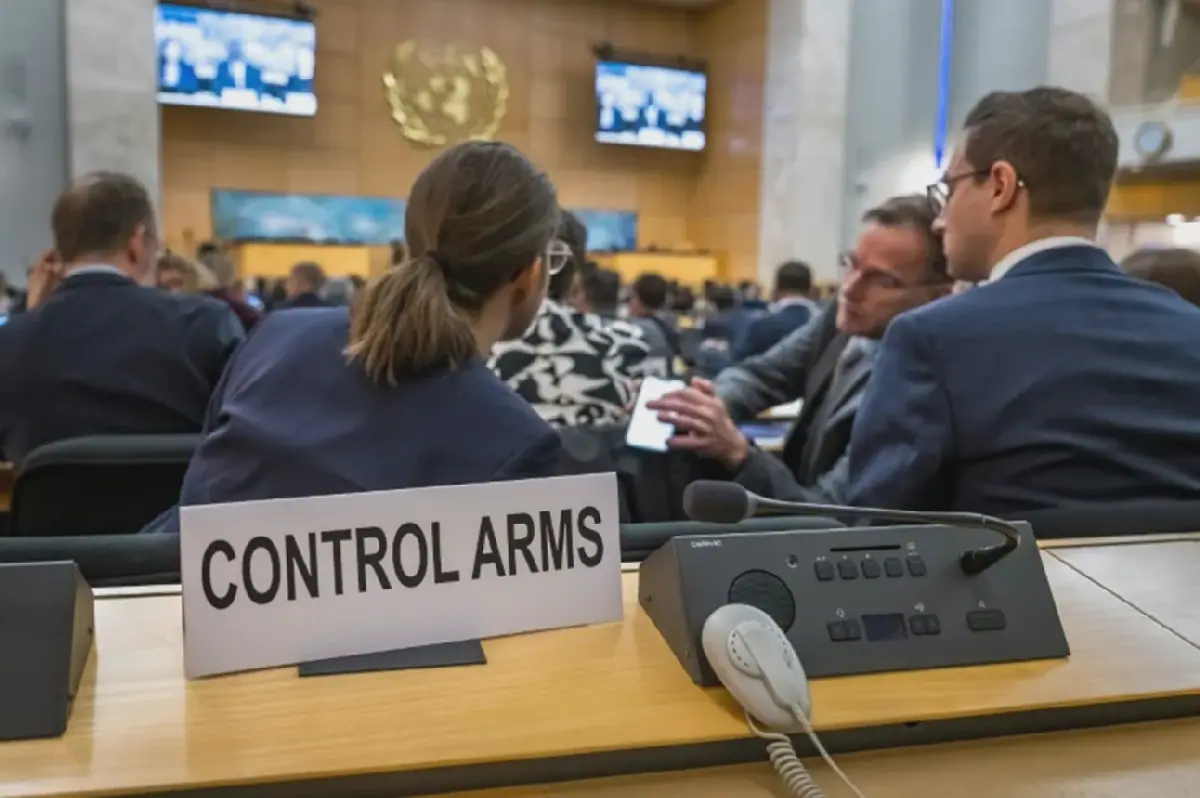
The seventh review conference of the Convention on Certain Conventional Weapons (CCW) opened on November 16, 2026, in Geneva, Switzerland. The meeting, presided over by Swiss Ambassador Julien Thöni, brings together 128 states to discuss the development of lethal autonomous weapons, often referred to as "killer robots." The conference aims to evaluate the functioning of the CCW and its protocols, as well as anticipate changes in warfare methods.
Humanitarian organizations, including Amnesty International, Human Rights Watch, and Stop Killer Robots, have expressed concerns about the rapid development and deployment of autonomous weapons. They argue that without binding rules, civilians will be exposed to technologies that evolve faster than the law. These organizations warn of potential mass killings, indiscriminate attacks, and algorithmic biases that could erode accountability in cases of humanitarian law violations.
The issue of autonomous weapons has been on the agenda for over a decade, with the Group of Governmental Experts (GGE) attempting to address the risks and possible responses within the CCW framework. In September, the GGE adopted a report containing elements for an instrument to regulate lethal autonomous systems, which will serve as the basis for the conference's discussions.
The United Nations Secretary-General, António Guterres, and the President of the International Committee of the Red Cross, Mirjana Spoljaric, have called for the urgent adoption of a binding instrument to establish clear prohibitions and restrictions on autonomous weapons. They emphasize the need to preserve human judgment and control, ensure respect for humanitarian law, and maintain human accountability in situations where civilians' lives are at risk.
The main obstacle to regulating autonomous weapons lies in the political sphere, with states disagreeing on the degree of human control required, the reliability and predictability of systems, and the categories of weapons to be banned. Humanitarian organizations fear that further consultations without a negotiation mandate will only delay action while research, development, and deployment continue.
The CCW was established to address emerging threats and protect civilians from excessive or indiscriminate war consequences. Its protocols cover issues such as undetectable fragments, landmines, incendiary weapons, blinding laser weapons, and explosive remnants of war. The conference in Geneva must determine whether international law can still impose limits on a rapidly advancing technological race or if states will allow the automation of violence to precede regulatory frameworks.
The outcome of the conference will have significant implications for international humanitarian law and the protection of civilians. As Nicole van Rooijen, Executive Director of Stop Killer Robots, stated, "The Convention on Certain Conventional Weapons was created to respond to emerging threats, and this review conference must demonstrate that it can still do so." The conference will continue until November 20, 2026, with a decision expected on whether to negotiate a binding protocol on lethal autonomous weapons.
Key points
- The conference aims to address the development of lethal autonomous weapons and their potential impact on civilians and international humanitarian law.