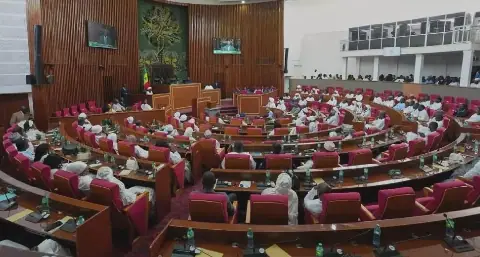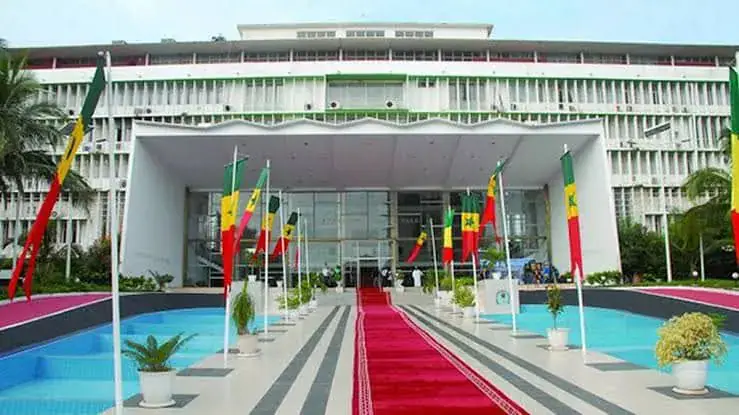
The Senegalese National Assembly has rejected the government's proposed 2026 revised finance bill, with 109 deputies voting against the text, 20 in favor of rejection, and three abstentions. This decision was made after the adoption of a preliminary question introduced by Amadou Ba, a deputy from the Pastef party, which prevented an in-depth examination of the project. The rejection of the revised budget constitutes a setback for the executive, which had planned to use this law to make budgetary adjustments during the current financial year.
The main concerns of parliamentarians relate to the reliability of budget forecasts and the presentation of the public deficit, estimated at 7.6% of gross domestic product (GDP). They also consider the information provided on state debt and financing needs to be insufficient. The Minister of Economy and Finance, Cheikh Diba, contested the arguments put forward to reject the revised budget, considering them as a pretext for rejecting the text. The rejection of the budget has significant implications for the country's financial situation, particularly with regard to settling debts with private companies and electricity suppliers.
The government's revised budget had aimed to secure additional resources to address these financial obligations and finance the supply of fuel to power plants. The rejection of the budget could also have repercussions on discussions between Dakar and the International Monetary Fund (IMF). Senegal is awaiting approval for $2.2 billion in financing from the international financial institution. The government will now have to review its budgetary strategy in a context marked by divergences over financial forecasts, deficit levels, and public debt sustainability.
The rejection of the revised budget highlights the tensions between the executive and legislative branches in Senegal. The situation has sparked concerns about the country's ability to manage its finances effectively and meet its financial obligations. The National Assembly's decision has also raised questions about the government's ability to implement its economic agenda and secure the necessary funding to support its development plans.
The Senegalese government had presented the revised budget as a necessary measure to adjust its financial projections and ensure the country's economic stability. However, the National Assembly's rejection has thrown these plans into disarray, and the government will now have to go back to the drawing board to come up with a new budget that addresses the concerns of parliamentarians.
The IMF has emphasized the importance of Senegal's economic reforms and its commitment to fiscal sustainability. The institution has also expressed concerns about the country's debt levels and the need for prudent financial management. The rejection of the revised budget has created uncertainty about Senegal's ability to meet its financial obligations and implement its economic agenda.
The Senegalese government will now have to engage in further consultations with parliamentarians and other stakeholders to come up with a revised budget that addresses the concerns of all parties. The country's economic future and its ability to secure funding from international institutions will depend on its ability to manage its finances effectively and implement its economic agenda.
Key points
- The Senegalese National Assembly has rejected the government's proposed 2026 revised finance bill, citing concerns over budget forecasts and public deficit.
- The rejection of the revised budget could have repercussions on discussions between Dakar and the International Monetary Fund (IMF) over $2.2 billion in financing.
- The government will now have to review its budgetary strategy in a context marked by divergences over financial forecasts, deficit levels, and public debt sustainability.