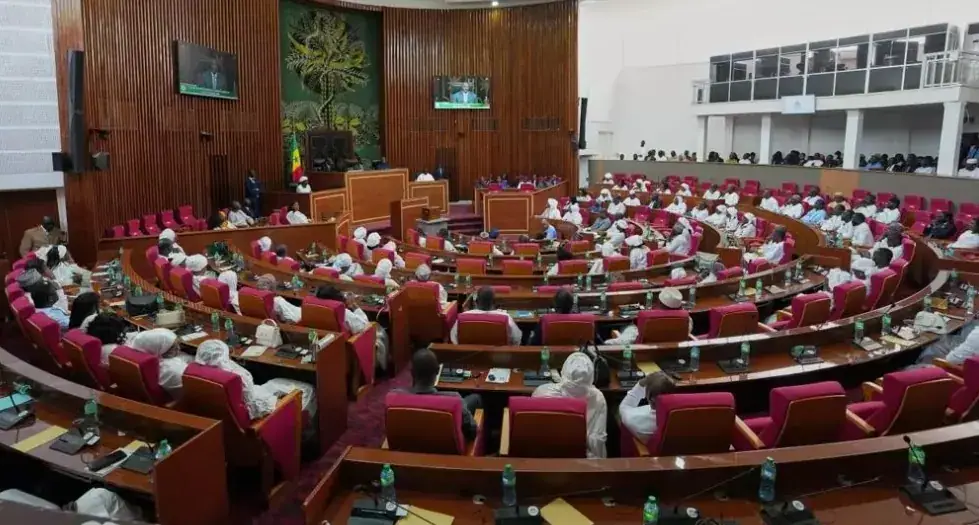
Senegal's National Assembly has rejected the government's proposed 2026 revised budget, with 109 lawmakers voting against and 20 in favor. This marks the third rejection of the bill, which aimed to rectify the country's financial woes. The opposition, led by the PASTEF party, has expressed concerns over revenue and expenditure projections, as well as the government's plan to rely on debt to fund social projects and reduce energy subsidies.
The rejection of the budget revision has significant implications for Senegal's financial stability and its negotiations with the International Monetary Fund (IMF). The government had been seeking a $2.2 billion support program over 36 months to stabilize its public finances. However, the IMF's approval is contingent upon several conditions, which the rejection of the budget revision may complicate. This development comes at a time when Senegal is grappling with a cost-of-living crisis, high youth unemployment, and social tensions.
The PASTEF party, which holds a majority in the National Assembly, has been vocal about its opposition to the government's economic policies. The party's concerns over the budget revision center on its potential impact on the purchasing power of citizens, particularly in light of the proposed reduction in energy subsidies. The government's efforts to address these concerns and find a compromise with the opposition will be crucial in determining the country's economic trajectory.
The rejection of the budget revision has also exposed deep divisions within Senegal's ruling coalition. The alliance that won the 2024 elections has fractured since the departure of Prime Minister Ousmane Sonko in May 2026. Relations between President Bassirou Diomaye Faye and his former Prime Minister have deteriorated, contributing to the current political tensions. This infighting may undermine the government's ability to address the country's pressing economic and social challenges.
In response to the budget rejection, President Bassirou Diomaye Faye may consider dissolving the National Assembly, potentially triggering early legislative elections. Analysts suggest that this move could be made as early as December 2, in an effort to secure a new majority and overcome the current impasse. However, this approach carries risks and uncertainties, and its success will depend on various factors, including the opposition's response and the state of the economy.
The current crisis highlights the need for Senegal's government to find a way to address the country's economic and social challenges. The country is facing significant hurdles, including a high cost of living, unemployment, and social unrest. The government's ability to navigate these challenges and find a path forward will be critical in determining the country's future prospects. The international community, including the IMF, will be watching closely for signs of progress.
The rejection of the budget revision has sparked concerns about the potential consequences for Senegal's economy and its people. The country's leaders will need to work together to find a solution that addresses the pressing challenges facing the nation. This will require compromise, dialogue, and a commitment to the well-being of the Senegalese people. The coming weeks and months will be crucial in determining the country's trajectory and its ability to overcome the current crisis.
Key points
- The Senegalese parliament's rejection of the 2026 budget revision has weakened the government and complicated negotiations with the IMF.
- The opposition, led by the PASTEF party, has expressed concerns over revenue and expenditure projections, as well as the government's plan to reduce energy subsidies.
- The rejection of the budget revision has exposed deep divisions within Senegal's ruling coalition and raised the possibility of early legislative elections.