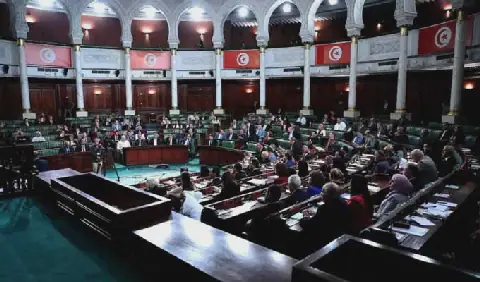
The Senegalese government has taken a significant step in its opposition to a proposed law aimed at amending the country's oil code. On September 29, 2026, the government submitted a referral to the Constitutional Council, seeking to have the proposed law deemed inadmissible. This move has resulted in the suspension of the law's examination, which was initially scheduled for the same day. The announcement was made by Deputy Ismaila Diallo during a plenary session of the National Assembly.
According to Deputy Diallo, the government's referral to the Constitutional Council concerns the proposed law n° 37/2026, which aims to modify the law n° 2019-03 of February 1, 2019, governing the oil code. The proposed law, championed by the PASTEF party, seeks to subject oil and gas contracts to the scrutiny of the National Assembly before they are signed by the executive. This move is seen as an attempt to increase parliamentary oversight of the country's oil and gas sector.
The government's decision to challenge the proposed law is seen as a bid to block a measure that could potentially limit its authority in the oil and gas sector. By referring the matter to the Constitutional Council, the government is hoping that the council will rule the proposed law inadmissible, thereby preventing it from being passed into law. This development has significant implications for the country's governance and the management of its natural resources.
The proposed law has been a point of contention between the government and the PASTEF party, which has been pushing for greater transparency and accountability in the oil and gas sector. The party argues that the current system allows the executive to sign contracts without adequate parliamentary oversight, potentially leading to unfavorable agreements for the country. The government's opposition to the proposed law has sparked concerns about its commitment to transparency and good governance.
The Constitutional Council's review of the proposed law is expected to be a critical step in determining the fate of the legislation. The council's decision will have significant implications for the country's oil and gas sector, as well as its governance. A ruling in favor of the government could limit parliamentary oversight of oil and gas contracts, while a ruling in favor of the proposed law could increase transparency and accountability.
The development has sparked a renewed debate about the role of parliament in the management of Senegal's natural resources. Some argue that the proposed law is necessary to ensure that the country's oil and gas resources are managed in a transparent and accountable manner, while others see it as an attempt to limit the executive's authority. The government's decision to challenge the proposed law has raised questions about its commitment to good governance and transparency.
The National Assembly's consideration of the proposed law has been suspended pending the Constitutional Council's ruling. The council's decision is expected to have far-reaching implications for the country's governance and the management of its natural resources. The government's move to block the proposed law has sparked concerns about its commitment to transparency and accountability in the oil and gas sector.
Key points
- The Senegalese government has filed a constitutional challenge to a proposed law modifying the country's oil code.
- The proposed law aims to subject oil and gas contracts to parliamentary scrutiny before they are signed by the executive.
- The Constitutional Council's review of the proposed law is expected to have significant implications for the country's oil and gas sector and governance.