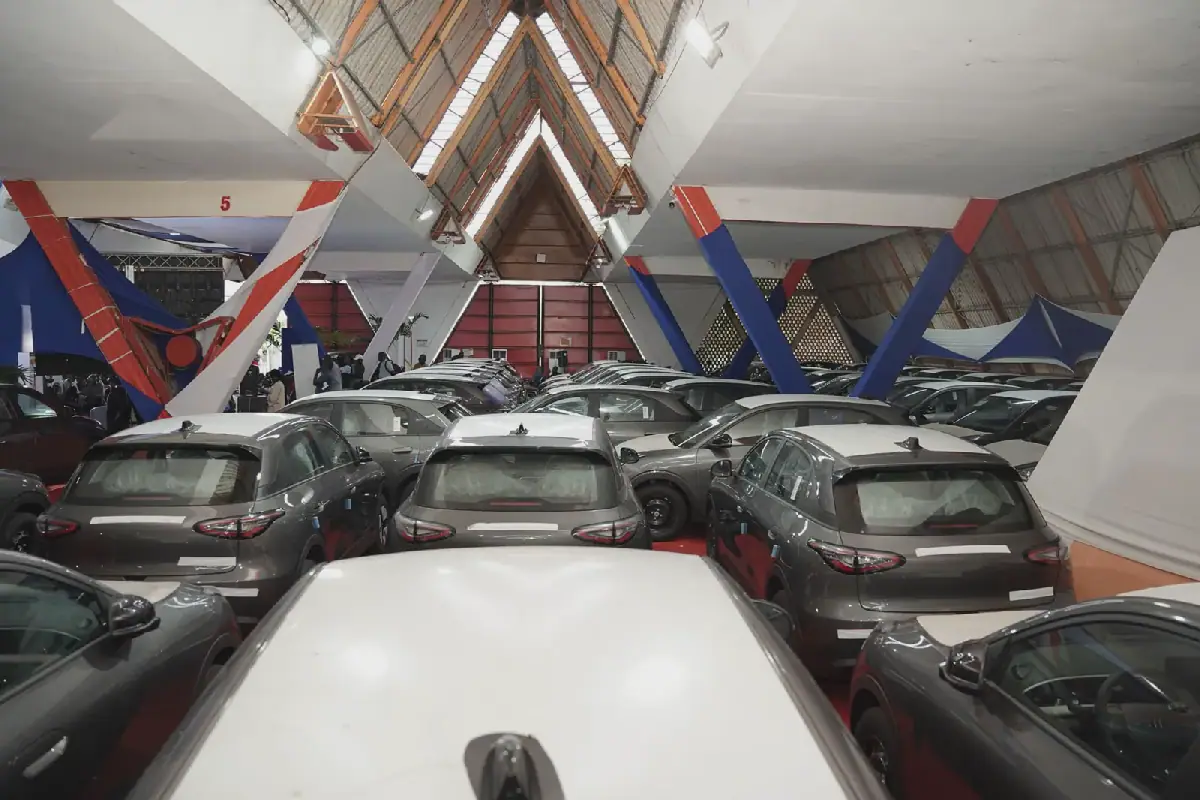
The Banque pour le commerce et l’industrie (BCI) in Senegal has partnered with the Fonds de développement des transports terrestres (FDTT) and the Office national de formation professionnelle (ONFP) to launch an electric taxi program. The program aims to deploy 1,000 electric vehicles by the first quarter of 2027, with the first 100 units being presented at the Centre international du commerce extérieur du Sénégal (CICES) in Dakar. This initiative marks a new step in Senegal's transition to cleaner mobility.
The electric taxis are EX2 Pro vehicles from the Chinese brand Geely, with a range of over 400 kilometers. They are equipped with safety features, GPS, and air conditioning. The program also includes a network of fast charging stations to support the deployment of the fleet. The vehicles are expected to reduce air pollution and noise pollution, as they do not emit direct exhaust gases or particles.
The program's economic model is based on a leasing system, allowing drivers to acquire the vehicles progressively and become owners after four years. The BCI will finance the acquisition of the vehicles and establish the necessary financial ecosystem for the program. The program aims to reduce exploitation costs, with electricity being three to five times less expensive per kilometer than fuel.
The program has already entered its recruitment and selection phase for drivers. Over 150 candidates have been evaluated, with requirements including age, experience, and a clean driving record. Selected drivers will undergo three modules of training and obtain certificates of aptitude. The program also includes a social device providing retirement coverage, health insurance, and a fixed salary.
The BCI claims that the program is aligned with Senegal's national priorities, particularly the Stratégie nationale de développement 2025-2029. The program aims to contribute to a modern, clean, and accessible mobility vision. Mbassor Sarr, technical advisor to the BCI's general director, stated that the program reflects the bank's values, including integrity, technological innovation, and social responsibility.
The program's goal is not only to renew the taxi fleet but also to promote a professional and structured framework for drivers. The BCI expects the program to create value in the long term and support the development of human capital. The launch of the first 100 electric taxis marks a significant step in transforming Senegal's urban transportation.
The program aims to expand to 10,000 vehicles by 2030, with 500 vehicles expected to be delivered by the end of 2026. The BCI and its partners are committed to supporting the growth of the electric taxi fleet and promoting cleaner mobility in Senegal.
Key points
- The program aims to deploy 1,000 electric vehicles by the first quarter of 2027.
- The electric taxis have a range of over 400 kilometers and are equipped with safety features and GPS.
- The program includes a social device providing retirement coverage, health insurance, and a fixed salary for drivers.