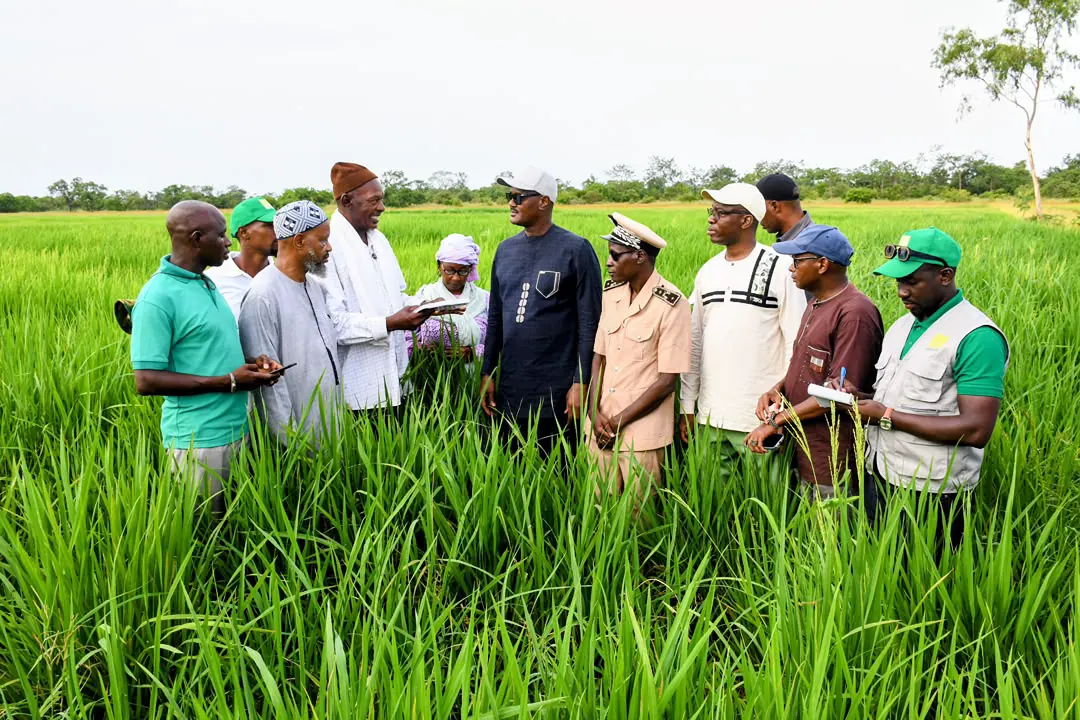
The Senegalese Ministry of Agriculture, Food Sovereignty, and Livestock (MASAE) recently conducted a tour of the country's eastern region to assess the 2026 agricultural campaign. Led by Minister Dr. Cheikhou Oumar Bâ, the delegation visited various sites in Kédougou and Tambacounda regions, meeting with local producers and stakeholders. The tour aimed to evaluate the sector's potential and address challenges posed by climate change.
In Kédougou, the delegation visited a 1,000-hectare valley and an agricultural cooperative with 81 members, including 60 women. They also inspected a 15-hectare plot dedicated to rice seed multiplication, a strategic activity for securing agricultural campaigns. The cooperative's efforts and the region's potential for agricultural development were notable, but challenges such as water management, storage, and marketing were also highlighted.
In Tambacounda, the region boasts 900,200 hectares of arable land and over 15,000 hectares of irrigable land. However, the 2026 campaign is marked by a significant deficit in rainfall, with a cumulative average of 456.71 mm as of September 18, compared to 567.26 mm during the same period in 2025. This shortage has affected crop yields, particularly for maize, rice, and fonio.
Despite these challenges, local producers, especially young people and women, remain committed to agriculture. In Sinthiou Malem, the Wouly Sandougou cooperative and Mamadou Diatta's farm in Medina Yara showcased their resilience in the face of drought. The region has seen an increase in maize and peanut cultivation, driving demand for inputs like fertilizers.
The Senegalese government has introduced initiatives to support farmers, including the distribution of inputs and equipment. Minister Dr. Bâ announced plans to deploy 500 tractors and 500 motoculters across the country's 14 regions. He also emphasized the importance of strengthening the presence of agricultural and livestock services in rural areas to better address local challenges.
The agricultural campaign in Senegal's eastern region highlights the need for sustainable solutions to climate-related challenges. The government aims to enhance the sector's resilience through the Plan Diomaye for the Senegalese Oriental region. This plan seeks to leverage agriculture as a driver of food sovereignty and economic development.
As the 2026 agricultural campaign unfolds, stakeholders stress the importance of addressing pressing concerns such as water management, access to equipment, and market opportunities. The sector's growth and sustainability depend on effective collaboration between the government, producers, and local communities.
Key points
- The Senegalese government has pledged to support farmers through initiatives like input distribution and equipment deployment.
- Climate change poses significant challenges to Senegal's agricultural sector, particularly in regions like Tambacounda.
- The agricultural campaign in Senegal's eastern region highlights the potential for growth and development, but also underscores the need for sustainable solutions to climate-related challenges.