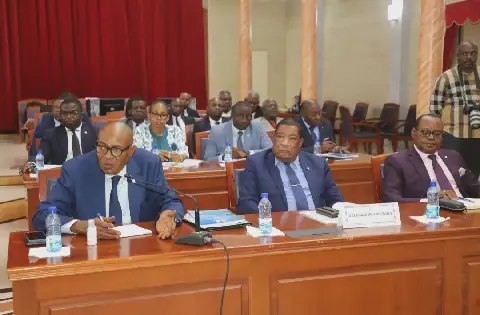
A workshop aimed at making education a cornerstone of climate resilience took place in Dakar, Senegal, on November 17, 2026. The event was organized by the Coalition of organizations in synergy for the defense of public education. Representatives from civil society organizations, technical and institutional partners of the state, and education stakeholders attended the meeting. The discussions centered on the impact of climate change on school infrastructure.
The workshop is part of a transnational project focused on environmental education and sustainable development, funded by Education Out Loud, a fund of the Global Partnership for Education. The project's goal is to equip students with the knowledge and skills necessary to address environmental challenges. Participants reviewed the current state of environmental education in Senegal and explored ways to integrate it into the national curriculum.
Moustapha Guirassy, Minister of National Education, emphasized the need for education stakeholders to adapt their approaches to the local context and realities. He encouraged participants to ensure that environmental education initiatives achieve their objectives and to implement the recommendations made during the workshop. The minister's call to action underscored the importance of collective effort in promoting climate resilience through education.
The workshop provided a platform for stakeholders to share experiences and expertise in environmental education. Participants discussed the consequences of climate change on school infrastructure, including damage to buildings, disruption of educational activities, and impact on student health. They also explored strategies for mitigating these effects and promoting sustainable development.
Education Out Loud, a fund of the Global Partnership for Education, has been supporting initiatives aimed at improving education outcomes in countries vulnerable to climate change. The fund's support for the transnational project on environmental education and sustainable development reflects its commitment to promoting climate-resilient education systems. By investing in education, the fund aims to empower students to become agents of change in their communities.
The integration of environmental education into the national curriculum is seen as a critical step towards building a climate-resilient society in Senegal. By equipping students with knowledge and skills on environmental sustainability, the education sector can play a vital role in promoting sustainable development. The workshop's outcomes are expected to inform policy decisions and shape the future of environmental education in Senegal.
The next steps for the project include the implementation of the recommendations made during the workshop. Education stakeholders will work together to develop and integrate environmental education modules into the national curriculum. The project's success will depend on the collaboration and commitment of all stakeholders involved, including government agencies, civil society organizations, and education institutions.
Key points
- The Senegalese government and its partners are working together to integrate environmental education into the national curriculum as part of a broader effort to build climate resilience.
Reporting sources
- Des organisations décident de faire de l’éducation un pilier de la résilience climatique · Agence de presse sénégalaise