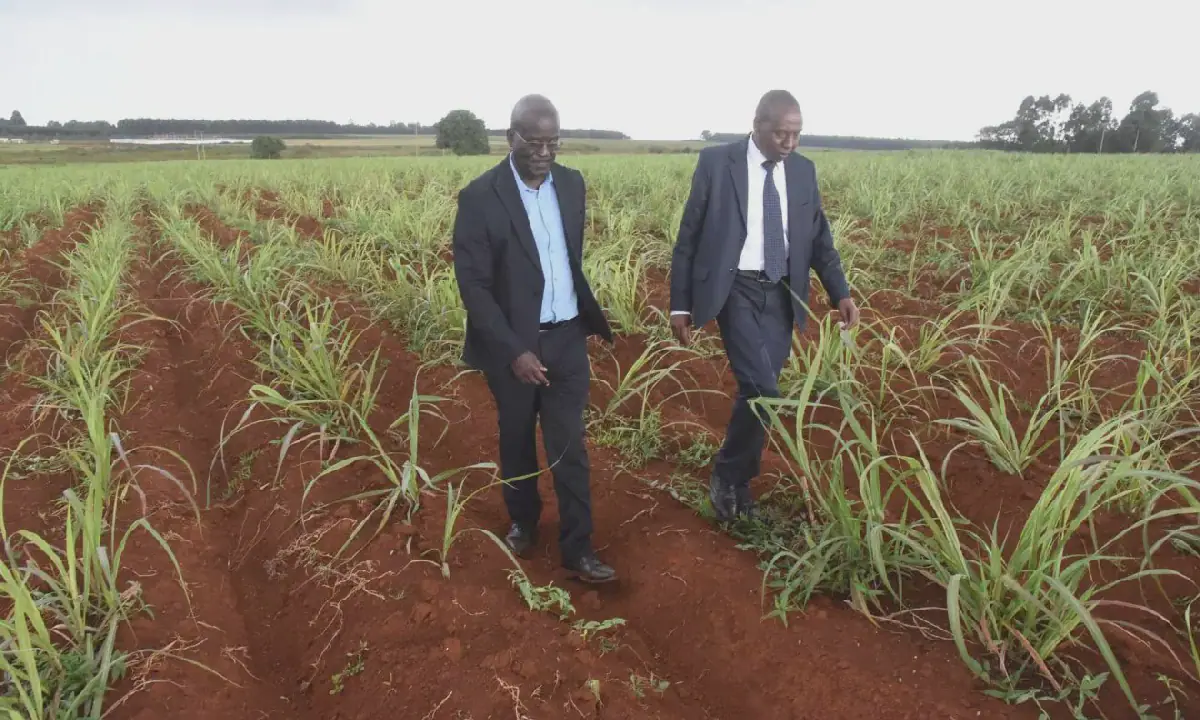
Moi University, facing significant financial challenges, has initiated a sugarcane farming project to generate additional revenue and decrease its dependence on government allocations. The university has already planted sugarcane on 750 acres and plans to expand to 1,500 acres. The project, costing Sh105 million, aims to utilize the university's vast land to create a new source of income, support academic activities, and provide employment opportunities for local residents.
The university's Deputy Vice-Chancellor, Prof Kiplagat Kotut, stated that they have decided to utilize their land resources to generate income instead of relying solely on government allocations. "Our main goal is to ensure the university can operate without financial difficulties. To achieve this, we must generate sufficient funds through our projects," Prof Kotut said. The university has approximately 3,000 acres of land and plans to use nearly half of it for sugarcane farming to address financial challenges while supporting agriculture and engineering studies.
The university is collaborating with West Kenya Sugar Company, which provides expertise and advice on crop management. The company will also purchase the sugarcane when it matures and is harvested. The farm manager, Tobias Okeno, stated that the cost of preparing and planting one acre is estimated to be Sh70,000, although this may vary depending on weather conditions and farm environment. Eight types of sugarcane that mature at different times have been planted on the 750 acres to determine which varieties are most suitable for the area.
The university expects to harvest an average of 40 tons of sugarcane per acre. At the current price of Sh5,500 per ton, this could generate approximately Sh220,000 per acre in revenue, before deducting production and operating costs. In addition to generating revenue, the project has already started providing job opportunities for local residents and students. Prof Kotut stated that hundreds of residents have been employed in sugarcane planting and weeding activities, while students have also been given the opportunity to work on the farm and get paid.
The university plans to expand its commercial farming activities by establishing coffee and tea farms, as well as projects for apples and avocados. The apple project was initiated in May 2021 on approximately 100 acres. The university is also conducting research on various apple varieties, including the MUA52, which Prof Kotut stated is being cultivated by the institution. Another apple harvest is expected in February next year, although changes in weather patterns have affected the harvest schedule.
In the case of avocados, the university is collaborating with Safaricom. According to Okeno, the first avocado seedlings were planted in November last year, and additional seedlings were planted in March this year. The university's collaboration with West Kenya Sugar Company and other partners aims to improve its financial sustainability and create new opportunities for students and local residents.
The sugarcane farming project is one of several initiatives by Moi University to address its financial challenges and improve its operations. The university's efforts to diversify its revenue streams and reduce its reliance on government funding are expected to have a positive impact on its financial sustainability and ability to provide quality education to its students.
Key points
- Moi University has started large-scale sugarcane farming on 750 acres, with plans to expand to 1,500 acres, to generate additional revenue and reduce its reliance on government funding.
Reporting sources
- Ni kubaya: Chuo Kikuu cha Moi chageukia kilimo cha miwa kujimudu kifedha · taifaleo.nation.co.ke