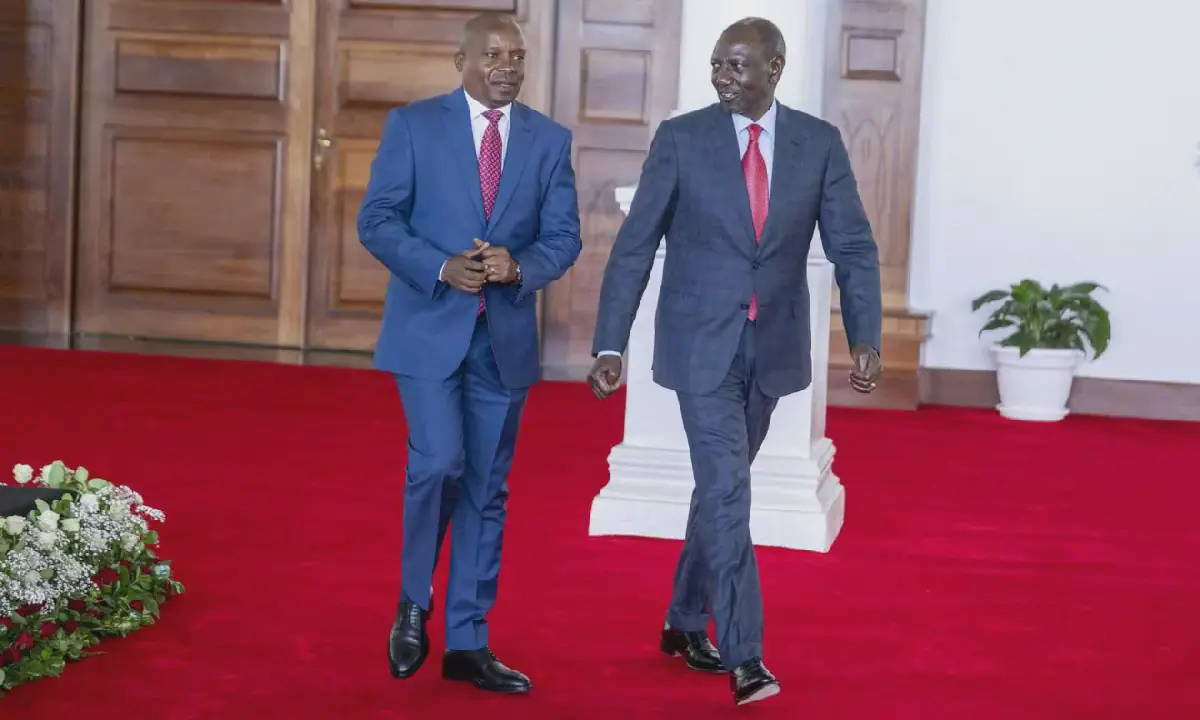
Kenyan President William Ruto is set to deliver his fourth State of the Nation address to a joint session of the National Assembly and Senate on November 18, 2026. The address comes at a time when his government is facing significant challenges, including a high national debt, rising cost of living, and unemployment among the youth. The speech is expected to highlight the government's achievements and provide answers to the challenges facing citizens.
According to the Parliamentary Budget Office (PBO), the government has limited fiscal space to implement its plans due to the heavy burden of debt. The PBO's report on budget options for the 2027/28 financial year indicates that the ordinary budget is expected to be Sh5.3 trillion, with Sh1.5 trillion allocated to debt repayment alone. This amount is more than double the funds allocated to development projects. The national debt has reached Sh13.1 trillion, with the government recording a revenue shortfall of Sh60.2 billion as of June 2026.
The address comes eight months before the August 2027 general election, and President Ruto is expected to outline his government's achievements and respond to the challenges facing citizens. Experts, including governance expert Barasa Nyukuri, say the speech will be a test of the government's performance, particularly in comparison to its economic promises and major projects. Nyukuri notes that the President needs to explain how he plans to address youth unemployment, university funding, election preparations, national debt, and the cost of living.
Other issues expected to be addressed in the speech include the affordable housing plan, healthcare funding challenges, and security following kidnapping incidents. The President is also expected to provide updates on his 10-year reform plan worth Sh5 trillion, announced in November 2025. The plan includes constructing 50 large dams, expanding irrigation farming, and building 28,000 kilometers of roads.
The PBO report notes that despite efforts to strengthen the economy, growth has not reached the required level. The report warns that debt repayment is reducing funds available for other services and projects. In light of this, the PBO advises the government to prioritize efficient spending rather than launching large-scale projects that require significant funding.
Finance Minister John Mbadi has announced that the government has established the National Infrastructure Fund (NIF), aimed at funding projects without relying on new loans. The fund has an initial capital of Sh310.6 billion, including Sh104 billion from the sale of Kenya Pipeline Company (KPC) shares and Sh206 billion expected from the reduction of government shares in Safaricom. However, the High Court's decision to nullify the sale of a 15% stake in Safaricom has raised concerns about the availability of these funds.
Governance expert Nyukuri notes that citizens expect direct answers on issues such as employment, corruption, and taxation, rather than promises of long-term projects. He says the main challenge for President Ruto is to convince Kenyans that government investments are translating into tangible improvements in their daily lives before the 2027 elections. The success of the affordable housing plan, according to the PBO, will depend on the speed of selling completed houses to fund the construction of others.
Key points
- President Ruto's address is expected to provide answers to the challenges facing citizens, including youth unemployment and the high cost of living.
- The government is facing limited fiscal space due to a heavy debt burden, with the national debt reaching Sh13.1 trillion.
- The President's 10-year reform plan worth Sh5 trillion includes major infrastructure projects, such as constructing 50 large dams and building 28,000 kilometers of roads.
Reporting sources
- Rais Ruto kwenye mizani akihutubia Bunge kuhusu hali ya taifa · taifaleo.nation.co.ke