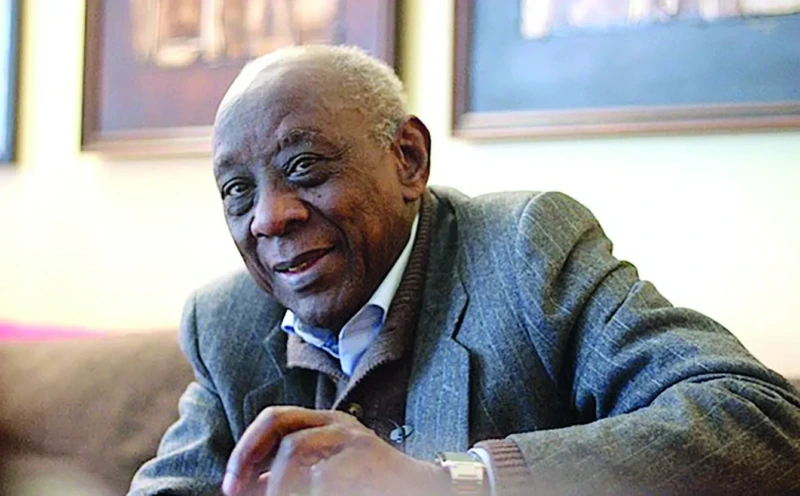
The Senegalese literary community is in mourning following the passing of Cheikh Hamidou Kane, a celebrated writer and intellectual who traversed nearly a century with elegance and intellectual curiosity. Born in 1928 in Matam, Senegal, Kane's life was marked by a rich and diverse journey, from his early education in the Fouta to his later years in prominent French universities. His work continues to resonate with readers, inviting reflection on the intersection of tradition and modernity.
Kane's seminal work, "L'Aventure ambiguë," published in 1961, introduced the character of Samba Diallo, a young man grappling with the complexities of identity and cultural heritage in the face of Western influence. Through Samba's story, Kane explored the universal theme of navigating multiple systems of thought and the quest for self-discovery. The novel has become a classic of African literature, transcending its time to speak to successive generations about the challenges of embracing modernity without losing one's roots.
The impact of Kane's work extends beyond literature, influencing discussions on education, cultural identity, and the role of technology in shaping the future. His legacy is particularly relevant in today's digital age, where young Africans are navigating the complexities of the internet, social media, and artificial intelligence. Kane's exploration of how to engage with external knowledge without compromising one's identity remains a pressing concern for contemporary society.
The renaming of the former Virtual University of Senegal to Université numérique Cheikh Hamidou Kane is a testament to his enduring influence. This institution, dedicated to digital education and distance learning, embodies Kane's vision of making knowledge accessible without necessitating physical displacement. By bridging geographical divides, it symbolizes the potential for technology to democratize access to education and empower individuals across Senegal and beyond.
Kane's message to the youth of the Fouta, his native region, is one of empowerment and pride. He demonstrated that it is possible to achieve greatness without severing ties to one's origins. His life story serves as a powerful example of how to balance the pursuit of global knowledge with a deep connection to one's cultural heritage. This balance, Kane suggests, is crucial for personal and communal development.
As Senegal and the world at large remember Cheikh Hamidou Kane, his work continues to pose essential questions about the future of education, cultural identity, and technological advancement. His literary legacy challenges readers to consider how to harness the benefits of modernity while preserving the essence of their humanity. Kane's contributions to African literature and thought have left an indelible mark, inspiring future generations to explore, innovate, and dialogue with the world.
The renaming of the university serves as a fitting tribute to Kane's memory, linking the past with the future and traditional knowledge with digital innovation. As the world evolves, Kane's work reminds us of the importance of engaging with multiple cultures and ideas while staying true to oneself. His departure leaves a void, but his ideas and legacy will continue to inspire and guide.
Key points
- Cheikh Hamidou Kane's work continues to influence discussions on identity, culture, and modernity.
- The renaming of the Virtual University of Senegal to Université numérique Cheikh Hamidou Kane reflects his vision for accessible education.
- Kane's legacy challenges future generations to balance modernity with cultural heritage.