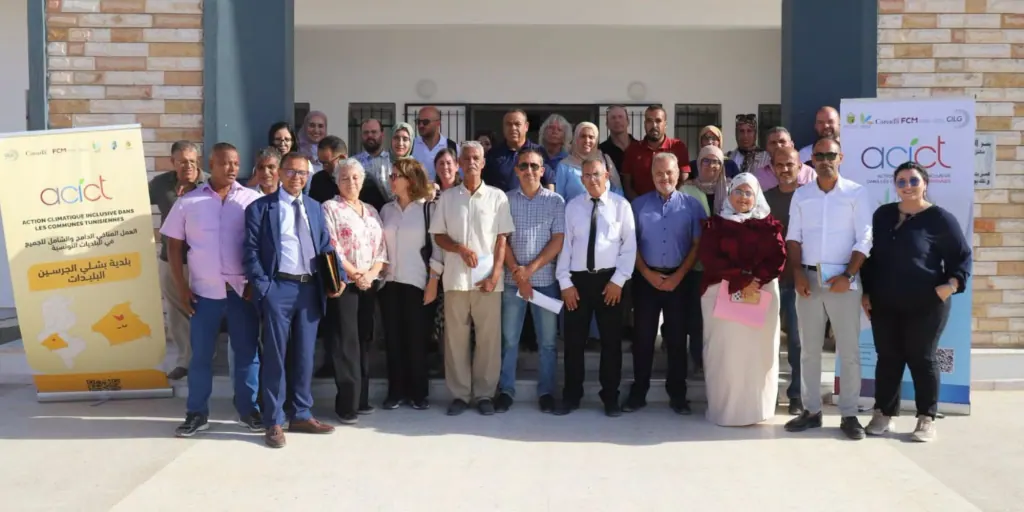
The Canadian Embassy in Tunisia recently participated in a visit to several Tunisian municipalities, including Bargou, Rahal, and Bchelli-Jercine-Blidette, as part of the Inclusive Climate Action in Tunisian Municipalities (ACICT) project. This project aims to support local communities in developing and implementing climate change adaptation strategies. The visit was conducted in collaboration with the Tunisian Ministry of Interior, the Federation of Canadian Municipalities (FCM), and CILG VNG International.
The ACICT project focuses on knowledge sharing, peer learning, and co-construction of solutions tailored to local realities. Through field visits, workshops, and exchanges between Tunisian and Canadian experts, participants explored concrete solutions to address climate-related challenges. These challenges include heatwaves, water scarcity, forest fires, and heavy rainfall and flooding events. By working together, municipalities in Tunisia and Canada can learn from each other's experiences and strengthen the resilience of their territories.
The ACICT project is supported by the Canadian government and implemented by the FCM and CILG VNG, in partnership with the Tunisian Ministry of Interior and Ministry of Environment. This collaboration enables the sharing of expertise and best practices in addressing climate change. The project also aims to foster cooperation between Canadian and Tunisian municipalities, promoting the development of sustainable and resilient communities.
The visit to the Tunisian municipalities marked an important milestone in the development of local climate adaptation projects. Participants gained a deeper understanding of the specific needs and challenges faced by each community. By working together, Canadian and Tunisian experts can develop effective solutions to address these challenges and promote sustainable development.
Climate change poses significant challenges to local communities worldwide, including those in Tunisia and Canada. Rising temperatures, changing precipitation patterns, and increased frequency of extreme weather events require immediate attention and action. The ACICT project provides a platform for municipalities to share knowledge, expertise, and experiences in addressing these challenges.
The Canadian Embassy in Tunisia played a key role in facilitating the visit and collaboration between Canadian and Tunisian stakeholders. This effort reflects the Canadian government's commitment to supporting climate change mitigation and adaptation efforts in partner countries. The ACICT project is a testament to the strong bilateral relationship between Canada and Tunisia.
The ACICT project has made significant progress in promoting cooperation and knowledge sharing between Canadian and Tunisian municipalities. By continuing to work together, these communities can develop effective strategies to address climate-related challenges and build more resilient and sustainable futures. The project's success will depend on the continued collaboration and commitment of all stakeholders involved.
Key points
- The ACICT project aims to support local communities in developing and implementing climate change adaptation strategies.
- The project focuses on knowledge sharing, peer learning, and co-construction of solutions tailored to local realities.
- The collaboration between Canadian and Tunisian municipalities promotes the development of sustainable and resilient communities.