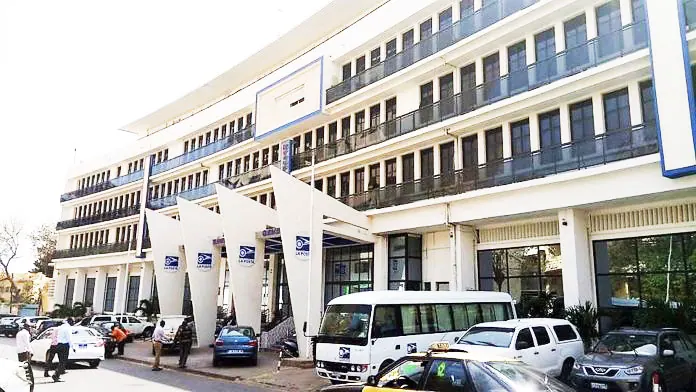
The National Post Workers' Union (SNTP) has strongly denounced the Senegalese government's decision to withdraw the payment of family security allowances from La Poste, a service that has long been provided by the public enterprise. This measure, effective since October 1, 2026, has been transferred to Mobile Money operators, a decision that unionists describe as "incomprehensible and destructive".
According to Ahmed Diouf, Secretary General of the SNTP, this decision contradicts the commitments made by the government during the Interministerial Council dedicated to the relaunch of La Poste, held on September 1, 2025. On that day, fifteen measures were adopted for the recovery of the company, including the priority allocation of state mass payments to La Poste.
The SNTP considers this decision to be unacceptable, as it deprives the company of crucial revenue and further jeopardizes its cash flow, putting at risk the jobs of thousands of postal workers. The union recalls that La Poste has a network of over 250 offices across the national territory, a network that allows it to make payments closest to the beneficiary populations of social programs.
The Secretary General of the SNTP believes that this "about-face demonstrates a deliberate will to suffocate La Poste du Sénégal, in total contradiction with the official speeches on economic sovereignty and the safeguarding of national companies". This controversy occurs while La Poste is going through a deep multidimensional crisis.
The company's situation is characterized by heavy debt, cumulative losses exceeding a hundred billion, largely negative equity, client account deficits, and outdated infrastructure. The recovery plan adopted in September 2025 provided for a recovery phase from 2025, with recapitalization, control of staff, clearance of debts, and valorization of land heritage.
For the SNTP, coherence requires that the State respects its own orientations. "We are not claiming any privilege. We are claiming coherence with the announced orientations for the recovery of La Poste", insists Ahmed Diouf, adding that the withdrawal of payment of allowances constitutes a significant loss, while the company is facing structural financial difficulties.
The transfer of the device to private operators raises questions among staff about the state's true willingness to save its public company. For thousands of postal workers, the question remains: how to relaunch a company from which its most strategic sources of revenue are simultaneously being withdrawn?
Key points
- The Senegalese government's decision to withdraw payment of family security allowances from La Poste has sparked criticism from the National Post Workers' Union.
- The decision contradicts the government's commitments to relaunch La Poste, adopted during the Interministerial Council on September 1, 2025.
- The controversy occurs while La Poste is going through a deep multidimensional crisis, characterized by heavy debt, cumulative losses, and outdated infrastructure.