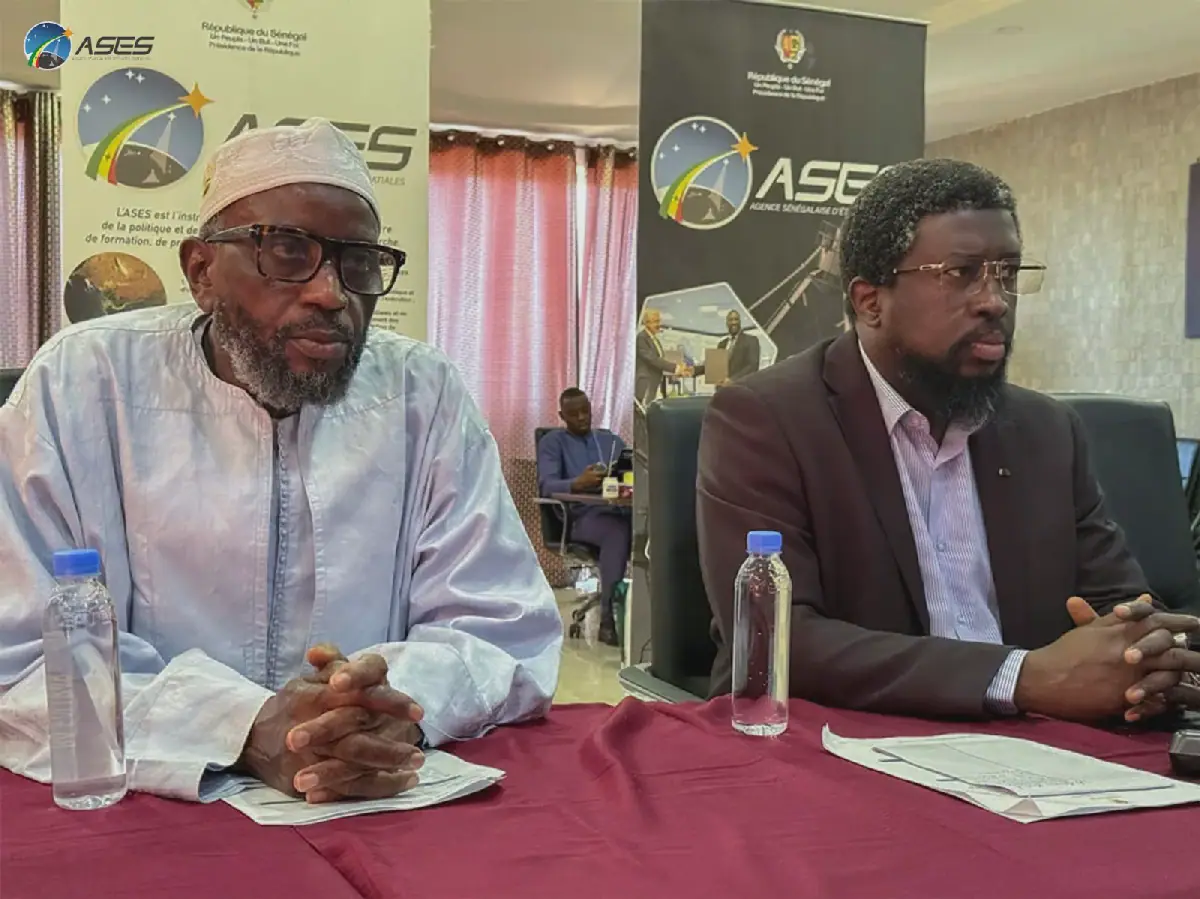
The Senegalese government has stressed the need for the country to become a space-faring nation, with space sciences at the forefront of its development agenda. A national workshop on "Space Sciences, Media, and Society" was held in Toubab Dialaw from October 26 to 28, bringing together journalists and imams to discuss the applications and benefits of space technologies. The workshop aimed to enhance participants' understanding of the sector's potential and its relevance to citizens' daily lives.
Maram Kairé, Director of the Senegalese Space Studies Agency (ASES), emphasized that making Senegal a space-faring nation requires a collective effort beyond specialized agencies. He noted that the country's ambition to leverage space sciences for development must be driven by the entire population, with media playing a strategic role in disseminating information and promoting awareness. By equipping journalists with reliable information and adapted tools, they can effectively communicate the benefits and applications of space technologies to the public.
The Senegalese government envisions space sciences as a tool for driving economic and social development, with various sectors set to benefit from space technologies. These include agriculture, livestock, fishing, territorial planning, transportation, healthcare, education, and security. Space data and technologies can support disaster prevention, soil management, telemedicine, and maritime surveillance, among other applications. The government aims to integrate space applications into the national economy to foster innovation, job creation, and growth.
The ASES is working on several projects to develop Senegal's space capabilities, including the establishment of an astronomy and astrophysics research observatory, a micro- and nanosatellite assembly center, and a satellite constellation for maritime surveillance and border control. These initiatives are part of a broader strategy to position Senegal as a player in the international space arena, with a focus on cooperation and knowledge sharing.
Senegal's participation in international space initiatives, such as the Artemis Accords, is a key aspect of its strategy. By joining the accords in July 2025, Senegal aims to strengthen its scientific and technical competencies, with opportunities for collaboration, training, and capacity building. The country seeks to be an active participant in the global space community, rather than just a spectator.
The national workshop on space sciences, media, and society is part of a broader effort to promote awareness and understanding of space technologies among various stakeholders. By engaging journalists, imams, and other sectors of society, the government aims to build a broad coalition of support for Senegal's space ambitions. This approach recognizes the importance of inclusive and participatory development, with space sciences as a key driver of progress.
As Senegal continues to develop its space capabilities, the government is committed to leveraging space sciences for the benefit of its citizens. With a focus on practical applications, international cooperation, and capacity building, the country is poised to make significant strides in the space sector. The emphasis on space sciences for development reflects a broader vision for Senegal's future, with a strong emphasis on innovation, growth, and progress.
Key points
- The Senegalese government aims to make the country a space-faring nation, leveraging space sciences for economic and social development.
- The national workshop on space sciences, media, and society aims to promote awareness and understanding of space technologies among various stakeholders.
- Senegal's participation in international space initiatives, such as the Artemis Accords, is a key aspect of its strategy to strengthen its scientific and technical competencies.