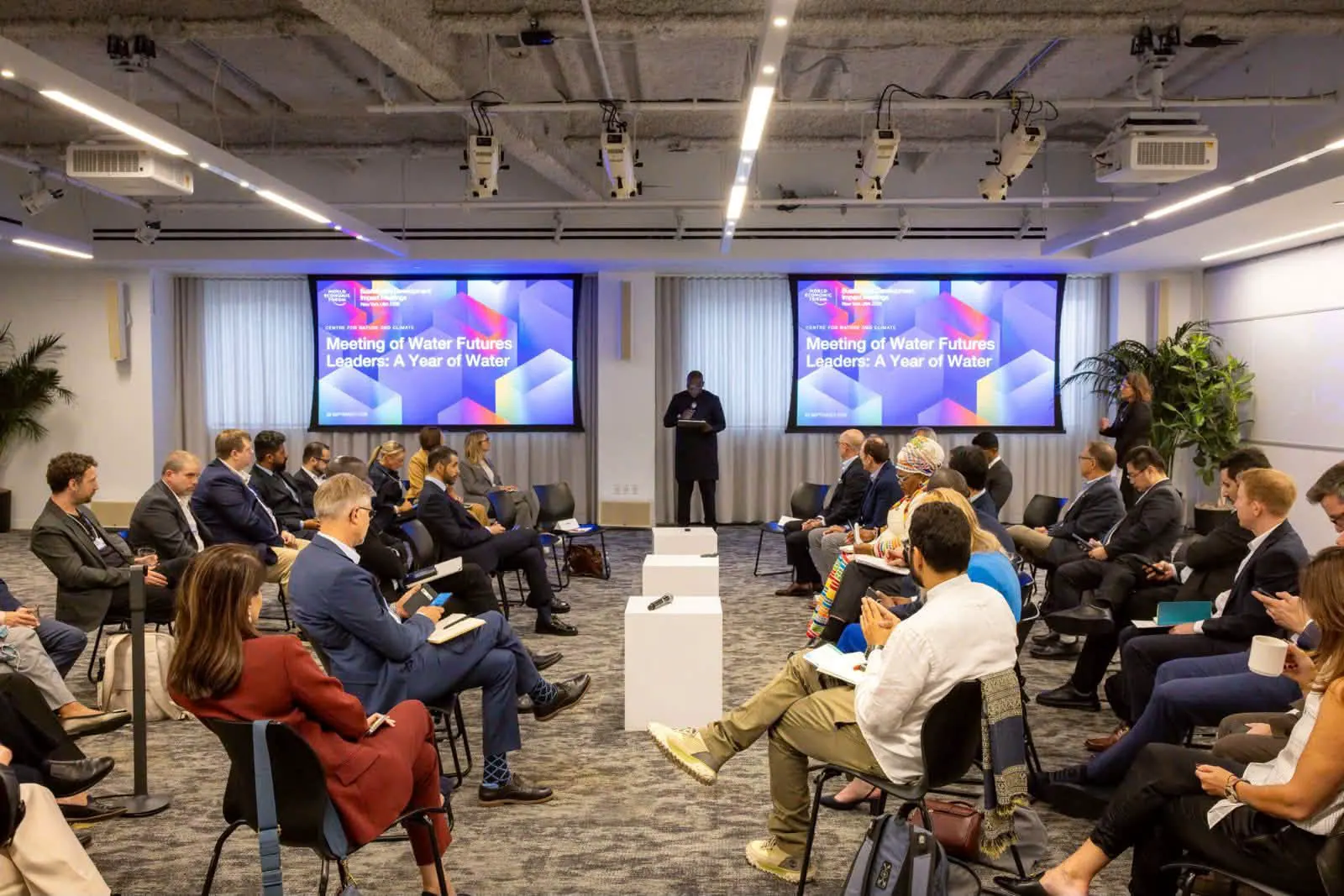
On September 24, 2026, Senegal made a significant push for global cooperation on water security and sustainable development at the 81st session of the United Nations General Assembly in New York. The country's Minister of Hydraulics and Sanitation, Dr. Cheikh Tidiane Dieye, represented President Bassirou Diomaye Faye at a high-level panel discussion on investing in water in Africa. The panel, chaired by Namibian President Netumbo Nandi-Ndaitwah, brought together several heads of government, African ministers, and institutional leaders to discuss financing for the water sector.
Senegal's participation in the high-level panel discussion underscored the country's commitment to elevating water as a priority in multilateral diplomacy. Dr. Dieye emphasized the need for increased mobilization of financing and investments to ensure access to water resources and their sustainable management. This approach is crucial for enhancing water security, building resilience to climate change, and promoting sustainable development on the continent. The Senegalese government's stance aligns with its broader strategy to address the challenges of water scarcity and climate change.
The push for a more robust global response to water-related challenges is part of Senegal's ongoing diplomatic efforts. Earlier, at the World Economic Forum, Dr. Dieye, who also chairs the African Ministers' Council on Water (AMCOW), highlighted the growing economic dimension of water issues. He called for accelerated mobilization of capital, strengthened partnerships, and scaled-up innovative solutions to address the pressing challenges in the water sector. This approach aims to foster a genuine "water economy" that can meet the needs of populations while anticipating the impacts of climate change and demographic growth.
Senegal's advocacy for water cooperation gains momentum as the country co-organizes the 2026 United Nations Water Conference with the United Arab Emirates. This major event aims to accelerate progress toward Sustainable Development Goal 6 (SDG 6), which focuses on universal access to safe drinking water and sanitation by 2030. Through its diplomatic engagement in New York, Dakar seeks to firmly establish water issues on the international agenda, focusing on climate, development financing, and resilience.
The upcoming UN Water Conference represents a critical opportunity for Senegal to advance its agenda on water governance and cooperation. By championing sustainable water resource management and collective responses to water access and climate adaptation challenges, Senegal aims to contribute to a more inclusive and resilient development model. This proactive approach reflects the country's commitment to effective water diplomacy as a vital component of its international action.
As the international community prepares for the UN Water Conference, Senegal's efforts underscore the importance of integrating water issues into broader development and climate discussions. The country's initiatives aim to ensure that water security and sustainable management are recognized as essential components of global cooperation on development and climate resilience. This approach acknowledges the intricate links between water, climate change, and sustainable development.
Senegal's push for global cooperation on water issues reflects its ambition to play a leading role in shaping the international water agenda. By emphasizing the need for collective action and sustainable solutions, Dakar seeks to contribute to a more water-secure and resilient future for all. The country's diplomatic efforts will continue to focus on fostering partnerships, mobilizing resources, and promoting innovative solutions to address the complex challenges in the water sector.
Key points
- Senegal urges global cooperation on water security and sustainable development at the UN General Assembly.
- The country co-organizes the 2026 UN Water Conference to accelerate progress toward SDG 6.
- Senegal champions sustainable water resource management and collective responses to water access and climate adaptation challenges.