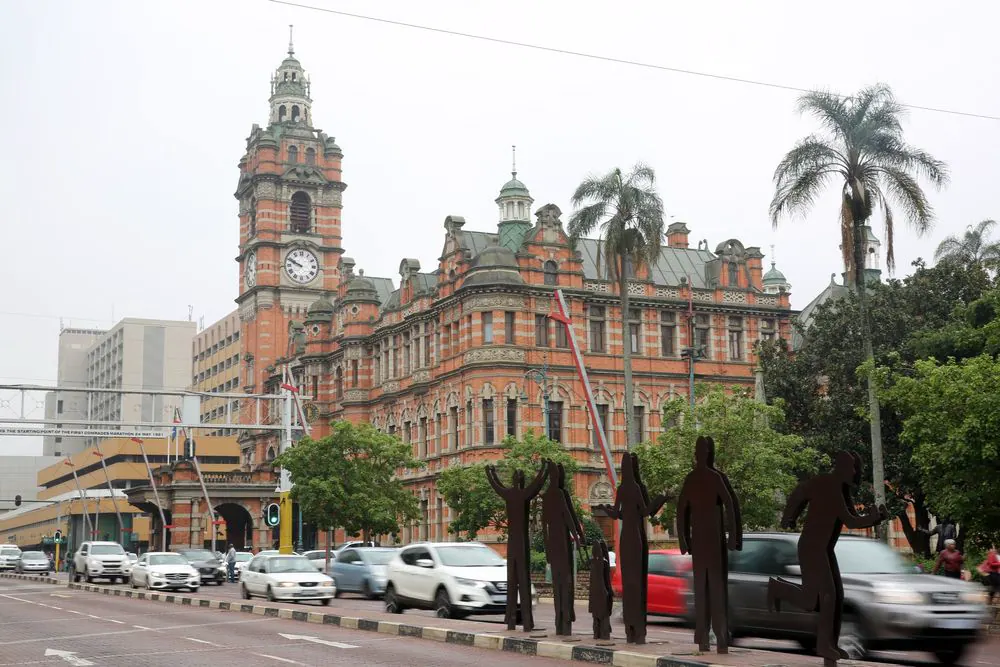
South Africa's Parliamentary standing committee on public accounts, Scopa, has announced plans to intensify its oversight of local municipalities to improve financial accountability and service delivery. The committee is concerned about the lack of consequences for wrongdoing and will scrutinize the role of provincial governments and municipal public accounts. Scopa has identified two municipalities, Msunduzi in KwaZulu-Natal and Masilonyana in the Free State, which face operational, governance, and financial crises.
Both municipalities experience revenue collection challenges, mounting debt burdens, and non-compliance with supply chain management regulations, resulting in increased unauthorized, irregular, fruitless, and wasteful expenditure. The committee's report notes that operational delivery is crippled by crumbling infrastructure, leading to utility distribution losses in water and electricity. Additionally, both municipalities exhibit significant human resource vulnerabilities, including prolonged leadership vacancies and staff non-compliance with minimum qualification requirements.
Msunduzi's audit outcomes for the 2024/25 financial year improved from previous years, but significant issues persist regarding performance reporting, compliance, financial management, and infrastructure delivery. The Auditor-General of South Africa reported that despite spending 88% of its budget, the municipality achieved only 57.9% of its basic service delivery targets. The municipality failed to meet key service delivery targets, including repairing mainline bursts and resolving sewer blockages.
The municipality incurred fruitless and wasteful expenditure of R114.060 million in the 2024/25 financial year, up from R25m the previous year. The main contributors were interest charged on late payments, mostly to Eskom and Umngeni Water, and overpayments to senior officials and employees. Scopa expressed concerns about the municipality's failure to conclude disciplinary cases timeously, with employees remaining on paid suspensions for extended periods or resigning before disciplinary hearings.
The committee also heard that disciplinary and forensic investigations faced severe delays due to death threats and intimidation directed at investigators and presiding officers. To address this, the municipality turned to external panels and investigators to run disciplinary proceedings. In the case of Masilonyana, Scopa concluded that the municipality is characterized by severe administrative dysfunction, poor record-keeping, and financial instability.
The committee noted that the problems it identified in May were the same as those found by its predecessor in August 2022. The municipality was placed under administration in February due to governance failures, financial distress, and inability to fulfil statutory service delivery obligations. Scopa found serious weaknesses in governance, financial management, service delivery, record-keeping, project management, revenue collection, supply chain management, and consequence management.
Scopa's oversight visits to the two municipalities highlight the need for strengthened financial accountability and service delivery in local governments. The committee's findings and recommendations aim to address the systemic challenges facing municipalities and ensure that they are able to deliver essential services to their communities. The municipalities' failures have significant implications for the communities they serve, emphasizing the need for effective governance and management.
Key points
- Scopa to intensify oversight of local municipalities to improve financial accountability and service delivery
- Msunduzi and Masilonyana municipalities face operational, governance, and financial crises
- Municipalities experience revenue collection challenges, mounting debt burdens, and non-compliance with supply chain management regulations