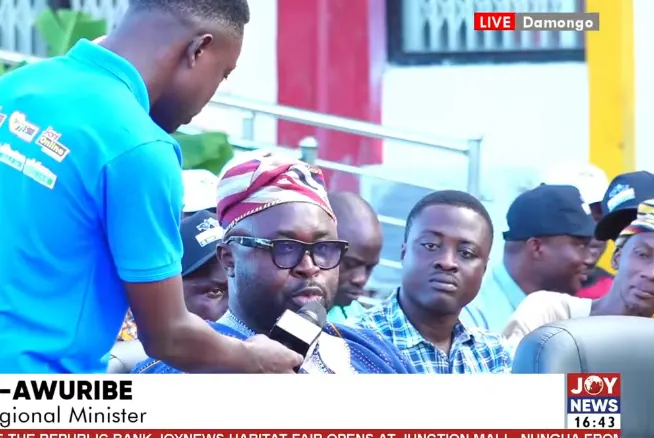
Savannah Regional Minister Salisu Be-Awuribe has urged Ghana to establish clear rules to distinguish between vote-buying and genuine acts of generosity. He made this statement in Damongo while speaking to JoyNews. According to him, Ghana must define what constitutes an electoral offence. The Minister, who also chairs the Savannah Regional Security Council, stated that he had heard allegations of vote-buying but had not personally witnessed the practice.
Mr Be-Awuribe acknowledged that Ghana's electoral laws prohibit acts intended to influence voters. He referred to provisions under the Representation of the People's Law, 1992 (PNDCL 284), which prohibit attempts to induce a person to vote, refrain from voting, or influence another person's electoral decision. He emphasized that politicians and community members often engage in exchanges that may not necessarily have an electoral motive.
The Minister cited an example from his experience as a Regional Minister. He recounted visiting a community and receiving gifts as a gesture of appreciation, which may not necessarily amount to an attempt to influence an electoral decision. He explained that such gestures could be interpreted differently if the intent behind them was made explicit. According to him, the behaviour of politicians and prospective candidates could also influence how communities interpret their actions.
Mr Be-Awuribe noted that when someone who was previously not known for regularly visiting communities or providing assistance suddenly changes their behaviour, people may interpret the change as an indication that the person intends to contest an election. He stated that such a person could suddenly become more generous or more involved in the affairs of a community. This change in behaviour could lead to allegations of vote-buying.
The Minister was asked whether paying the school fees of a constituent's child, settling a person's medical bill, or providing other forms of assistance could amount to vote-buying when the beneficiary is a potential voter. He replied that Ghana needed clear and practical guidelines on the issue. According to him, there were instances where people provided financial assistance while pursuing political ambitions, but stressed the need to clearly identify which actions should be considered prohibited.
Mr Be-Awuribe emphasized that the issue could not simply be determined by examining one isolated act. Instead, he said there should be clear standards to determine whether an action amounts to an attempt to influence an election, with a practical distinction between legitimate community support and conduct intended to induce voters. He also stressed that conduct prohibited by electoral law could have legal consequences.
The Savannah Regional Minister's comments come amid growing discussions about vote-buying and the use of money and other forms of assistance in Ghanaian politics. For him, the key issue is not simply whether politicians or individuals give money or other items to people, but whether such acts are intended to influence electoral choices. His call for clear guidelines is a significant step towards addressing the issue of vote-buying in Ghana.
Key points
- Savannah Regional Minister Salisu Be-Awuribe calls for clear guidelines to distinguish between vote-buying and genuine acts of generosity.
- Ghana's electoral laws prohibit acts intended to influence voters, but there is a need for clear standards to determine what constitutes an electoral offence.
- The Savannah Regional Minister emphasizes that conduct prohibited by electoral law could have legal consequences.