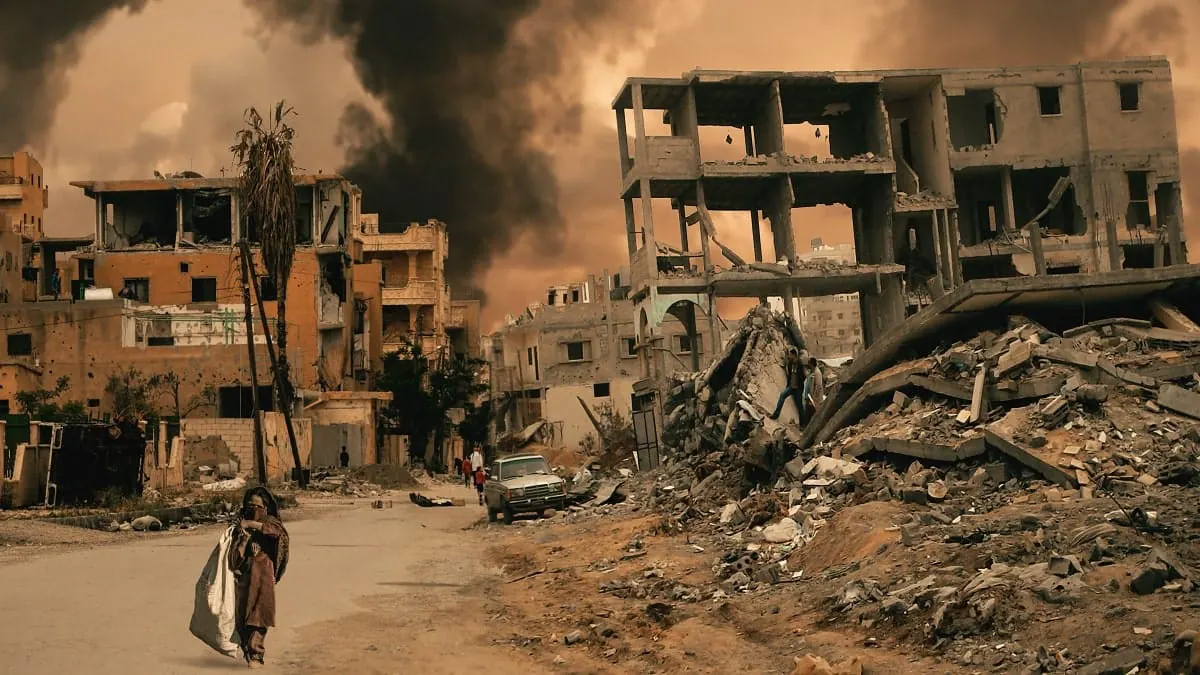
Recent satellite images obtained from Google Earth have revealed the devastating impact of Israel's military operations in Gaza. The images, which compare the area in May 2022 with its condition in 2026, show widespread destruction, with entire neighborhoods reduced to rubble and infrastructure severely damaged. The images have been shared widely on social media, with over seven million views on X, a platform formerly known as Twitter.
The satellite images, updated in June, provide a visual representation of the transformations in Gaza between 2023 and 2026. They show that areas such as Tal al-Sultan in western Rafah have been almost completely destroyed, with only a few buildings remaining standing. Similar destruction is visible in eastern Jabaliya, where dense urban areas have given way to expanses of sand and debris.
The destruction is not limited to residential areas, with critical infrastructure such as hospitals, schools, and water and sanitation facilities also severely damaged. According to the United Nations Children's Fund (UNICEF), nearly 95% of schools in Gaza had been damaged or destroyed by the end of 2025. The healthcare sector has also been severely impacted, with less than half of hospitals and less than 38% of primary care centers still partially functional.
The economic and social costs of the destruction are staggering, with estimated losses of $22.7 billion and physical damage of $35.2 billion, according to a report by the World Bank, the UN, and the European Union. The total impact is estimated at nearly $58 billion. The report also notes that reconstruction and recovery efforts will require $71.4 billion over the next decade, with $26.3 billion needed in the first 18 months.
The destruction in Gaza has been described as "genocidal" by some critics, who argue that Israel's military operations have gone beyond legitimate military targets and have caused widespread harm to civilians and infrastructure. Israel has argued that its operations were aimed at dismantling Hamas infrastructure and eliminating militants, but the scale of destruction has raised questions about the proportionality of its actions.
The international community has been criticized for its response to the crisis, with some arguing that Western powers have been complicit in or have turned a blind eye to Israel's actions. The destruction in Gaza has sparked widespread outrage and calls for greater accountability. The images from Google Earth provide a stark visual reminder of the devastating impact of conflict on civilians and infrastructure.
The situation in Gaza remains dire, with over a million people displaced and in need of humanitarian assistance. The international community continues to call for a ceasefire and increased aid to the region. The satellite images serve as a powerful reminder of the need for a peaceful resolution to the conflict and for efforts to rebuild and restore the devastated areas.
Key points
- The destruction in Gaza has caused an estimated $58 billion in economic and social losses.
- Nearly 95% of schools in Gaza have been damaged or destroyed.
- Over a million people have been displaced and are in need of humanitarian assistance.