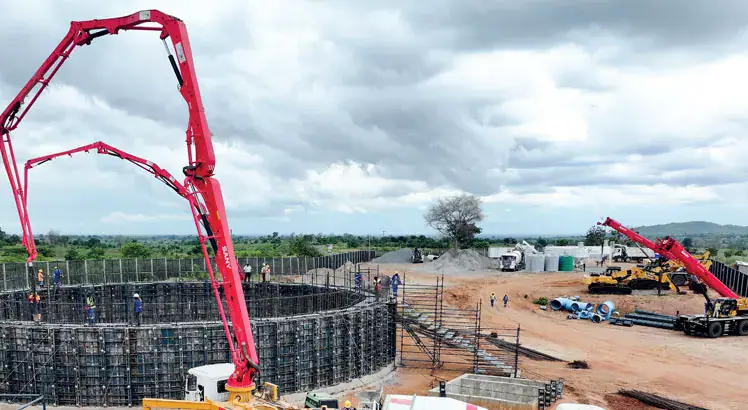
The Salima-Lilongwe Water Supply Project, a flagship initiative aimed at addressing water shortages in Malawi's Central Region, is facing significant delays and funding challenges. The $315 million project, which began in January 2025 and was initially set to be completed by January 2027, is currently only 18.9 percent complete. The project implementer, Salima-Lilongwe Water Supply Company (SLWSC), has cited a K372 billion funding gap as a major obstacle to completing the project on time.
According to a progress report, the government has secured $100 million in funding through loans from local commercial banks, leaving a significant funding gap of $215 million. Despite this, approximately $95 million has been disbursed to the contractor, Khato Civils-South Zambezi Joint Venture, to finance engineering designs, procurement, and ongoing construction activities. Engineering designs are nearly 90 percent complete, but procurement progress is slow due to foreign exchange shortages.
The project's delays have raised concerns among stakeholders, including the Centre for Social Accountability and Transparency (Csat) and the Water and Environmental Sanitation Network (Wesnet). Csat executive director Willy Kambwandira has called for greater transparency and accountability in the project's implementation, citing concerns that the project may become a conduit for siphoning taxpayers' money. Wesnet executive director Safari Mbewe has emphasized the urgent need for funding to complete the project, highlighting the severe water shortages currently affecting Lilongwe and the wider Central Region.
The project's completion is crucial for addressing the worsening water crisis in Lilongwe, where the current water production deficit stands at 42 million liters per day. Lilongwe Water Board chief executive officer Daniel Chaweza has acknowledged that the board is currently producing 115 million liters of water per day against a daily demand of 157 million liters for the city and surrounding areas. The project aims to provide potable water to 1.5 million people in Lilongwe, Dowa, and Salima districts.
Economists and stakeholders have urged the government to secure the necessary funding to complete the project. Mzuzu University-based economist Christopher Mbukwa has warned that further delays could plunge Lilongwe into a severe water crisis and result in additional costs due to the possible deterioration of equipment and materials already installed. The Parliamentary Committee on Statutory Corporations and State Enterprises has also expressed concerns about the project's implementation and has announced plans to invite relevant parties to explain the circumstances surrounding the project's delays.
The Ministry of Finance and Economic Planning and Decentralisation has reaffirmed the government's commitment to completing the project, describing it as a critical investment. However, the ministry has not outlined specific interventions to address the funding gap. SLWSC chief executive officer Valentine Kaupa has referred queries about possible sources of funding to the Ministry of Agriculture and Water Development.
The Salima-Lilongwe Water Supply Project's delays have significant implications for the region's water supply. With the project's completion uncertain, residents of Lilongwe and the wider Central Region may continue to face severe water shortages. Key stakeholders, including the government, SLWSC, and contractors, must work together to secure the necessary funding and ensure the project's timely completion.
Key points
- The project's delays have raised concerns about the potential for siphoning taxpayers' money and the need for greater transparency and accountability.
- The project's completion is crucial for addressing the worsening water crisis in Lilongwe and the wider Central Region.
- Economists have urged the government to secure the necessary funding to complete the project, warning that further delays could have severe consequences.
Reporting sources
- Salima-LL water supply project set to miss deadline · The Nation