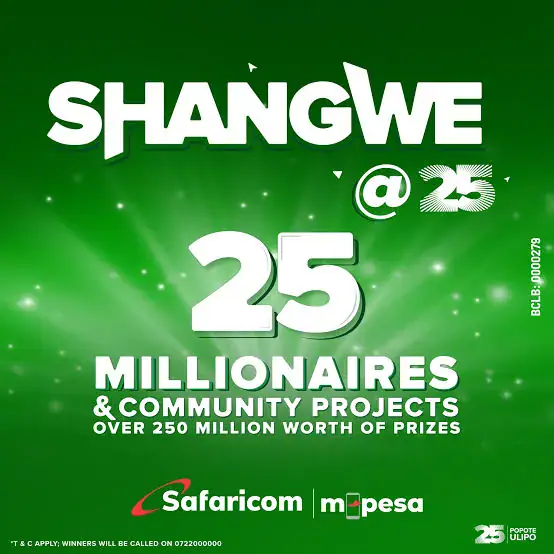
Safaricom launched its Shangwe @25 promotion in October 2025 as part of its 25th anniversary celebrations. The campaign rewarded customers with cash prizes, including KES1 million, and channelled equipment, inventory support and funding for community projects to businesses. This approach gave the promotion a wider economic dimension, supporting micro, small and medium-sized enterprises (MSMEs) in Kenya. The campaign ran from October 31, 2025 to January 19, 2026.
The business-focused rewards included 25 Bajaj tricycles for small and micro businesses, KES250,000 worth of stock for another 25 businesses, and KES500,000 each for 15 medium and large enterprises to support community projects. This structure addressed a persistent challenge for smaller businesses: access to working capital and productive assets. For retailers, inventory determines revenue, while for farmers or distributors, transport influences the cost and reliability of moving products to market.
One of the businesses selected to receive a Bajaj tricycle was Sakifarm Ltd, an avocado-growing and export business working with hundreds of farmers. Sakifarm uses Safaricom Business services, including M-PESA for Business and bulk SMS, to manage payments and communicate with farmers. The company's chief executive, Elijah Sawe, said these tools had improved operational efficiency and farmer engagement while reducing human resource costs. The tricycle adds a physical asset to that digital infrastructure.
The first round of business winners showed the range of enterprises targeted by the promotion. The 10 businesses announced as Bajaj tricycle recipients included Sakifarm Ltd, Millys the Redbeet Fresh Mat, and Carrix Media Group Ltd. Nine businesses were also named among the first recipients of KES250,000 worth of stock each, including Ebee Mobility Kenya Ltd and Robstar Premium Fit Ltd. The first round further included KES500,000 community-project awards for six organisations.
The distinction between the three categories of awards is important. The tricycles and inventory support were directed at businesses, while the KES500,000 awards were intended to fund community projects. Together, they extended the campaign beyond individual winners, although the awards served different economic and social purposes. Safaricom's promotion built on its wider role in providing payment and communication infrastructure for businesses.
Safaricom said customers could participate in Shangwe by purchasing, renewing or reactivating eligible services, including voice, internet, cloud, IoT and M-PESA for Business. The campaign connected the company's consumer and business service ecosystems to a rewards programme that included both individual customers and enterprises. The business awards ran alongside the campaign's consumer millionaire draws, creating 25 millionaires and awarding prizes worth KES250 million.
The wider question is what happens after the prizes are handed over. For MSMEs, the significance of such interventions is whether the support helps a business serve more customers, move more products, improve cash flow or build the capacity to grow. In that respect, Shangwe's business awards placed part of Safaricom's anniversary spending into the hands of enterprises whose next stage of growth may depend on access to precisely these resources.
Key points
- Safaricom's Shangwe @25 promotion provided KES250 million in prizes to over five million customers in Kenya.
- The promotion supported small businesses with equipment, inventory and funding for community projects.
- The business awards addressed a persistent challenge for MSMEs: access to working capital and productive assets.