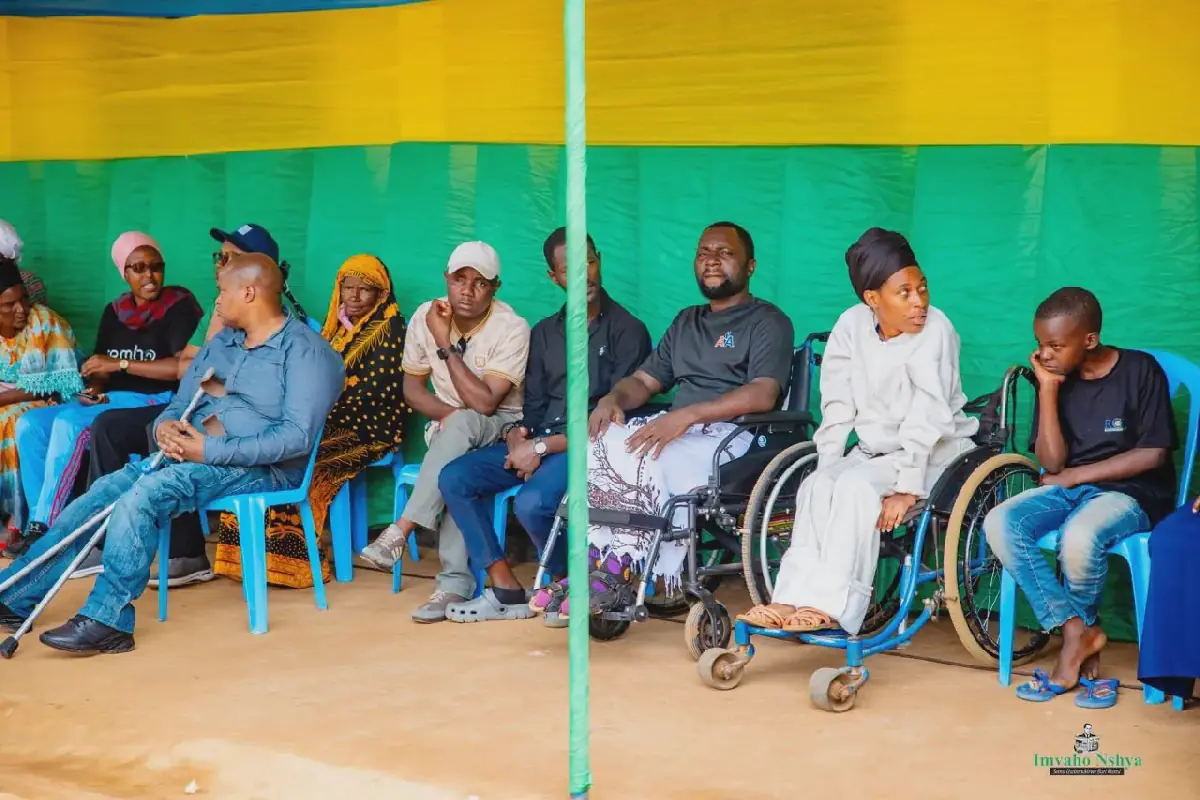
In a significant development, Rwandan women and people with disabilities are being given a platform to contribute to decision-making processes. This change is a result of efforts to promote inclusivity and equality. For years, women and people with disabilities were marginalized and excluded from participating in decision-making. However, with the introduction of new laws and policies, they are now being given a chance to have their voices heard.
The 2003 Constitution of Rwanda played a crucial role in promoting the inclusion of people with disabilities in decision-making processes. According to Article 10 of the Constitution, at least one member of parliament must represent people with disabilities. This provision was implemented through a special electoral process. The law also provided for a minimum of 30% of seats in decision-making bodies to be reserved for women.
The 2003 Constitution also provided for 24 special seats for women in parliament, which are allocated through a special electoral process. This move was aimed at increasing the representation of women in decision-making bodies. In 2007, the law governing political parties and politicians was revised to require political parties to have at least 30% women on their lists.
Women and people with disabilities in Bugesera district are embracing their new roles in decision-making processes. They expressed their satisfaction with the newfound recognition and appreciation of their contributions. Cécile Dusabimana, a person with a physical disability, said that people with disabilities were previously marginalized and excluded from participating in decision-making.
Claudette Nirere, also from Bugesera district, expressed similar sentiments. She said that women and people with disabilities are now being given a platform to contribute to decision-making processes. Francine Izabikora, a woman from Ntarama sector, said that women are now being taken seriously and their voices are being heard.
Mariya Uwimana, a woman from Nyamata sector, also welcomed the new development. She said that women are now being given a chance to participate in decision-making processes and their contributions are being recognized. The statistics show that in the 2003 parliamentary elections, women secured 39 out of 80 seats, which is 48.75%.
In the 2024 elections, the number of women in parliament increased to 51 out of 80 seats, which is 63.8%. This includes 25 women elected through the general election and 26 women elected through special seats. The new development is a significant step towards promoting inclusivity and equality in Rwanda.
Key points
- Women and people with disabilities in Rwanda are being given a platform to contribute to decision-making processes.
- The 2003 Constitution of Rwanda provided for the inclusion of people with disabilities and women in decision-making processes.
- The representation of women in parliament has increased significantly, from 48.75% in 2003 to 63.8% in 2024.