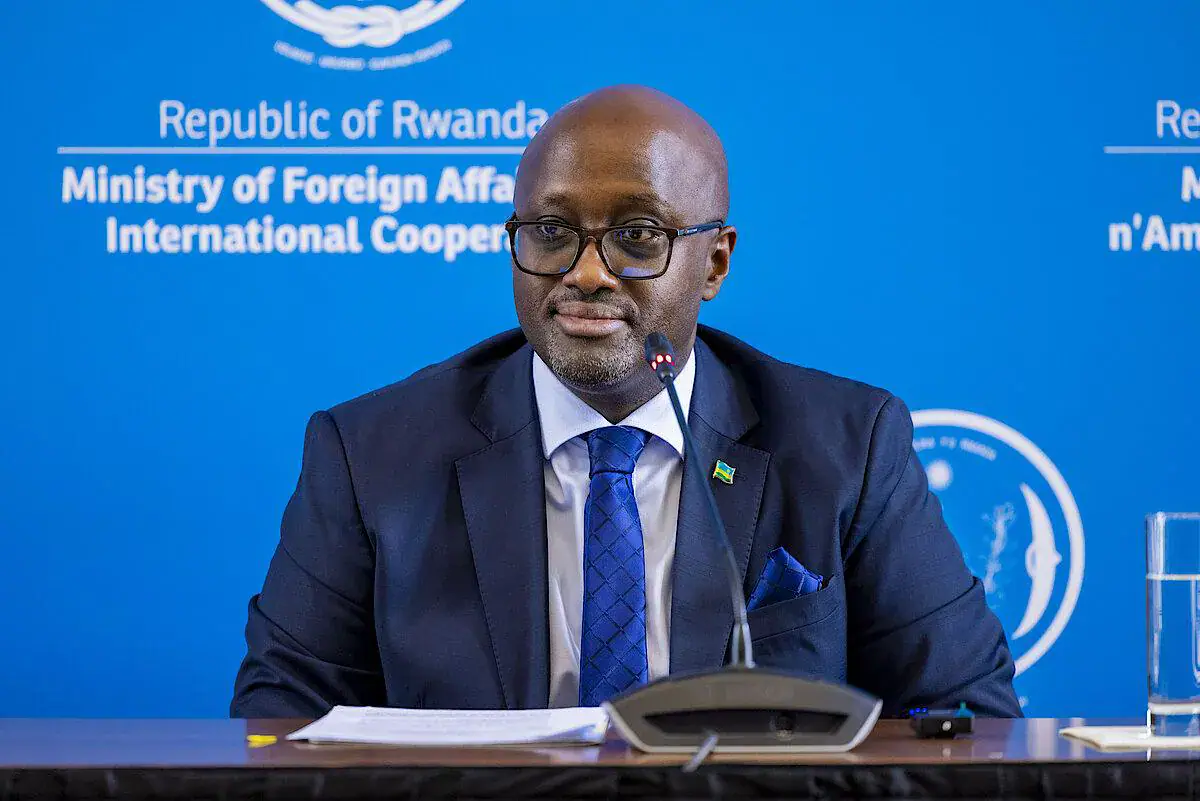
The government of Rwanda has announced its withdrawal from the Central African Economic and Monetary Community (CEEAC), effective June 7, 2025. According to Minisitiri w'Ububanyi n'Amahanga n'Ubutwererane, Nduhungirehe Jean Patrick Olivier, Rwanda's decision to leave CEEAC was made after careful consideration of the organization's operations and decision-making processes. Rwanda cited dissatisfaction with the organization's functionality.
Minisitiri Nduhungirehe stated that despite CEEAC's efforts to persuade Rwanda to rejoin, the country remained resolute in its decision. In a statement on X, he mentioned that CEEAC made every effort to convince Rwanda to reverse its decision, but Rwanda maintained its stance. The organization's attempts to persuade Rwanda to rejoin continued until November 23, 2026.
The Minisitiri responded to a statement by the Presidency of the Democratic Republic of Congo (RDC), which claimed that Rwanda's withdrawal from CEEAC was a diplomatic victory. Nduhungirehe expressed surprise at RDC's assertion, stating that Rwanda, not RDC, made the decision to leave CEEAC and continued to reject rejoining. He accused President Felix Antoine Tshisekedi of spreading misinformation.
Rwanda's decision to leave CEEAC was prompted by concerns over the organization's operations and governance. The country felt that CEEAC had become an instrument for RDC to advance its interests at Rwanda's expense. Rwanda's concerns included being unfairly targeted and excluded from decision-making processes.
On November 23, 2026, CEEAC officially acknowledged Rwanda's withdrawal, confirming that the country was no longer a member. The organization currently comprises 10 member states: Angola, Burundi, Cameroon, Gabon, Equatorial Guinea, the Central African Republic, RDC, the Republic of Congo, Sao Tome and Principe, and Chad.
At the 27th Ordinary Session of the Summit of Heads of State and Government of CEEAC, held in Equatorial Guinea, the organization's chairmanship was transferred to Mahamat Idriss Déby Itno of Chad, succeeding Teodoro Obiang Nguema Mbasogo of Equatorial Guinea. The next ordinary session of the summit is scheduled for January 2027 in N'Djamena, Chad.
The withdrawal of Rwanda from CEEAC marks a significant development in the country's diplomatic relations with its regional counterparts. With its withdrawal, Rwanda will no longer participate in CEEAC's economic and monetary integration initiatives. The move is seen as a strategic decision by Rwanda to reorient its economic and diplomatic priorities.
Key points
- Rwanda's withdrawal from CEEAC was finalized on November 23, 2026.
- The country cited dissatisfaction with CEEAC's operations and governance.
- Minisitiri Nduhungirehe rejected RDC's claims of a diplomatic victory, stating that Rwanda made the decision to leave CEEAC.