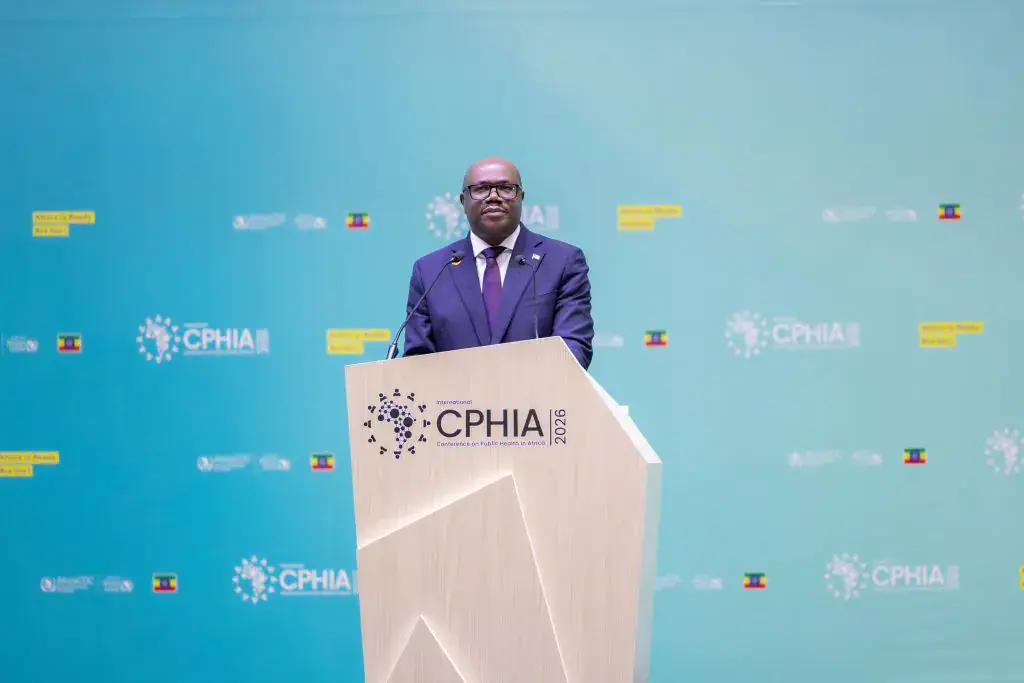
Rwanda's Prime Minister, Dr. Justin Nsengiyumva, has highlighted the country's Mutuelle de Santé as a successful example of a healthcare solution at the fifth Comprehensive Africa Health Infrastructure Plan (CPHIA2026) conference in Addis Ababa, Ethiopia. Representing President Paul Kagame, Dr. Nsengiyumva emphasized that Mutuelle de Santé has enabled many Rwandans to access healthcare services despite limited resources. The program has provided health insurance to 89% of Rwandans and expanded access to essential medicines and specialized care.
Dr. Nsengiyumva noted that since 2000, Rwanda has made significant progress in healthcare, including a decline in infant mortality rates from 107 to 27 per 1,000 live births and a reduction in maternal mortality rates from 1,071 to 149 per 100,000 births. Life expectancy has also increased from 50 to 70.5 years. He attributed these improvements to increased healthcare workers, technology, and infrastructure, as well as the crucial role of Mutuelle de Santé in facilitating access to healthcare.
Mutuelle de Santé is a community-based health insurance program that allows individuals to pool resources and contribute to a shared fund to cover medical expenses. The program was established to help low-income individuals access healthcare services without incurring significant costs. Dr. Nsengiyumva explained that as the program expanded, it became necessary to reform its funding mechanism to avoid placing an unsustainable burden on the government.
In 2026, Rwanda introduced a new funding model for Mutuelle de Santé, which relies on the financial capacity of citizens. Currently, members contribute 37% of the program's funds, while the government and private sector contribute 63%. The government has also implemented measures to facilitate payment of contributions and expanded coverage to include services such as cancer treatment, kidney transplants, and heart surgery.
The success of Mutuelle de Santé has led to significant growth in Rwanda's healthcare sector. According to the Rwanda Social Security Board (RSSB), the Ejo Heza fund, which supports the program, has accumulated over RWF 100 billion, and over 4.2 million Rwandans have registered for the program, with over 3.9 million making regular contributions.
Dr. Nsengiyumva emphasized that Mutuelle de Santé demonstrates the potential for innovative, community-based solutions to address healthcare challenges in Africa. He encouraged other countries to explore similar approaches, tailored to their unique contexts. The Prime Minister's presentation at CPHIA2026 highlights Rwanda's commitment to sharing its expertise and experiences with the international community.
The CPHIA2026 conference brings together stakeholders from across Africa to discuss healthcare infrastructure and innovative solutions. Rwanda's showcase of Mutuelle de Santé as a model for healthcare solutions underscores the country's reputation as a leader in healthcare innovation and its commitment to improving health outcomes for its citizens.
Key points
- Mutuelle de Santé has provided health insurance to 89% of Rwandans and expanded access to essential medicines and specialized care.
- Rwanda has made significant progress in healthcare, including a decline in infant mortality rates and maternal mortality rates.
- The government has introduced a new funding model for Mutuelle de Santé, which relies on the financial capacity of citizens.
Reporting sources
- CPHIA2026 – U Rwanda rwagaragaje uko Mutuelle de Santé yabaye igisubizo ku baturage · https://umuseke.rw/