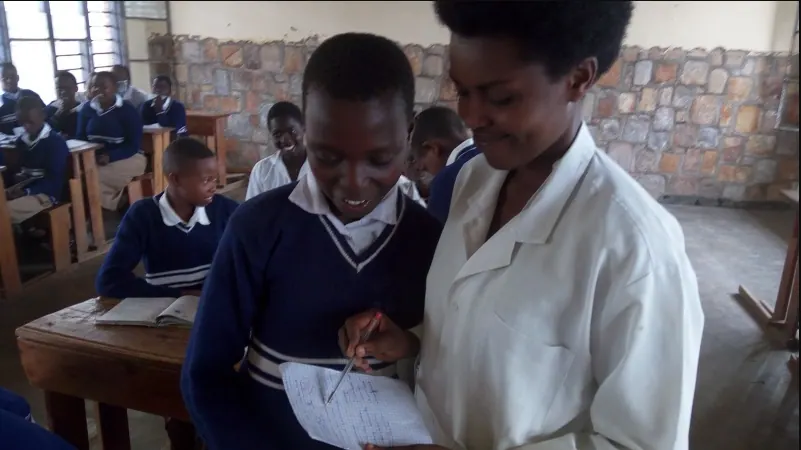
On October 5, the world celebrates World Teachers' Day, a day dedicated to appreciating the role of teachers in shaping the future. This day was established in 1966 by UNESCO and the International Labor Organization (ILO) to recognize the rights and responsibilities of teachers. This year marks 60 years since its inception, with the theme "Standing with teachers: 60 years of protecting the profession, advancing its status and shaping our futures."
Teachers play a vital role in shaping the future of a nation, and their welfare is crucial in ensuring quality education. In Rwanda, the government has been working to improve the living standards of teachers. In July 2026, the Ministry of Education held discussions with over 300 teachers from different parts of the country to address their challenges, including their welfare, career development, and school infrastructure.
The discussions highlighted that the welfare of teachers is closely linked to the quality of education. In 2024, the Ministry of Education received over 2,200 requests to transfer teachers, mainly due to family reasons and preferred work locations. This number indicates that the teacher management system should consider their welfare, not just their deployment to schools.
To address teacher welfare, the Rwandan government has taken several steps. In 2022, the government increased the salaries of primary and secondary school teachers. A teacher with a level A2 qualification saw an 88% increase in their salary, while those with A1 and A0 qualifications received a 40% increase. Additionally, the government provided 5 billion Rwandan francs to the "Umwalimu SACCO" to enhance its capacity to provide financial services to teachers.
However, improving teacher welfare goes beyond just salary increases. Teachers also need resources, training, technology, and a conducive working environment. The government is working to address these needs, including providing teachers with the necessary tools and infrastructure to effectively deliver education.
Rwanda is also reforming the way teachers are trained. Starting from September 2026, new teachers will undergo a five-year training program, up from the previous three years. This program aims to equip teachers with sufficient knowledge and skills to effectively teach and manage classrooms.
Another significant development in the education sector is the integration of Artificial Intelligence (AI). The government has started training over 5,000 teachers on AI, aiming to enhance their teaching methods and make education more effective. The goal is to ensure that AI complements teachers, rather than replacing them, and helps them focus on providing quality education to students.
Key points
- The Rwandan government is prioritizing teacher welfare to improve education quality.
- The government has increased teacher salaries and provided financial support to teachers through the "Umwalimu SACCO".
- Rwanda is reforming teacher training and integrating Artificial Intelligence (AI) to enhance education quality.