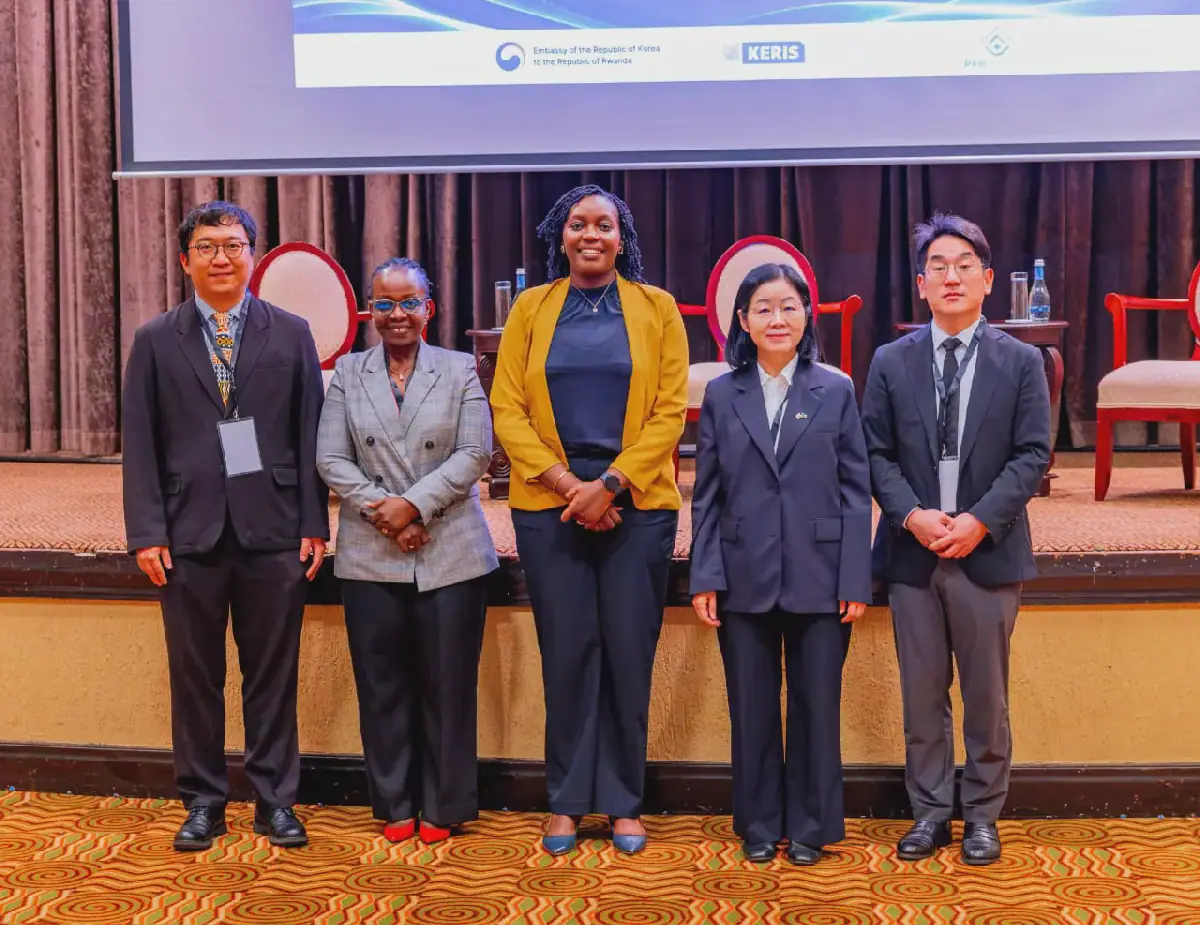
Rwanda is stepping up its efforts to integrate modern technology, particularly Artificial Intelligence (AI), into its education system. This initiative was highlighted at the 2026 Korea-Rwanda Seminar on Cooperation in AI Education, held in Kigali. The seminar brought together education stakeholders from Rwanda and South Korea to discuss expanding AI use in schools, sharing knowledge, and exploring partnership opportunities. The goal is to prepare future talent in the AI era.
Claudette Irere, Permanent Secretary in the Ministry of Education, emphasized that Rwanda's objective is not just to adopt technology but to ensure it enhances education quality and provides equal opportunities for all students. She noted that the focus is on leveraging AI to increase education productivity and support teachers, who are crucial in driving this change. Irere highlighted that teachers need to be equipped with the knowledge and tools to effectively use AI.
Rwanda has developed a National Artificial Intelligence Policy aimed at harnessing AI to boost the economy, improve living standards, and position the country as a hub for research and innovation in AI. The policy seeks to transform Rwanda into an international center for AI research and innovation in Africa. Key commitments include increasing citizens' technological literacy, building research capacity, and promoting the safe use of AI.
In the education sector, this policy has started to take shape through initiatives like training teachers to integrate AI into their teaching methods. By the end of 2025, the first phase of a teacher training program on basic AI knowledge had reached over 5,000 primary and secondary school teachers nationwide. The program aims to equip teachers and students not only with AI tools but also with an understanding of its implications and safe usage.
Rwanda has also established a three-year partnership with Anthropic to promote AI adoption in education, healthcare, and government services. This collaboration underscores Rwanda's efforts to find partners that can help accelerate technology integration in education and prepare youth for the future economy. South Korea, a leader in technology, research, and advanced industries, is a valuable partner in this endeavor.
The partnership with South Korea is expected to help Rwanda develop the capacity of its teachers, students, and researchers and expand the use of technology in schools. A key aspect of this collaboration is the emphasis that AI should not replace teachers but rather support them in improving teaching methods, identifying student weaknesses, and providing tailored assistance.
As AI continues to transform how people learn, conduct research, and work, the role of teachers remains essential. The integration of AI in education aims to enhance, not undermine, the teacher's position. Through such partnerships and initiatives, Rwanda aims to create a future-ready workforce and make significant strides in education and technological advancement.
Key points
- One key point is that Rwanda and South Korea are working together to integrate AI into the education system to prepare students for the future job market.
- Another key point is that the partnership aims to enhance education quality and provide equal opportunities for all students by leveraging AI.
- A third key point is that the collaboration includes training teachers to effectively use AI in their teaching methods and ensuring the safe and beneficial use of AI in education.
Reporting sources
- MU RWANDA 23 NOV, 17:09 U Rwanda rugiye gufatanya na Korea guteza imbere AI mu burezi · https://www.kigalitoday.com/