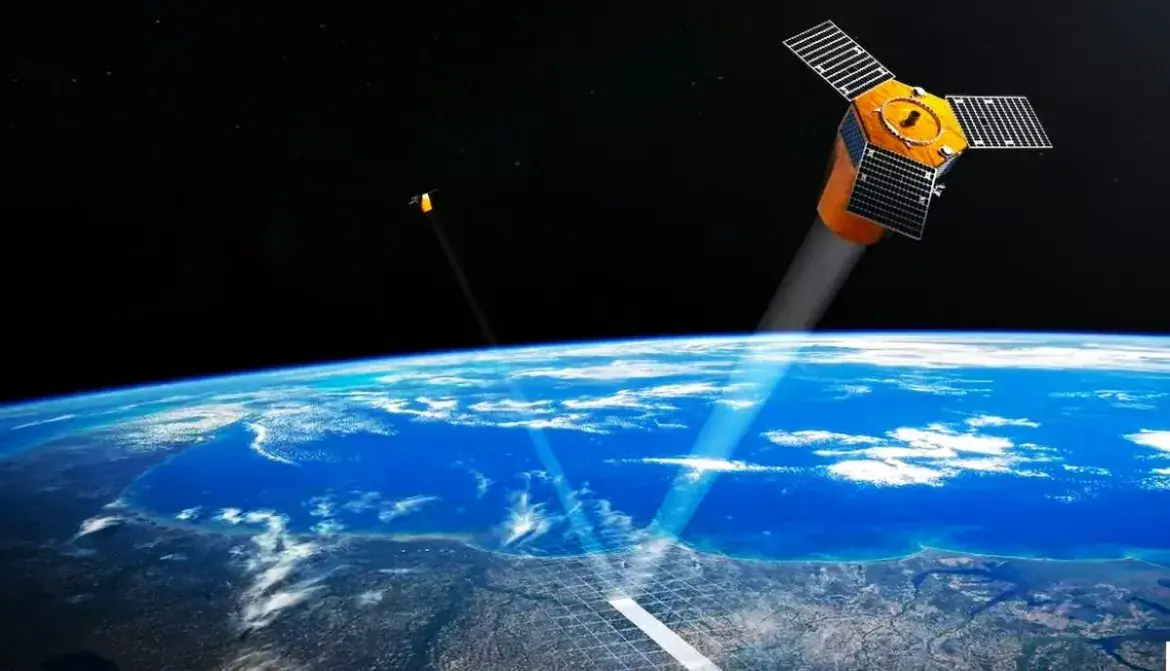
Russia and Tanzania have agreed to collaborate on a joint space program, with Russia launching Tanzania's first Earth observation satellite in March 2027. The agreement was reached during the third Russia-Africa Summit, attended by delegations from 48 African countries. The summit saw the signing of a framework memorandum on strategic partnership and cooperation in space observations between the two countries.
The memorandum was signed by General Dmitry Bakanov, Director of Russia's State Corporation for Space Activities (Roscosmos), and Mohammed Khamis Abdulla, Permanent Secretary of Tanzania's Ministry of Communication and Information Technology. According to Bakanov, Tanzania plans to establish its own space agency, and Russia is ready to provide expert and methodological support. Roscosmos has already begun cooperation with Tanzanian specialists, with support from the Russian presidential administration.
The agreement goes beyond a single launch, with both sides discussing sharing Earth remote-sensing data and establishing ground stations in Tanzania to receive it. Tanzania also plans to increase the number of students studying space-related disciplines at Russian universities. The parties agreed to establish joint working groups and develop roadmaps covering all areas of cooperation. Russian specialists have shown the Tanzanian delegation Russia's capabilities in training cosmonauts and space industry specialists and in conducting scientific experiments in space.
The agreement is part of Tanzania's Five-Year Strategic Plan for Space Programmes (2025-2030), titled "From Mount Kilimanjaro, the Peak of Africa, to Space." The plan is built on five pillars covering governance, international presence, human capital, public awareness, and space infrastructure. The Tanzanian Ministry for Communication and Information Technology is drafting a 2026 National Space Policy and a 2026 Space Act.
The satellite Russia will launch is distinct from TanSat-1, a 1U CubeSat being built by a joint team from the Dar es Salaam Institute of Technology and Côte d'Ivoire's INP-HB under the UNOOSA-JAXA KiboCUBE programme for deployment from the ISS. Tanzania is therefore advancing two separate satellite missions in parallel. The country also secured an orbital position at the World Radiocommunication Conference 2023 in Dubai.
Tanzania joins a growing list of Russian space partners on the continent. In September 2024, Burkina Faso, Mali, and Niger announced a collaboration with Roscosmos to jointly develop telecommunication and remote sensing satellites. The African Space Agency and Roscosmos have also formalized an MoU focused on capacity building and joint development of space applications.
The March 2027 date for the launch is the most consequential and most demanding element of the agreement. It implies a spacecraft already well advanced in production. Details of the satellite, including its specifications, manufacturer, and launch vehicle, have not been disclosed yet.
Key points
- Russia to launch Tanzania's first Earth observation satellite in March 2027.
- Tanzania plans to establish its own space agency with Russian support.
- The agreement is part of Tanzania's Five-Year Strategic Plan for Space Programmes (2025-2030).