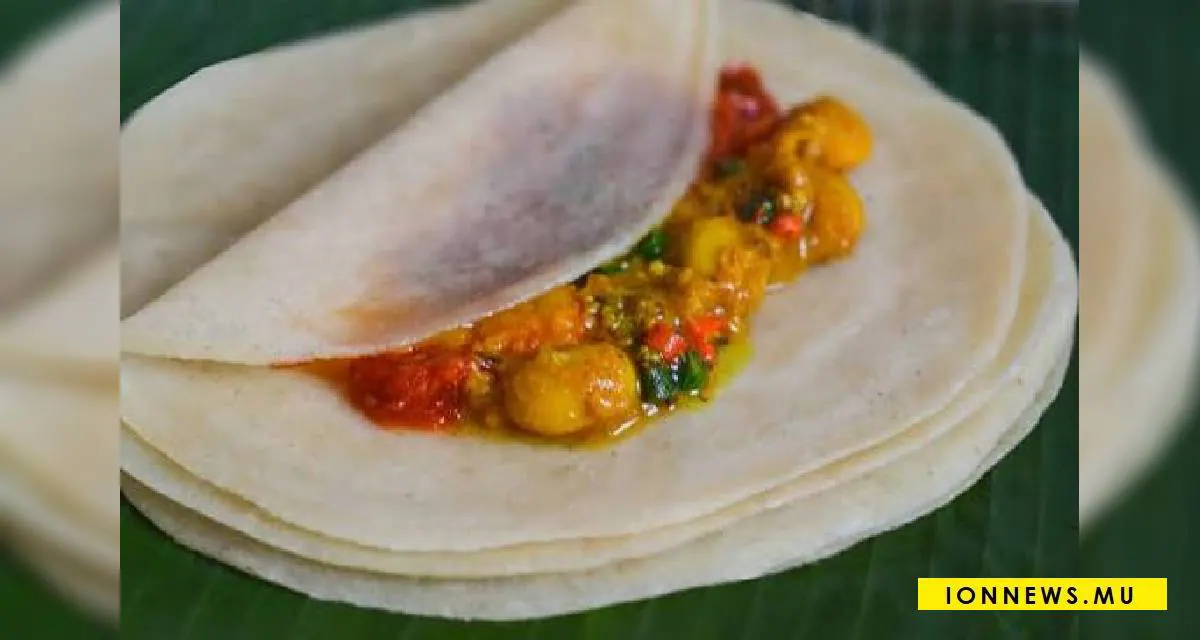
In Mauritius, there are certain dishes that have become an integral part of the local culture without needing to be overly sophisticated. One such dish is the roti blanc, a type of flatbread that has been a staple in Mauritian cuisine for generations. Made from a simple mixture of flour, water, salt, and oil, the roti blanc is a popular food item that can be found in markets, street vendors, small shops, and family kitchens. Its widespread availability and versatility have made it a favorite among locals.
The roti blanc is typically cooked on a tawa, a flat plate that gives it its characteristic marks. It can be prepared in just a few minutes and is best consumed while still warm. What makes the roti blanc truly popular, however, is what is put inside it. It can be accompanied by a variety of fillings such as cari made with peas, beans, vegetables, or pumpkin, as well as rougaille, chatini, or chili peppers. This flexibility allows the roti blanc to cater to different tastes and preferences.
For many Mauritians, eating roti blanc is a straightforward process. A piece of roti is torn off, filled with a desired topping, and then eaten directly with the fingers. The roti blanc can also be a standalone meal when paired with a few other items. A couple of rotis, a well-seasoned cari, some rougaille, and an achard can make for a satisfying meal without requiring many ingredients. This simplicity is a key factor in the roti blanc's enduring popularity.
The roti blanc is often compared to the dholl puri, another popular street food in Mauritius. However, the two are not prepared in the same way. While the roti blanc is an unleavened flatbread, the dholl puri contains a filling made from split yellow peas. The history of the roti blanc is tied to the arrival of Indian workers in Mauritius in the 19th century and the transmission of their culinary traditions.
Over time, these recipes were integrated into Mauritian cuisine and adapted to local tastes. The Mauritian government acknowledges the significant contribution of Indian migrants to the island's culinary heritage. The roti blanc has become an integral part of this heritage, reflecting the cultural exchange and blending of traditions that have shaped Mauritian cuisine.
Today, the roti blanc remains a popular food item in Mauritius, with its appeal showing no signs of waning. It can be consumed as breakfast, a quick lunch, a side dish, or as a base for a hearty cari. Its affordability, ease of consumption, and versatility have cemented its place in the daily lives of Mauritians.
As a testament to its enduring popularity, the roti blanc continues to be a staple in Mauritian cuisine, enjoyed by people of all ages. Its simplicity and adaptability have allowed it to transcend generations, making it a beloved food item that is unlikely to fade away anytime soon.
Key points
- The roti blanc's versatility and simplicity have made it a staple in Mauritian cuisine.
- The dish has a rich history tied to the arrival of Indian workers in Mauritius in the 19th century.
- The roti blanc remains a popular food item in Mauritius, enjoyed as breakfast, lunch, or a side dish.