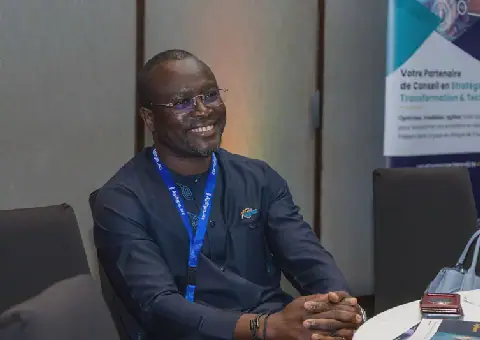
MTN Rwanda, in partnership with Viamo, has launched Miss Baza, a voice-first artificial intelligence assistant. Users can access the service by dialling 845 from an MTN line, receiving spoken responses in Kinyarwanda, English, French, and Kiswahili. The AI assistant covers areas such as healthcare, agriculture, financial literacy, land titles, and local government services. This innovation aims to bring AI closer to ordinary citizens, including those without smartphones, mobile internet, or mobile applications.
The Miss Baza service is powered by a collaboration of local and international capabilities. MTN provides the telecommunications network and access, while Viamo offers the voice platform and interactive voice response infrastructure. Pindo contributes to Kinyarwanda speech processing, and Google's Gemini provides the underlying generative AI capabilities. Local information sources, including Eden Care, contribute contextual knowledge relevant to Rwandan services. This partnership enables users to ask questions and receive spoken responses.
The technology behind Miss Baza involves several systems working together. When a user calls Miss Baza, their spoken question is converted into information the AI can process. The model generates a response, which is subsequently converted into speech and delivered to the caller. Users receive 30 free minutes monthly, after which calls cost RWF 45 per minute. This service is a commendable innovation, recognizing that access to technology should not be determined by smartphone ownership.
However, the intellectual property rights and ownership of the underlying technology behind Miss Baza raise important questions. Google developed Gemini, the foundational AI model powering the service, while Viamo contributes its voice platform and orchestration technology. MTN Rwanda provides the telecommunications infrastructure, distribution, and customer access. Pindo contributes local language-processing capabilities. The specific contractual arrangements governing Miss Baza's intellectual property have not been publicly established.
The processing and storage of voice recordings and transcripts generated by Miss Baza also raise concerns. It is unclear where these recordings are processed and stored, who can access them, and how long they are retained. There is also an economic question: if local language resources and conversational data contribute to improving AI systems, who ultimately captures the resulting value? Transparency is needed regarding the data-retention policies and responsibilities of each partner.
The partnership between MTN Rwanda, Viamo, and Google has clear advantages, including enabling MTN to launch quickly without building a foundational AI model or investing in expensive GPU infrastructure. Citizens gain access to services through ordinary telephones. However, dependence on external partners carries risks, such as changes in API pricing, licensing conditions, or international service availability. Local engineers can maintain components they control, but they cannot independently repair Google's proprietary model or Viamo's closed systems without the necessary access and rights.
The launch of Miss Baza highlights the need for Africa to consider its role in the development of artificial intelligence. Africa has historically exported raw materials and imported finished products. A similar pattern may be emerging in AI, with local languages, accents, cultural knowledge, and human interactions serving as valuable resources. However, if foundational models, computing infrastructure, and intellectual property remain externally controlled, Africa risks becoming a market and source of inputs for technologies whose highest-value assets are owned elsewhere.
Key points
- The Miss Baza service is a significant achievement in making AI accessible to ordinary citizens in Rwanda.
- The intellectual property rights and ownership of the underlying technology behind Miss Baza raise important questions about control and value capture.
- The partnership between MTN Rwanda, Viamo, and Google highlights the need for Africa to consider its role in AI development and ensure local technical capacity and ownership.