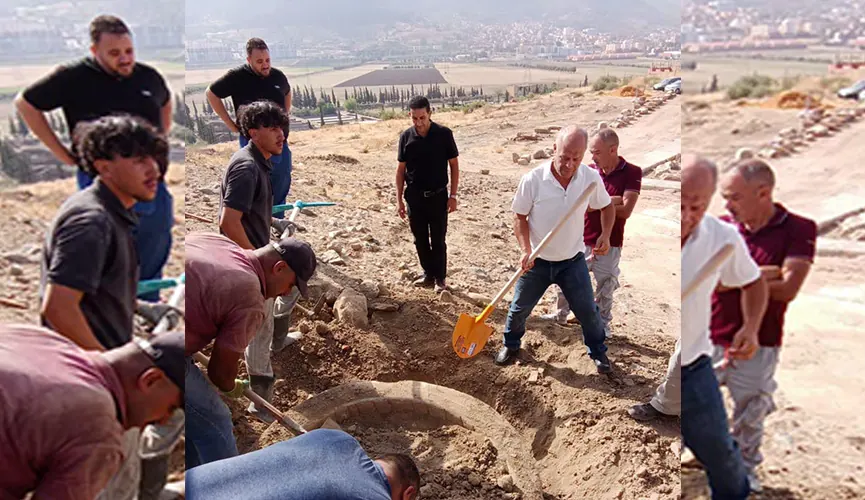
The fourth phase of archaeological excavations at the Obidum Novum site in Ain Defla, Algeria, has led to the discovery of a Roman-era wall and water tanks. The site, located in the northeastern outskirts of Ain Defla city, has been under excavation since 2022. The Algerian Ministry of Culture and Arts' National Center for Research in Archaeology is conducting the excavations to protect and preserve the country's cultural heritage. The site, which translates to "New City," is believed to date back to the mid-1st century AD.
The excavations have uncovered a 116-meter-long wall, approximately 1.8 meters high, along with several rooms, corridors, and water tanks. Archaeologists have also found ceramic pieces, coins, and inscriptions that have helped identify the site and its historical significance. According to Abdelhakim Jamai, Director of Culture and Arts for Ain Defla Province, the discoveries suggest that the site was initially a Roman camp that underwent renovations and reuse during the Islamic period.
The site's history reflects the succession of various civilizations and historical periods in the region. The Roman-era structures, including the wall and water tanks, demonstrate the engineering skills and urban planning of the ancient Romans. The discovery of ceramic pieces and coins provides valuable insights into the daily life and economy of the people who lived there. The site's reuse during the Islamic period highlights the complex history of the region.
The excavations, led by a team of experts and researchers from the National Center for Research in Archaeology, are expected to continue until 2027. The goal is to thoroughly survey the site and uncover more archaeological features that can shed light on the region's history. The discoveries will be preserved and showcased for the public, allowing visitors to learn about the site's significance and the civilizations that once flourished there.
In addition to its historical significance, the Obidum Novum site has become a practical workshop for students from the University of Chlef's Department of Archaeology. The students are participating in the excavations, gaining hands-on experience in archaeological techniques and methods. This collaboration between researchers and students is essential for advancing knowledge in the field of archaeology and ensuring the preservation of Algeria's cultural heritage.
The discoveries at Obidum Novum have sparked interest in the region's history and cultural heritage. The site's preservation and presentation to the public will contribute to raising awareness about the importance of protecting and conserving Algeria's archaeological sites. The Ministry of Culture and Arts is committed to promoting the country's rich cultural heritage and supporting archaeological research.
The excavation project at Obidum Novum is a significant step forward in understanding the history and cultural heritage of Algeria. The discoveries made so far have provided valuable insights into the lives of people who lived in the region over two millennia ago. As the excavations continue, it is likely that more secrets will be uncovered, shedding further light on the complex history of the region.
Key points
- The discovery of a Roman-era wall and water tanks at Obidum Novum highlights the significance of archaeological excavations in preserving Algeria's cultural heritage.
- The site's complex history reflects the succession of various civilizations and historical periods in the region.
- The excavations are expected to continue until 2027, with the goal of thoroughly surveying the site and uncovering more archaeological features.