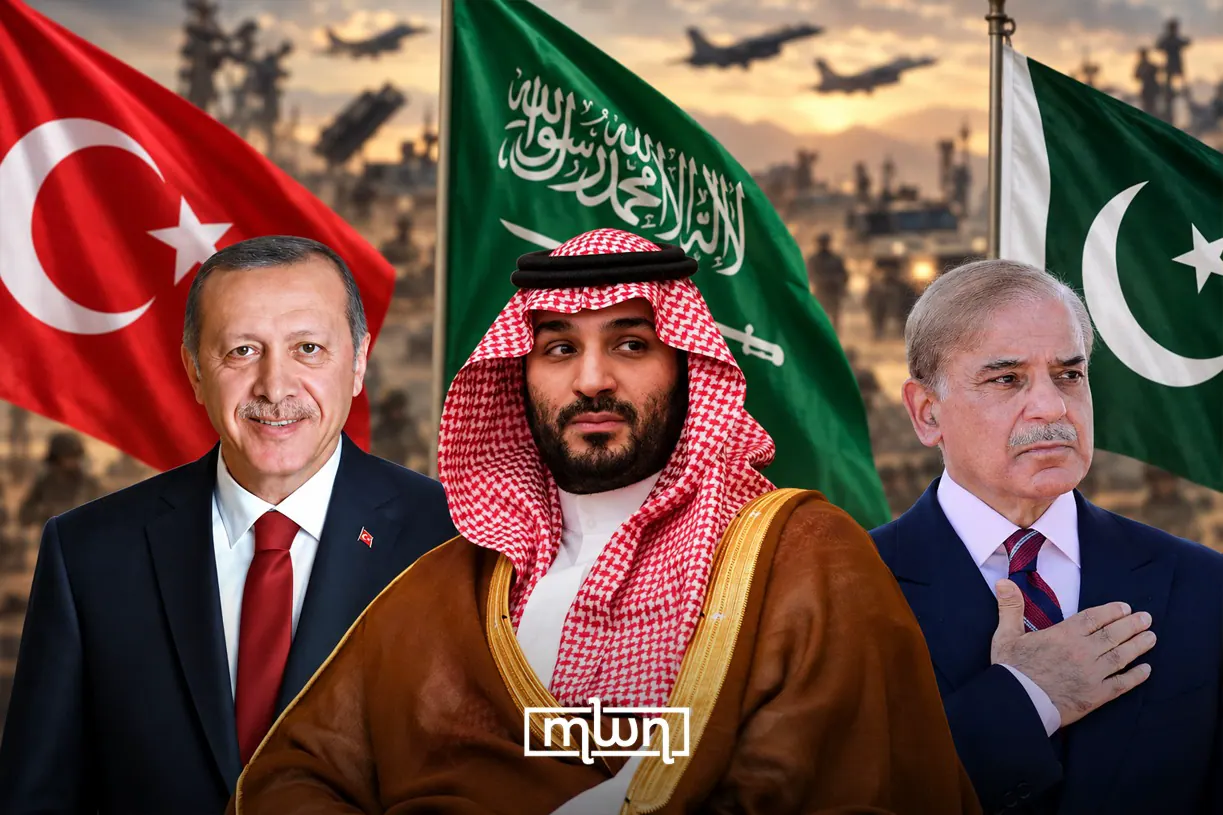
The Mecca Joint Defence Agreement, signed on August 7 by Saudi Arabia, Pakistan, and Turkey, was put to the test in September when the Houthis launched a large drone and missile barrage into Saudi Arabia. The agreement states that an armed attack on any one of its three members shall be regarded as an attack on all. However, the response from the kingdom's allies was unclear, with different interpretations of what the pact meant and what it could and could not do in the event of an attack on a member.
Turkish President Tayyip Erdogan, Saudi Crown Prince Mohammed bin Salman, and Pakistan's Prime Minister Shehbaz Sharif had agreed to "immediately translate" the commitments of their new defence pact into effective military cooperation. However, Turkish officials had already said that any support to Riyadh at this stage would be largely bilateral. Turkey's parliament speaker Numan Kurtulmus told reporters in Ankara that the agreement had not yet come into effect, as international agreements need parliamentary approval.
The same day, the military chiefs of Saudi Arabia, Pakistan, and Turkey met in Riyadh and pledged to condemn the Houthi attacks targeting Mecca and the kingdom's civilian and economic infrastructure. They also discussed intelligence sharing, military coordination, and the integration of their capabilities. However, Kurtulmus added that the pact was not directed against Iran, and that Iran could even join it one day.
The Mecca agreement extended the pact Saudi Arabia and Pakistan had signed in September 2025 into a trilateral one with Turkey, bringing together Pakistan's nuclear capability, Turkey's defence industry, and Saudi Arabia's financial and strategic weight. However, the response from the kingdom's allies came first in words, and the words moved in several directions. Pakistan's defence minister Khawaja Asif said that a spillover of the Yemen war into Saudi Arabia would mean the agreement would "definitely" become operational.
Turkish Foreign Minister Hakan Fidan said Saudi Arabia had come under very serious attacks on its territorial integrity and sovereignty and might have military needs, particularly on technical issues, which Ankara would have no problem meeting. However, Fidan had earlier said that, as in NATO, an attacked member has to request and define the specific help it needs. The kingdom asked France, Britain, Pakistan, and Egypt for air-defence support as American interceptor stocks dwindled over six months of war with Iran.
According to regional officials, Turkish and Pakistani officials told the Associated Press that they had not received a Saudi request for support in response to the Houthi escalation. Meanwhile, Pakistan's military commitment to Saudi Arabia predated the pact, with the country having already deployed thousands of troops, fighter aircraft, and air-defence systems to Saudi soil. However, the bilateral pact did not require automatic military intervention, and the trilateral one essentially leaves the degree and form of assistance to consultation.
The Mecca Joint Defence Agreement has established a secretariat, but according to the Arab Center in Washington, it establishes no joint command or standing forces. The agreement's full text has not been made public, leaving analysts to speculate about its implications. The incident has highlighted the complexities of the agreement and the autonomy of its member states in interpreting their commitments.
Key points
- The Mecca Joint Defence Agreement was tested in September, revealing ambiguities in its mutual-defence promise.
- The agreement's member states have different interpretations of what the pact means and what it could and could not do in the event of an attack on a member.
- The incident has highlighted the complexities of the agreement and the autonomy of its member states in interpreting their commitments.