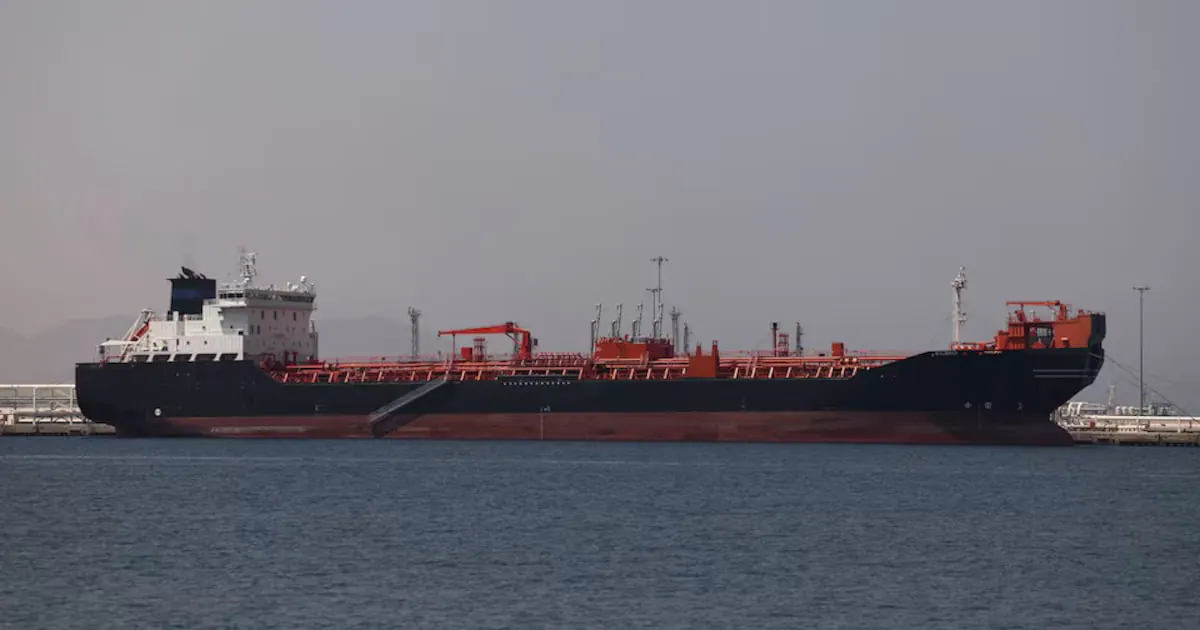
South Africa's increasing dependence on imported fuel is leading to higher costs due to surging oil tanker freight rates. Disruptions to shipping routes in and around the Middle East have caused freight rates to rise, with charges now accounting for about a fifth of the cost of delivering crude to refineries. This development is likely to exacerbate the country's fuel import bill.
According to Tom Reed, head of oil market analysis at Argus Media, freight rates have surged significantly on routes carrying crude from the Middle East to Asia. Geopolitical disruptions have forced ships to take longer and riskier journeys, increasing competition for available tankers. As a result, tanker freight costs on the benchmark Middle East to China route reached record levels in September.
The impact of higher shipping costs is evident in South Africa's fuel pricing structure. The department of mineral and petroleum resources cited higher shipping costs among the factors behind the increase in international crude prices during the latest fuel-pricing period. The country's fuel prices are calculated based on international costs, which include shipping expenses.
The disruption to shipping routes has been caused by attacks and incidents around the Strait of Hormuz, the Red Sea, and Bab el-Mandeb. An attack on Saudi Arabia's East-West pipeline has also forced the kingdom to increase exports through its eastern Gulf terminals, resulting in more crude moving through the Strait of Hormuz. This has raised security concerns and contributed to higher freight rates.
The increased reliance on the Strait of Hormuz is notable, with Saudi Aramco expected to send at least 56-million barrels of crude through the waterway during September and October. Despite heightened security concerns, the kingdom is increasing its exports through this route. Additionally, the cost of insuring tankers against war-related risks has risen sharply, adding to the cost of transporting crude.
The higher costs are not limited to Gulf crude, with elevated tanker rates affecting other major oil-trading routes. A recent analysis by the South African Reserve Bank estimated that the country's oil import bill could have been R76bn lower between 2021 and 2024 if the share of imported refined petroleum products had remained at about 25%, as it was during 2010-19. This suggests that the country's reliance on imported fuel is having a significant impact on its economy.
The impact of higher fuel costs is being felt in the broader economy, with the Reserve Bank raising the repo rate by 25 basis points to 7.25% this week. The Bank has also raised its near-term inflation forecasts, mainly due to higher fuel prices. Headline inflation is expected to be above 5% later this year and early next year, before slowing as the fuel shock recedes.
Key points
- South Africa's growing reliance on imported fuel is exposing the country to cost pressure as oil tanker freight rates surge amid Middle East shipping disruptions.
- The country's fuel import bill could have been R76bn lower between 2021 and 2024 if the share of imported refined petroleum products had remained at about 25%.
- The higher costs are not limited to Gulf crude, with elevated tanker rates affecting other major oil-trading routes.