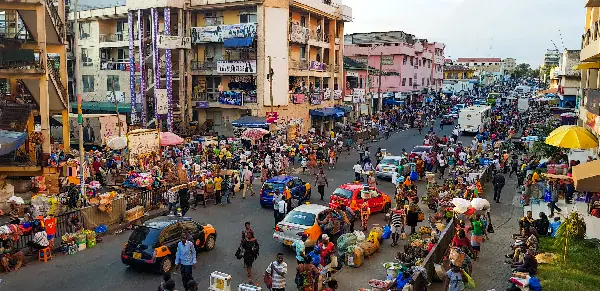
Ghana's economic indicators have shown improvement, with inflation dropping from over 23% in early 2025 to single digits by 2026. However, the cost of living in Accra has not decreased, and residents are feeling the pinch. A 50kg bag of imported rice costs over GH¢1,400, and a king-size mattress costs between GH¢4,990 and GH¢5,540. These prices are not luxury items but household necessities, and the cost is straining residents' budgets.
The rent advance system is a significant burden on Accra residents. Landlords often demand one to two years' rent upfront, forcing tenants into debt before they even move in. For a modest one-bedroom apartment at GH¢1,000 monthly, a two-year advance means producing GH¢24,000 before receiving the keys. This is more than two years' income for a minimum-wage worker earning roughly GH¢588 monthly. Many tenants borrow at high interest, sell assets, or rely on family remittances to pay the advance.
The transport surcharge is another major concern for Accra residents. Evening commuters from Dome to Circle can pay GH¢50 instead of the approved GH¢35, eating into monthly budgets. Over a 22-working-day month, that adds up to GH¢1,870 on transport alone for a worker earning GH¢2,500 monthly. The alternative is to wait in long queues at crowded terminals, often for hours. Many workers choose the higher fare because the cost of waiting is worse.
The formal-sector salary range in Accra is estimated at GH¢3,800 to GH¢5,000 monthly. However, a modest lifestyle requires GH¢4,000 to GH¢8,000 monthly. The gap between income and expenses is not a margin but a structural deficit. The Ghana Statistical Service has noted that services are now the main driver of inflation, with services inflation surging to 7.2% and housing and utilities contributing 40.6% of total inflation.
For many Accra workers, the response to rising costs is not to spend less but to earn more. The end of the working day has become the beginning of a second shift. Workers who cannot afford the higher fares spend hours waiting; those who pay the fares lose the money they might have saved. Some take on additional work, while others rely on family support.
The rent advance system has reshaped Accra's geography, with families pushed to peri-urban areas where rent is marginally lower but with poor roads, weak transport links, and fewer schools and clinics. The transport surcharge has also changed how workers calculate the cost of getting home. For students and informal workers, the squeeze is even tighter.
The experience of the economy for Accra residents is not measured by inflation rates but by whether the money in the envelope covers the month. The rent advance system forces debt before shelter is secured, and transport costs consume income before work is reached. Budgeting, for many, has become a daily negotiation with scarcity rather than a monthly plan for surplus.
Key points
- The cost of living in Accra remains high despite a drop in inflation rate.
- Rent and transport costs are major concerns for Accra residents.
- The rent advance system and transport surcharge have reshaped Accra's geography and economy.