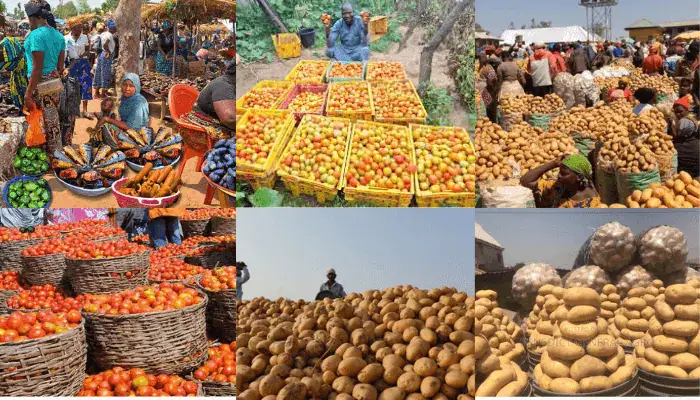
Agricultural stakeholders in Nigeria are calling on the Federal Government to address the root causes of high food prices, including high production costs, insecurity, inadequate storage facilities, and poor transportation infrastructure. They argue that periodic government interventions, such as releasing grains from the National Strategic Reserve and distributing fertiliser, can only provide temporary relief to consumers. According to Adebowale Onafowora, Founder and Managing Director of BIC Farms, these interventions will not resolve the persistent food affordability crisis without deliberate investments in the agricultural value chain.
Insecurity across major grain and tuber-producing areas in the North and Middle Belt is affecting agricultural productivity, with farmers paying levies to bandits or abandoning fertile farmland. Onafowora identified this as a critical challenge and called for dedicated agro-ranger patrols and community-backed intelligence around major agricultural corridors. He also advocated for greater investment in decentralised storage and processing facilities to address post-harvest losses, which account for between 30 and 50 percent of perishable and grain harvests.
Sunday Ezeobiora, National President of the Poultry Association of Nigeria (PAN), also cited high production costs, insecurity, poor logistics infrastructure, energy costs, and inadequate storage facilities as major drivers of food inflation. The poultry industry is particularly exposed to rising agricultural input costs, with feed accounting for approximately 70 to 75 percent of poultry production costs. Ezeobiora called for investments in modern silos, decentralised aggregation centres, warehouse receipt systems, drying and conditioning facilities, refrigerated logistics systems, and regional cold-chain hubs.
Yinka Lawal, Chairman of the Poultry Association Nigeria (PAN) Ogun State chapter, stressed the need for the government to consider the long-term sustainability of food production rather than focusing exclusively on reducing commodity prices through reserve grain releases. He identified transportation, energy, insecurity, storage, processing, and distribution margins as factors influencing final prices paid by consumers. Lawal called for transparent distribution of government-held grains through recognised commodity traders, processors, feed manufacturers, cooperatives, and consumer markets.
Oyewole Okewole, Senior Associate Consultant at FutuX Agri-consult Limited, urged the government to move away from an intervention-driven agricultural policy towards a productivity-driven and market-oriented food system. He called for improved access to quality seeds, seedlings, planting materials, mechanisation, irrigation infrastructure, affordable energy, and crop protection products. Okewole also emphasised the need for stronger private-sector partnerships and improved agricultural financing and risk management.
Tunde Banjoko, Chairman of the Lagos Chambers of Commerce and Industry (LCCI) Agric and Agro Allied Group, stressed the need to reduce the cost of agricultural production, particularly the cost of labour, seedlings, and other farm inputs. He argued that access to single-digit interest loans would enable farmers to finance production more sustainably, while government-backed aggregation arrangements could help mop up their produce at agreed prices that reflect production costs.
The stakeholders agreed that while the release of strategic grains and distribution of fertiliser could provide immediate market relief, sustainable food price stability would depend on addressing the structural constraints that continue to make food production and distribution challenging in Nigeria. They emphasised the need for a comprehensive approach that addresses the root causes of high food prices and supports the long-term sustainability of food production in the country.
Key points
- High production costs, insecurity, and inadequate storage facilities are major obstacles to sustainable food price stability in Nigeria.
- Addressing post-harvest losses and improving agricultural financing and risk management are critical to reducing food prices.
- A productivity-driven and market-oriented food system is necessary to achieve sustainable food price stability in Nigeria.
Reporting sources
- ‘Rising Farm Costs, Storage Gaps Keep Food Prices High’ · Independent Nigeria