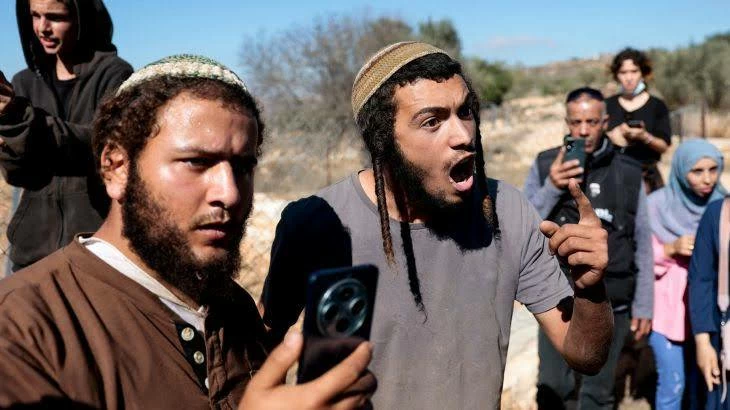
The recent attacks carried out by Israeli settlers in the West Bank have brought attention to the growing presence of 'Hill Youth,' a loosely connected group of radical settlers, mostly young people, who adhere to a religious-nationalist ideology. They aim to expand the Jewish presence in occupied territories by establishing unauthorized outposts. The group's name has come to the forefront after an attack on the village of Jallud in northern West Bank, where over 100 settlers carried out an assault.
The 'Hill Youth' movement lacks unified leadership and consists mainly of young people, including some who have dropped out of school. Some members have come from outside the West Bank, and the movement is based on a religious-nationalist ideology. These groups establish outposts outside existing Israeli settlements, often using temporary tents or mobile homes, and set up agricultural projects without obtaining permits from Israeli authorities.
The influence of the 'Hill Youth' movement grew after Israel's unilateral disengagement plan launched by former Prime Minister Ariel Sharon in 2005. The plan dismantled 21 settlements in the Gaza Strip and 4 in the West Bank, leading to the evacuation of thousands of Israelis. This event marked a new phase in settlement activity, with more ideologically radical settlers challenging the traditional strategy of building larger settlements.
The new generation of settlers has shifted focus from establishing large settlements to creating smaller outposts and agricultural projects spread over vast areas. This strategy, encapsulated in the slogan 'fewer people on more land,' has allowed 'Hill Youth' to expand their control significantly. The movement's activities have been facilitated by the Israeli government's support, including funding for infrastructure and security measures.
The 'Hill Youth' movement has been linked to a surge in violence against Palestinians in the West Bank, including physical attacks, land theft, and vandalism of mosques and churches. Despite international condemnation, perpetrators have often escaped legal prosecution. In a Telegram channel associated with the movement, it was reported that 635 attacks were carried out in 158 Palestinian villages over the past 12 months, resulting in 409 Palestinian injuries and 436 burned cars.
The Jallud attack has brought the 'Hill Youth' movement back into the spotlight, with over 100 settlers involved and three Israeli security personnel injured. The incident has sparked criticism from Israeli officials, who have typically downplayed settler violence. The relationship between 'Hill Youth' and the Israeli military has also come under scrutiny, with some soldiers less inclined to dismantle unauthorized outposts.
The phenomenon of 'Hill Youth' is part of a broader settlement landscape in the West Bank, where around 500,000 Israelis live in settlements considered illegal under international law, alongside 3 million Palestinians. The Israeli government recognizes around 140 settlements, but there are approximately 400 unauthorized outposts and farms. The 'Hill Youth' movement has contributed to a shift in the settlement landscape, with a focus on small outposts, agriculture, and grazing.
Key points
- The 'Hill Youth' movement is driven by a religious-nationalist ideology and seeks to expand the Jewish presence in the West Bank through unauthorized outposts and agricultural projects.
- The movement's activities have been linked to an increase in violence against Palestinians and have sparked international condemnation.
- The Israeli government's response to the 'Hill Youth' movement has been criticized, with some officials calling for a more robust approach to addressing settler violence.