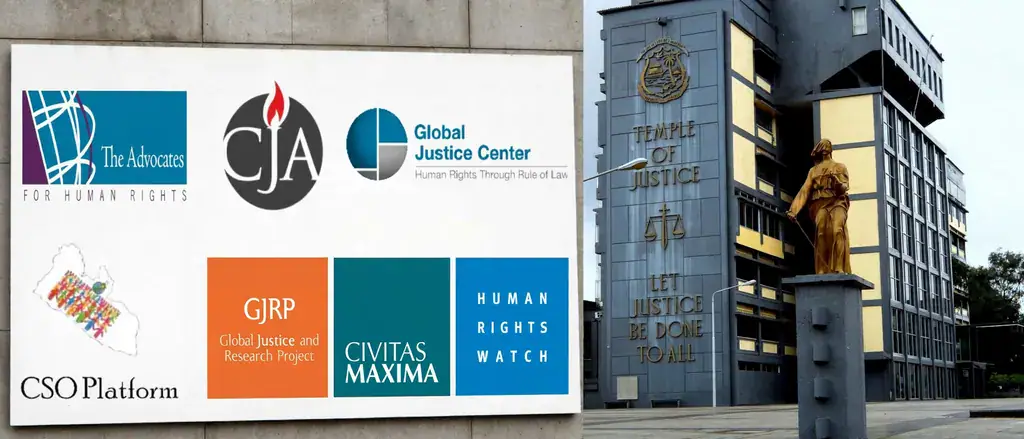
A coalition of human rights organizations has expressed concerns about a provision in the Liberian Senate's bill to establish a Special War Crimes Court for Liberia (SWACCOL). The groups, including The Advocates for Human Rights and Human Rights Watch, warn that giving the Liberian Supreme Court final appellate authority could damage the court's independence and credibility. They made the recommendation in a joint statement submitted to the Senate Judiciary Committee's public hearing on November 25, 2026.
The groups recognize the Supreme Court's constitutional role but are concerned that the arrangement could affect the court's independence, impartiality, and effectiveness. They cite longstanding challenges facing the domestic justice system, including capacity and independence issues. The coalition urges lawmakers to keep a majority international panel of judges serving alongside Liberian judges and to consult experts who helped set up other hybrid courts.
Despite their concerns, the groups strongly support the push for a war crimes court and urge lawmakers to move forward without delay. They aim to establish the court by November 2027, in line with the Executive's stated timeline. The groups believe that Liberia now has a real chance to secure accountability for grave crimes committed during the country's civil wars.
The coalition raises several other issues with the bill, including the timeframe, which reaches back to crimes committed from 1979. They recommend a later start date tied more closely to the outbreak of war in 1989, which they say would be more feasible for the court to manage. They also suggest excluding anyone under 18 at the time of the alleged crimes from prosecution.
The groups praise the bill for including key international law principles, such as official position offering no immunity and strong fair-trial protections. They also welcome the inclusion of sexual and gender-based crimes and requirements for gender parity and relevant experience for judges. The statement credits the Truth and Reconciliation Commission, the Liberian National Bar Association, and the Office for the Establishment of War and Economic Crimes Court for Liberia for laying the groundwork.
The groups urge the Senate plenary, House committees, and the Joint Plenary of the Legislature to continue holding public hearings and consulting victims, civil society, and legal experts as the bill moves forward. They believe that advancing the bill now would demonstrate Liberia's leadership on justice and accountability, particularly as the country prepares to hold the rotating presidency of the UN Security Council in December.
The human rights groups are encouraged by the Senate's progress on the bill and hope that lawmakers will address their concerns. They emphasize that survivors of the civil wars expect to see justice delivered at home, citing war crimes trials of Liberians in France and Switzerland as proof that such crimes can be prosecuted.
Key points
- The proposed Special War Crimes Court for Liberia could undermine the court's independence and credibility if the Liberian Supreme Court is given final appellate authority.
- Human rights groups recommend a later start date for the court's jurisdiction and exclusion of child offenders.
- The groups praise the bill for including key international law principles and urge lawmakers to move forward without delay.