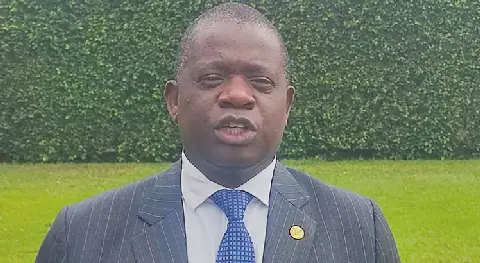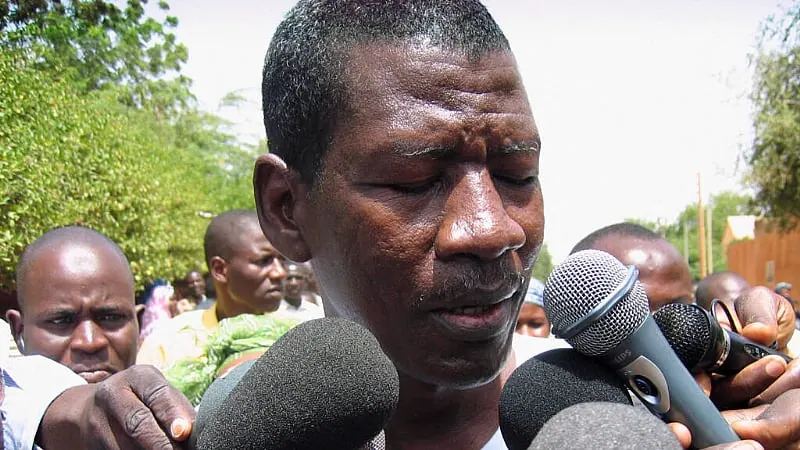
Nigerien journalist Moussa Kaka, a prominent figure in Nigerien journalism and a former RFI correspondent, has been missing since August 31. Kaka has spent more than three decades reporting from the country and was previously imprisoned in Niamey from September 2007 to October 2008. He was accused of complicity in threatening state security or authority after interviewing leaders of the Tuareg-led Niger Movement for Justice (MNJ).
Press freedom group Reporters Without Borders (RSF) is calling for an investigation into Kaka's disappearance, citing strong reason to believe the country's military authorities are involved. The group has referred the case to the United Nations Committee on Enforced Disappearances and previously to the African Union's special rapporteur on freedom of expression and access to information.
Alioune Tine, founder of the Afrikajom think tank, which focuses on democracy and security in Africa, expressed concern over Kaka's disappearance. Tine, who knew Kaka personally and intervened on his behalf in 2007 and 2008, believes Kaka's case is part of a wider deterioration of civic space in Niger since the military took power in a coup in July 2023.
Tine stated that it is extremely worrying and difficult to understand Kaka's disappearance, particularly in a country where the military is in power. He emphasized that people's lives and fundamental freedoms should be protected. Tine called on General Abdourahamane Tiani, the leader of the military, to provide clear signs that Kaka is alive and to release him.
According to Tine, Kaka's disappearance is an enforced disappearance, and responsibility lies with the Nigerien general. He urged the current authorities to give him the opportunity to speak with Kaka and express concerns about his freedom. The G25, a group of Nigerien civil society organizations, reported that Kaka is being held by an intelligence service called the DGDSE.
Tine found this information credible, given the increasing difficulty in Niger for independent civil society activists to operate. He noted that there has been a deterioration in civic space, with human rights violations, and that Kaka's disappearance is part of a hardening of the government's stance towards the press.
Tine also emphasized that African citizens are being arrested, and no African or African institution should remain indifferent to these phenomena. He called for a real mobilization of African public opinion in defense of people's fundamental freedoms.
Key points
- The African Union and other regional organizations are urged to take action to protect journalists and human rights in Niger.
- Moussa Kaka's disappearance is believed to be linked to his work as a journalist and the current military regime's stance towards the press.
- The case has been referred to the United Nations Committee on Enforced Disappearances and the African Union's special rapporteur on freedom of expression and access to information.