Malawi is pushing forward with plans to construct a North-bound railway that will connect the country to the Tanzania-Zambia network, known as Tazara. This railway link aims to reduce transport costs, which currently account for an estimated 60 percent of import and export expenses. The Tazara railway is a bi-national railway that connects landlocked Zambia to Tanzania's Indian Ocean port of Dar es Salaam, offering both cargo and passenger transportation services.
Malawi's current railway infrastructure is limited, extending only as far as Lilongwe, with restricted connections between Blantyre and Lilongwe, as well as Balaka and Nayuchi in Machinga. The rail link to the southern tip in Nsanje, which previously connected the country to Mozambique and Zimbabwe, is in a dilapidated state. This situation was worsened by the wash-away at Mtayamoyo Bridge in Nsanje in 1999.
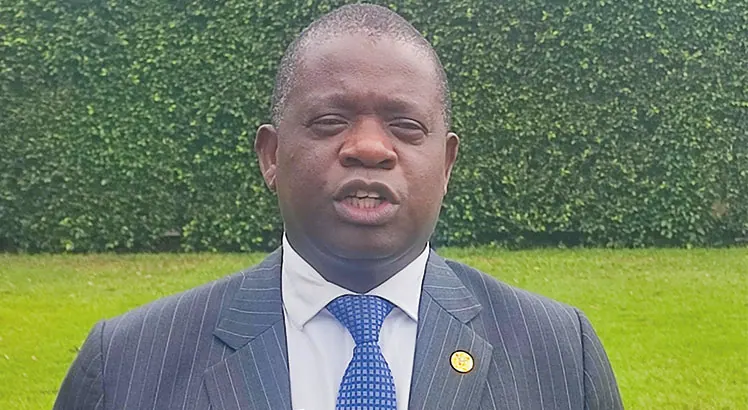
Secretary for Transport and Public Works Bright Kumwembe stated that the railway project will be implemented in phases, with a feasibility study currently underway, assisted by the Central Corridor Transit Transport Facilitation Agency. The African Development Bank has committed to providing resources for this feasibility study. Kumwembe emphasized that high transport costs are a significant issue for Malawi's economy, with consumers bearing the full burden of inefficiencies.
Kumwembe noted that transport costs account for 50-60 percent of local costs, which are passed on to consumers. He highlighted the importance of the Central Corridor, which Malawi joined in December 2023, becoming the sixth member State with access to the Port of Dar es Salaam. This move is expected to provide an alternative route for trade.
The Tazara connection will complement ongoing railway rehabilitation work in the South, where the 72-kilometre Marka-Bangula line in Nsanje has faced repeated delays since construction began in May 2022. The project, awarded to China Railway 20th Bureau Group at K68 billion, has missed two deadlines due to contractor changes, cyclones, and the kwacha devaluation, with the cost now projected at over K100 billion.
Malawi Confederation of Chambers of Commerce and Industry economic analyst Chancey Mkandawire emphasized the importance of the corridor for diversifying trade routes. He noted that while most goods currently pass through Nacala and Beira, the new corridor provides businesses with an additional route, increasing diversity and potentially reducing costs.
The cost of living crisis in Malawi has intensified pressure on transport reform, with the basic needs basket for an average urban family reaching K1 million per month. Fuel prices have surged more than 120 percent since October 2024, when petrol stood at K2 530 per litre. The new railway project aims to alleviate some of this pressure by providing a more efficient and cost-effective transportation solution.
Key points
- The project aims to reduce transport costs, which account for an estimated 60 percent of import and export expenses.
- Malawi joined the Central Corridor in December 2023, becoming the sixth member State with access to the Port of Dar es Salaam.
- The cost of the Marka-Bangula line project is now projected at over K100 billion, up from K68 billion.