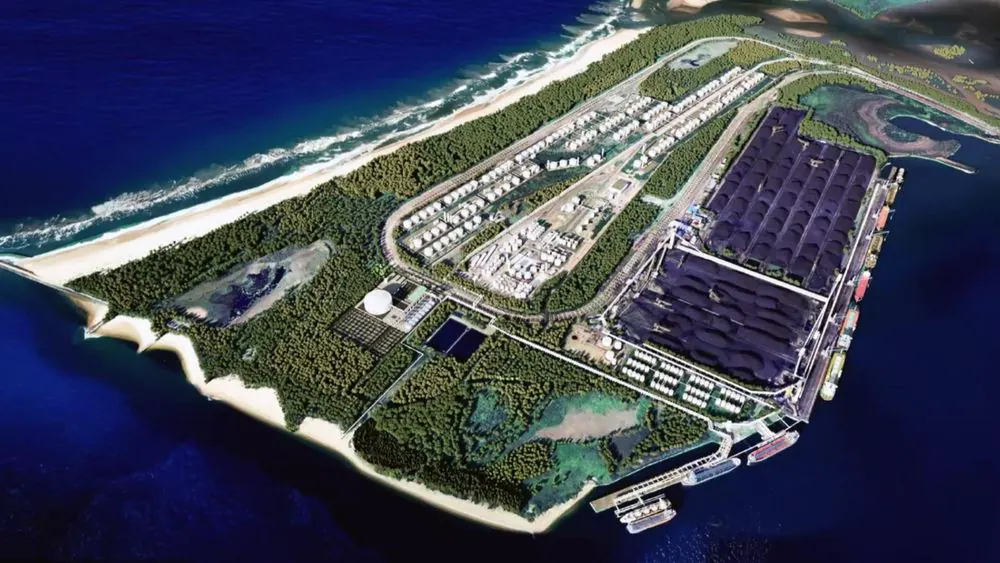
Richards Bay, a city in KwaZulu-Natal, South Africa, is emerging as a critical energy hub in Africa. The city's port, one of the continent's largest deep-water ports, provides access to key regional markets, established industrial infrastructure, and direct access to major rail and road corridors. These attributes make it an ideal location for energy and industrial development. The city is being positioned as a national energy hub capable of attracting investment into gas-to-power projects, renewable-energy manufacturing, green hydrogen, energy storage, and liquefied natural gas (LNG) infrastructure.
The development of Richards Bay as an energy hub is expected to have a significant impact on KwaZulu-Natal's economy. Large-scale investment in energy infrastructure will stimulate construction activity, create employment opportunities, and generate demand across numerous sectors. This aligns with KZN's 2035 Provincial Growth and Development plan, a blueprint for integrated advancement. The plan aims to drive economic growth, reduce poverty, and improve the quality of life for residents in the province.
Richards Bay's development as an energy hub is also critical for South Africa's energy security. The country faces an increasingly urgent challenge commonly referred to as the "gas cliff". Existing gas supplies from Mozambique's mature Pande and Temane fields are expected to decline over the coming years, creating risks for industrial operations and energy-intensive sectors that rely on natural gas. The planned LNG import infrastructure in Richards Bay can help address this challenge by providing a new channel to import, store, and distribute natural gas to power producers and industrial users.
The development of liquid natural gas (LNG) import facilities, liquid bulk terminals, fuel storage infrastructure, and gas distribution networks will create an industrial ecosystem capable of attracting significant domestic and international investment. This industrialisation agenda aligns closely with South Africa's broader economic objectives of increasing manufacturing capacity, reducing reliance on imports, and creating higher-value jobs. For KZN, this could position Richards Bay as an anchor for a wider development corridor.
Richards Bay's strategic location on the Indian Ocean positions it as a natural entry point for global LNG supplies and energy-related trade flows. As trade under the African Continental Free Trade Area continues to expand, with 48 countries ratifying it and an estimated US$450 billion in revenue by 2035, ports that can efficiently facilitate the movement of energy products, industrial goods, and raw materials will become increasingly valuable.
The development of Richards Bay represents far more than a collection of infrastructure projects. It is a strategic economic opportunity that can reshape KwaZulu-Natal, strengthen South Africa's energy security, and position Africa for a more industrialised and prosperous future. With its world-class port, expanding energy infrastructure, growing investment pipeline, and strategic location, Richards Bay is emerging as one of the continent's most important economic growth nodes.
Richards Bay's future is not limited to traditional energy sources, as its development plans can potentially include renewable energy manufacturing, green hydrogen production, and energy storage technologies. This creates a powerful opportunity for South Africa to pursue a balanced energy transition, one that is cognizant of energy security and economic growth while gradually expanding cleaner energy industries.
Key points
- Richards Bay is uniquely positioned to become a catalyst for energy security, industrialisation, and economic growth in Africa.
- The city's development as an energy hub is expected to have a significant impact on KwaZulu-Natal's economy, stimulating construction activity, creating employment opportunities, and generating demand across numerous sectors.
- Richards Bay has the potential to become one of Africa's most important energy gateways, serving not only South Africa but also neighbouring countries and emerging regional markets.