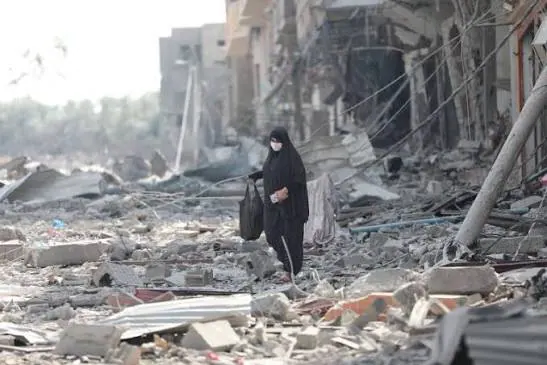
The ongoing crisis in the Gaza Strip has led to a significant increase in violence against women and girls, according to recent reports from the UN Population Fund (UNFPA). The war has eroded social structures, creating severe and growing risks of gender-based violence. An analysis of data from ten organizations reveals that conditions in war-torn Gaza have exacerbated the vulnerability of women and girls.
Field testimonies from 230 women residing in crowded displacement camps in Gaza City and Khan Younis describe grim realities. Displaced women in school-turned-shelters shared accounts of rape victims being married to their rapists to avoid social stigma and scandal. One woman noted that rape cases discovered in schools are often followed by weddings and celebrations.
Women across different displacement camps shared similar accounts of survival exchanges that would have been unthinkable before the conflict began in 2023. A father married off his fourteen-year-old daughter in exchange for two bags of flour to feed his remaining children during a period of severe famine. These incidents highlight the extreme circumstances that have led to the breakdown of social structures.
UNFPA figures show that reported cases of early and forced marriage increased by 123% in the second quarter of this year compared to the first. Child marriages involved girls aged twelve to seventeen. Nestor Owomuhangi, the UNFPA representative to Palestine, described these trends as shocking, citing the destruction, displacement, and collapse of public services over the past three years.
The erosion of education and safety nets has also contributed to the vulnerability of girls in Gaza. Prolonged school closures have halted progress, forcing many children to drop out. Boys face pressure to find informal work, while girls confront heightened safety risks. Living among strangers without privacy in a conservative society has led to frequent complaints of sexual harassment.
Many families view marrying off their daughters as a protective measure to preserve modesty. Orphaned girls are particularly vulnerable. A woman in a Gaza City camp described attending the wedding of two family members aged fourteen and fifteen, whose uncles married them off young to avoid responsibility and expenses.
The health consequences of adolescent pregnancies are severe, with girls in their early teens facing higher risks of miscarriages and underweight babies than adult women. Local support groups have documented severe cases of abuse and early pregnancy. Mr. Owomuhangi stated that adolescent pregnancies are increasing due to child marriage, highlighting the need for urgent intervention.
Key points
- UNFPA reports 123% increase in early and forced marriages in Gaza Strip.
- Breakdown of social structures and erosion of education and safety nets contribute to vulnerability of girls.
- Adolescent pregnancies in Gaza Strip lead to severe health consequences, including higher risks of miscarriages and underweight babies.