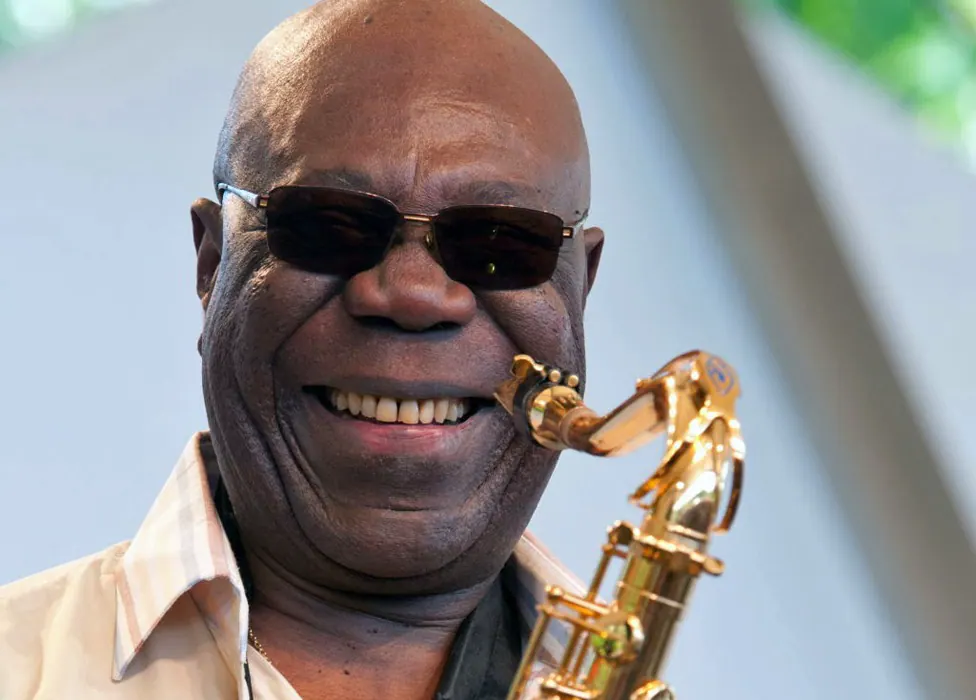
Manu Dibango, a renowned Cameroonian saxophonist, was celebrated in Lagos, Nigeria, in November 2016, when he received the Legendary Award at the All Africa Music Awards, AFRIMA. At 82 years old, Dibango had already had a storied career, playing in Europe, America, and Africa, and collaborating with some of the most important musicians of his time. The award was significant, as it was the first music award he had received in Africa.
Born Emmanuel N'Djoké Dibango in Douala, Cameroon, in December 1933, Dibango's musical journey began in the church, where he sang in the choir and experimented with instruments. He later studied piano in France, before discovering the saxophone in the early 1950s. This instrument would become an integral part of his identity as a musician. Dibango's ability to inhabit multiple musical worlds without losing his identity was a hallmark of his career.
Dibango's encounter with Joseph Kabasele, one of the architects of modern Congolese popular music, led him deeper into Africa. He joined Kabasele's African Jazz and spent time in Léopoldville, today's Kinshasa, during the great era of Congolese rumba. This experience helped shape Dibango's unique sound, which blended jazz, Cuban music, and African rhythmic traditions. His versatility allowed him to play rumba, highlife, reggae, soul, salsa, gospel, and chanson.
In 1972, Dibango recorded "Soul Makossa," a song that would become one of the most influential African records ever made. Initially released as the B-side of a record connected to Cameroon's football campaign, "Soul Makossa" reached DJs in New York and became a hit on American dance floors. The song's irresistible rhythm and Dibango's immense saxophone sound helped introduce African dance music to a broader audience.
The impact of "Soul Makossa" was significant, with the Museum of Modern Art describing it as the first African pop recording to reach the Western Top 40. The song's influence can be heard in later genres, such as disco and funk, and it helped pave the way for the internationalization of African dance music. Dibango's achievement demonstrated that an African record could enter the Western mainstream without losing its African identity.
Dibango's music also had a lasting impact on global pop stars. Michael Jackson's "Wanna Be Startin' Somethin'" featured a chant that was unmistakably inspired by "Soul Makossa." Dibango pursued a legal claim, which resulted in an out-of-court settlement. Years later, Rihanna's "Don't Stop the Music" used a similar interpolation, leading to another legal claim. These episodes highlighted the ongoing issue of authorship and recognition in African creativity and global popular culture.
Throughout his career, Dibango maintained a strong connection to Nigeria, where he collaborated with musicians like Fela Kuti. Their musical kinship was built on a deep understanding of African music and its global significance. Dibango's legacy continues to inspire new generations of musicians, and his contributions to African music remain unparalleled.
Key points
- Manu Dibango received the Legendary Award at the All Africa Music Awards, AFRIMA, in 2016.
- "Soul Makossa" was a groundbreaking record that introduced African dance music to a broader audience.
- Dibango's music influenced global pop stars, including Michael Jackson and Rihanna.