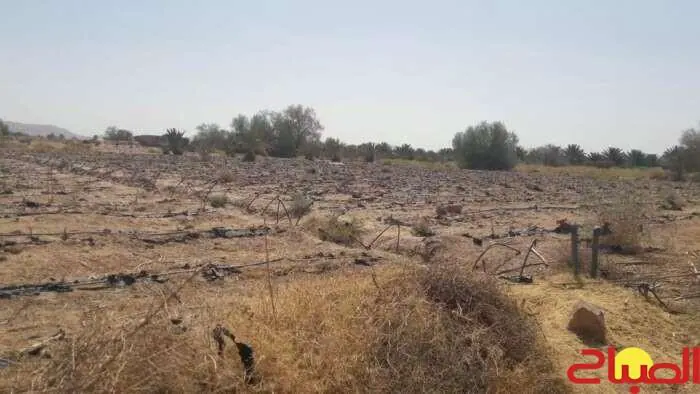
The cultivation of red watermelons in Morocco's Zakoura region has sparked debate over its impact on local water and soil resources. The region already faces water scarcity and consecutive years of drought and rising temperatures. While the crop provides income for some farmers, its continuation has drawn criticism due to its high water consumption and soil degradation. Environmental activists warn that the crop is unsuited to the region's climate and water conditions.
The Zakoura region's water scarcity issues are exacerbated by the watermelon crop, which requires significant water resources. Environmental groups, including the Friends of the Environment association in Zakoura, have called for a re-evaluation of the crop's suitability for the region. They argue that the crop's high water demands threaten the region's limited water resources and the long-term sustainability of oasis farming.
According to Jamal Aqchbal, head of the Friends of the Environment association, red watermelon cultivation is a significant strain on the region's water resources. He describes it as "invasive and unsustainable" and primarily driven by commercial interests rather than food security concerns. Aqchbal estimates that only a small proportion of local farmers engage in watermelon cultivation, often with the support of investors.
The continued exploitation of groundwater for watermelon farming poses significant risks to the region's water resources, Aqchbal warns. As the water table declines, residents may face increased difficulties accessing water, particularly during the summer months. The degradation of water resources also threatens the region's iconic palm trees, as reduced water levels make it harder for their roots to access water.
In addition to water depletion, Aqchbal highlights the issue of plastic waste and pesticide use associated with watermelon farming. The accumulation of these pollutants in fields poses another environmental concern, as it can lead to soil contamination. The Friends of the Environment association advocates for prioritizing the conservation and rehabilitation of the Draâ oasis and protecting its water resources.
To address these challenges, the association recommends redirecting available water resources towards essential uses, such as providing drinking water for residents and supporting sustainable agriculture. They suggest promoting crops that are better suited to the region's climate and ecology, such as date palms and subsistence crops. This approach aims to ensure the long-term viability of oasis farming and protect the region's unique environment.
The controversy surrounding red watermelon cultivation in Zakoura highlights the need for sustainable water management and agricultural practices in Morocco's fragile ecosystems. As the region continues to grapple with the impacts of climate change, finding a balance between economic development and environmental conservation will be crucial for preserving the Draâ oasis and its resources for future generations.
Key points
- Environmental activists warn that red watermelon cultivation threatens the region's limited water resources and the long-term sustainability of oasis farming.