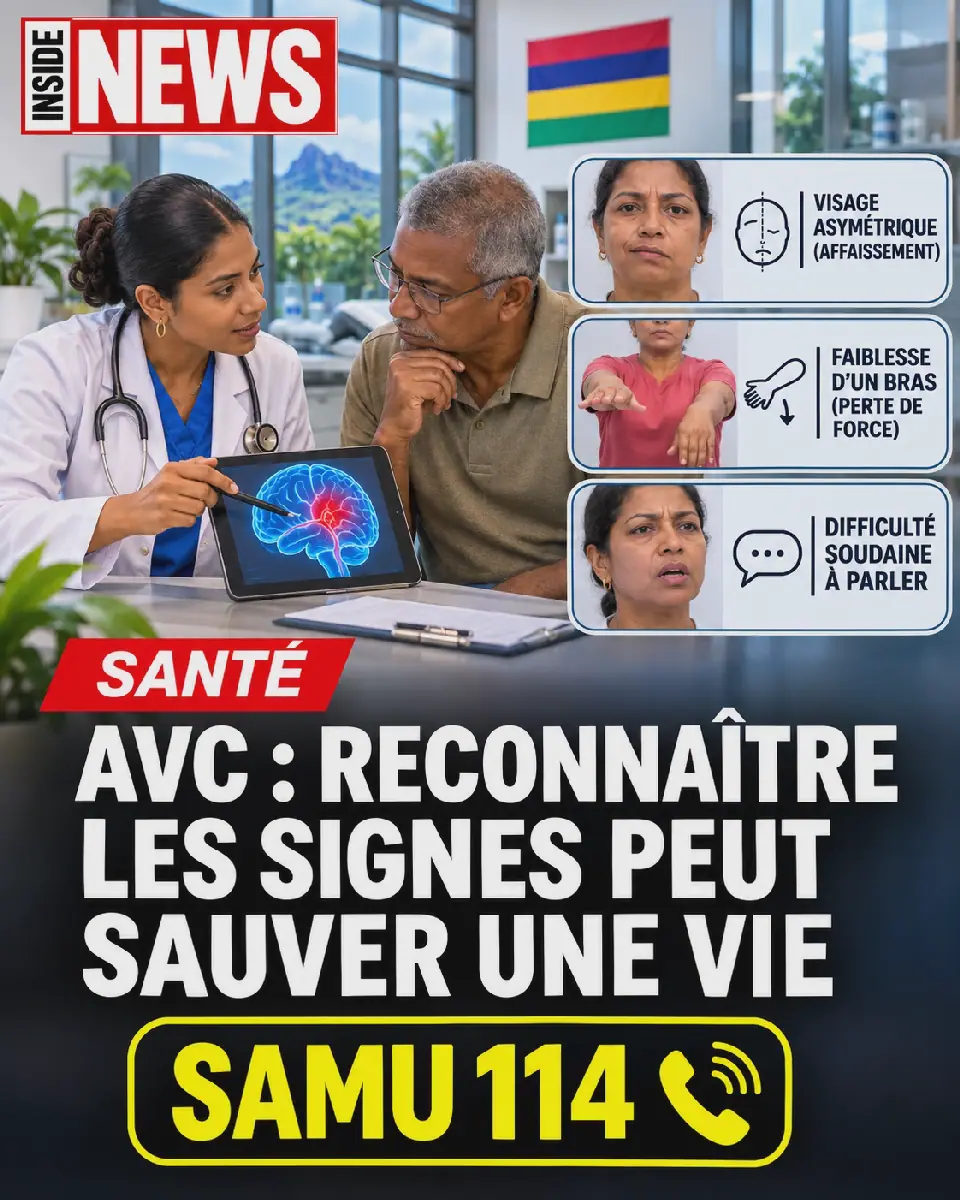
In Mauritius, cerebrovascular diseases accounted for 9.2% of recorded deaths in 2024, according to the Ministry of Health's statistical report. This category does not solely measure the number of people who have suffered a stroke, but it highlights the impact of these diseases. Recognizing emergencies, understanding risk factors, and preparing for rehabilitation can help families navigate the situation. A stroke occurs when the blood supply to part of the brain is interrupted, either due to a blockage or bleeding.
A stroke can manifest through various symptoms, including sudden weakness or numbness in the face, arm, or leg, often on one side, difficulty speaking or understanding, and sudden vision problems or balance issues. A severe headache can also accompany some cases. If you suspect someone is having a stroke, it is crucial to act immediately and call the SAMU at 114. Provide the symptoms, exact address, and the time the person was last seen in their normal state, and follow the operator's instructions.
Time is of the essence when it comes to stroke treatment. At the hospital, medical teams use examinations and imaging to determine the type of stroke and the best course of action. The Government Information Service reported on October 15, 2026, that specialized stroke units are operational at Sir Seewoosagur Ramgoolam National, Sir Anerood Jugnauth, and Dr. A. G. Jeetoo hospitals. In an emergency, call 114 and let the medical team decide the best course of action.
Hypertension, diabetes, smoking, and other cardiovascular factors can increase the risk of a stroke. Regular blood pressure checks, discussing screening options with a healthcare professional, and adhering to prescribed treatments for chronic conditions can help mitigate risks. A balanced diet, suitable physical activity, quitting smoking, and reducing excessive alcohol consumption are also essential preventive measures.
The World Health Organization emphasizes that rehabilitation can involve physiotherapy, occupational therapy, speech therapy, and psychological support, tailored to individual needs. This process begins when the patient's medical condition allows and should be planned with the healthcare team. Before discharge, families can request a summary of the patient's condition, follow-up instructions, and information on available rehabilitation services.
The recovery process varies significantly from person to person, and the need for assistance at home should be assessed on an individual basis. Patients and families can seek help and guidance from various resources, including the Ministry of Health's NCD and Health Promotion Unit, located at Atchia Building, and their healthcare providers.
For emergency assistance, the SAMU can be reached at 114. For prevention and guidance, the NCD and Health Promotion Unit can be contacted at 213 0037. This information is general and not a substitute for medical consultation; individuals should seek professional advice for specific health concerns.
Key points
- Knowing the signs of a stroke and acting quickly can significantly improve treatment outcomes.
- Specialized stroke units are available at select hospitals in Mauritius.
- Preventive measures, such as regular health checks and lifestyle adjustments, can reduce the risk of a stroke.