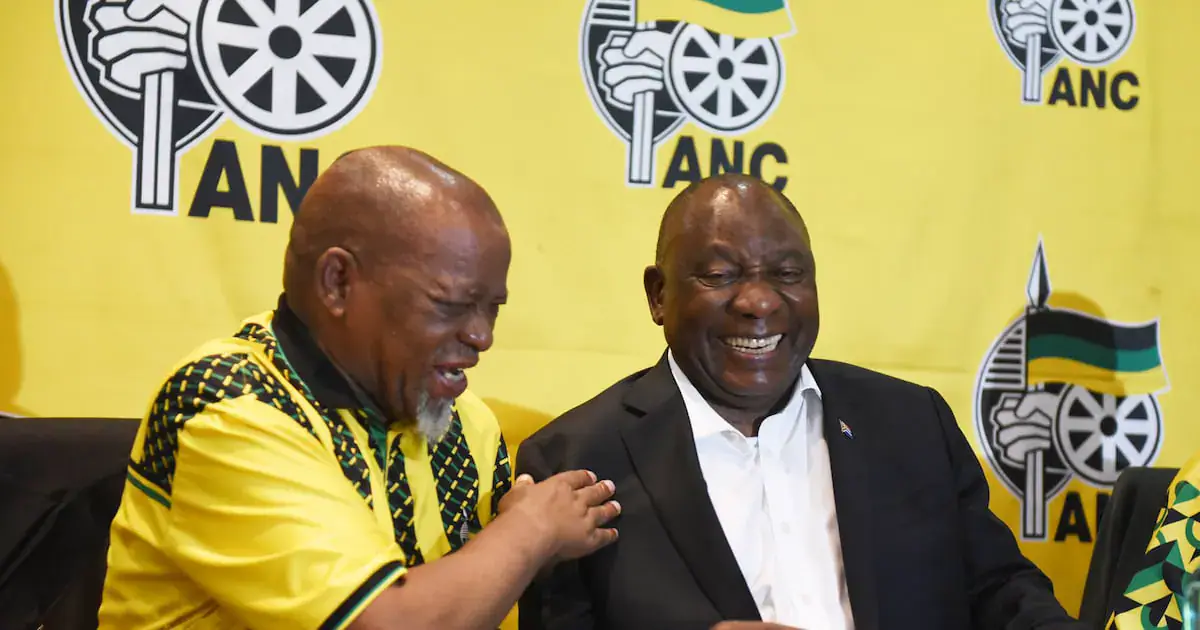
The African National Congress (ANC) and the MK party have agreed in principle to work together in KwaZulu-Natal, a development that could have significant implications for the formation of municipal administrations in the province. This understanding was reached during weekend coalition discussions, although the details of their cooperation have yet to be finalised. The ANC's national working committee is set to meet on Monday, while its coalition negotiating team will discuss the proposed arrangement with MK party leader Jacob Zuma on Sunday.
The agreement between the ANC and MK party comes amid heightened tension between the ANC and its government of national unity partner, the Democratic Alliance (DA). President Cyril Ramaphosa reportedly expressed frustration with the DA at an ANC national executive committee meeting last week, accusing them of second-guessing ANC policies and attempting to bypass Luthuli House. The ANC saw its vote share drop to just over 30% in the recent elections, leading to a critical peak in tensions with the DA.
The MK party secured the largest share of votes in KwaZulu-Natal during the 2024 provincial election but was excluded from the government of provincial unity. This time, the MK party will seek to avoid a similar outcome, particularly in councils where it emerged as the leading party but fell short of an outright majority. The MK party has emerged as the dominant political force in KwaZulu-Natal, leading in 19 councils, including eThekwini, while the ANC leads in only three.
Any working arrangement between the ANC and MK party could significantly impact the formation of municipal administrations in KwaZulu-Natal. The DA has also held discussions with the MK party, although they have not publicly disclosed the engagement. The DA is seeking to consolidate its position in Gauteng's three metros, where it emerged as the leading party in Johannesburg, Tshwane, and Ekurhuleni.
The discussions between the ANC and MK party form part of a broader round of coalition negotiations taking place across the country. Parties are seeking partners to secure governing majorities in municipalities where no party won outright control. The ANC has returned to the Inanda Club in Sandton, where it held meetings with ActionSA, the IFP, the EFF, and Build One SA (Bosa) over the weekend.
The IFP has expressed encouragement by the broad areas of consensus emerging from these discussions, particularly the common commitment to establishing stable, people-centred local government administrations. The IFP's coalitions negotiations team is currently finalising a comprehensive preliminary report, together with its recommendations, for consideration by the IFP national executive committee and the national council on Monday, November 16.
Parties have 14 days from the announcement of the election results to constitute municipal councils, putting pressure on negotiating teams to translate preliminary discussions into formal agreements. The ANC's NEC endorsed a more flexible approach to municipal coalitions after the party's reduced electoral support left it dependent on other parties to retain control of several councils.
Key points
- The ANC and MK party's agreement in principle could significantly impact the formation of municipal administrations in KwaZulu-Natal.
Reporting sources
- ANC and MK party agree in principle to form coalition in KZN · The Rand Daily Mail