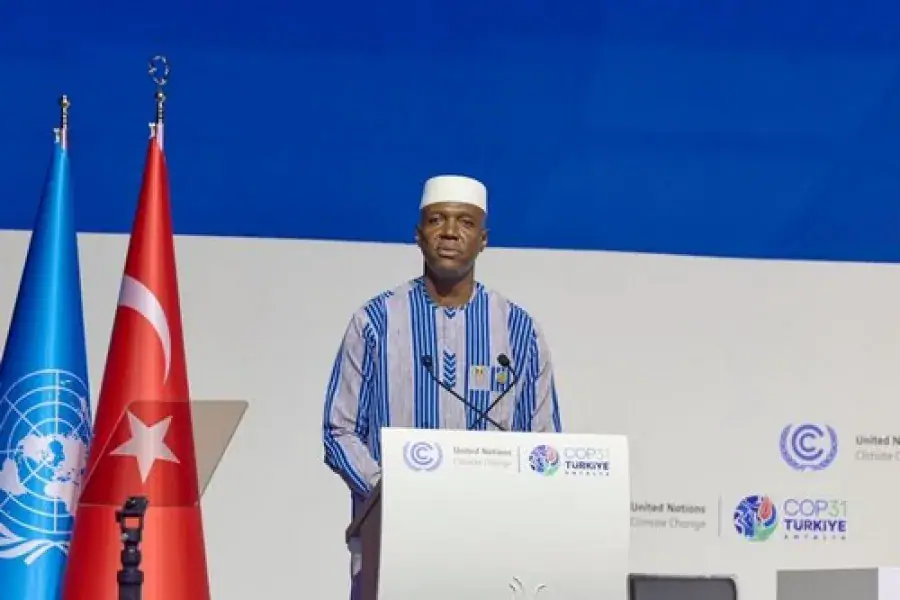
On November 12, 2026, Mali's Prime Minister Abdoulaye Maïga delivered a speech at COP 31 in Antalya, Turkey, on behalf of President Assimi Goïta. The speech was a diplomatic move aimed at both the COP attendees and the Malian public. Maïga's address emphasized the country's commitment to addressing climate change while promoting its sovereignty and strategic interests. He highlighted Mali's efforts to reduce its carbon footprint, citing the country's vision for 2063, which includes a 25.25% reduction in emissions by 2035.
Maïga's speech was structured around three key principles: respect for sovereignty, respect for strategic choices and partners, and consideration of the vital interests of populations. He emphasized that respect is a condition for any cooperation and that Mali will not be dictated to by external partners. The Prime Minister also highlighted the country's progress in renewable energy, including 4,142 MWc of solar power and 132 million tons of CO2 avoided. These achievements demonstrate Mali's commitment to sustainable development and its efforts to reduce its reliance on fossil fuels.
The speech also touched on the issue of climate justice, with Maïga calling on developed countries to recognize their historical responsibility for greenhouse gas emissions and to take concrete actions to reduce their emissions. He emphasized that countries with low emissions should not bear the brunt of climate change consequences. Maïga's words were seen as a call to action for countries to take responsibility for their emissions and to support vulnerable nations in their efforts to adapt to climate change.
The Malian government's commitment to climate action is reflected in its Nationally Determined Contribution (NDC) 3.0, which was validated on October 1, 2026. The NDC sets out a plan to reduce greenhouse gas emissions and adapt to the impacts of climate change. Maïga's speech also highlighted the country's efforts to promote sustainable development, including the construction of 564 water wells in five years, which has improved access to clean water for many Malians.
The speech was seen as a significant moment for Mali's diplomacy, as it marked a shift in the country's approach to climate change. Maïga's emphasis on sovereignty and strategic interests was seen as a way of asserting Mali's independence and promoting its partnerships with other countries. The speech also highlighted the country's growing relationship with Turkey, which has been strengthening its ties with Mali in recent years.
The visit to Turkey was seen as an opportunity for Mali to diversify its partnerships and strengthen its cooperation with other countries. The two countries have been discussing ways to enhance their cooperation in areas such as trade, defense, and energy. While no specific agreements were announced during the visit, the talks were seen as a positive step towards deepening the relationship between the two countries.
Maïga's speech at COP 31 was seen as a call to action for countries to take concrete steps to address climate change. The Prime Minister's emphasis on climate justice and the need for developed countries to take responsibility for their emissions resonated with many attendees. As the world grapples with the challenges of climate change, Mali's commitment to sustainable development and climate action serves as an example for other countries to follow.
Key points
- Mali aims to reduce its greenhouse gas emissions by 25.25% by 2035.
- The country's vision for 2063 includes a focus on sustainable development and reducing reliance on fossil fuels.
- Mali is seeking climate justice and greater support from developed countries to address the impacts of climate change.
Reporting sources
- COP 31 : Le Mali réclame une justice climatique · Maliweb.net