Rebecca Alitwala Kadaga, one of the most consequential figures in Uganda's parliamentary history, has left a lasting impact on the country's politics. As a trained lawyer who studied at Makerere University and the University of Zimbabwe, Kadaga built a career that placed her at the heart of some of Uganda's biggest constitutional and political confrontations. She rose to prominence as Kamuli District Woman MP in 1989 and became Uganda's first female Speaker of Parliament in May 2011. Kadaga presided over Parliament for a decade, leaving office in May 2021 after losing the speakership contest to Jacob Oulanyah.
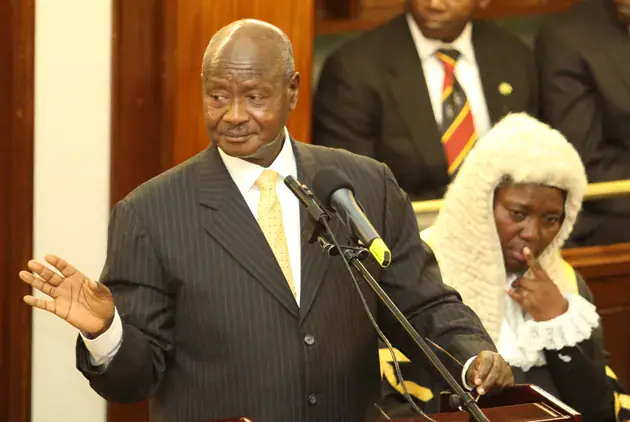
Two major episodes during Kadaga's speakership continue to raise questions about her political legacy: the 2017 removal of presidential age limits and the 2020 debate over declaring a COVID-19 state of emergency. The first controversy began when Parliament removed presidential term limits in 2005, but the age ceiling remained a constitutional obstacle to President Yoweri Museveni's eligibility for the 2021 elections. In December 2017, Parliament passed the Constitutional Amendment Bill, championed by Igara West MP Raphael Magyezi, which removed the presidential age ceiling. Kadaga presided over the historic and chaotic proceedings, during which opposition legislators protested and security personnel entered Parliament.
The December 20, 2017 vote produced 317 votes in favour, 97 against, and two abstentions. The amendment effectively cleared the way for Museveni, then 73, to seek another term. Critics considered the legislation a constitutional manoeuvre designed to protect presidential continuity rather than strengthen democratic accountability. Supporters defended it as eliminating age-based discrimination. Kadaga later acknowledged the significance of her role, saying Museveni would not have appeared on the 2021 ballot without her involvement in facilitating the process.
The consequences of the 2017 amendment were enormous, as a constitutional restriction that could have blocked Museveni's candidacy was removed. The second controversy emerged in 2020 when COVID-19 threatened Uganda's public health and economic stability. As the government introduced lockdowns, curfews, and movement restrictions, Kadaga and then-Chief Justice Bart Katureebe reportedly advised Museveni to consider declaring a formal state of emergency under Article 110 of the Constitution.
Kadaga subsequently told Parliament that a Cabinet minister had convinced Museveni against the proposal. Attorney General William Byaruhanga argued that existing public-health laws provided sufficient authority to manage the crisis. Consequently, Uganda never declared the formal constitutional emergency. Instead, the government relied on presidential directives and public-health regulations. Some political observers questioned whether emergency powers could have created opportunities for extraordinary political arrangements.
However, no such extension resulted from the COVID-19 response. Ultimately, Kadaga's record presents an uncomfortable political contradiction. The 2017 amendment removed a concrete constitutional barrier to Museveni's continued presidency, while the 2020 emergency proposal never materialised. For a Speaker who occupied one of Uganda's most powerful constitutional offices, these episodes remain central to assessing her legacy.
The debate over what it means for democracy, accountability, and the country's future remains far from settled. Kadaga's role in these controversies has sparked questions about her legacy: was she simply managing parliamentary procedure, defending institutional authority, or facilitating political decisions that strengthened an already powerful presidency? Uganda's political history provides the evidence, and the discussion is ongoing.
Key points
- Kadaga's involvement in the 2017 removal of presidential age limits paved the way for President Museveni's re-election in 2021.
- The 2020 debate over declaring a COVID-19 state of emergency never resulted in the implementation of emergency powers.
- Kadaga's legacy remains a subject of discussion, with questions about her role in shaping Uganda's politics and democracy.